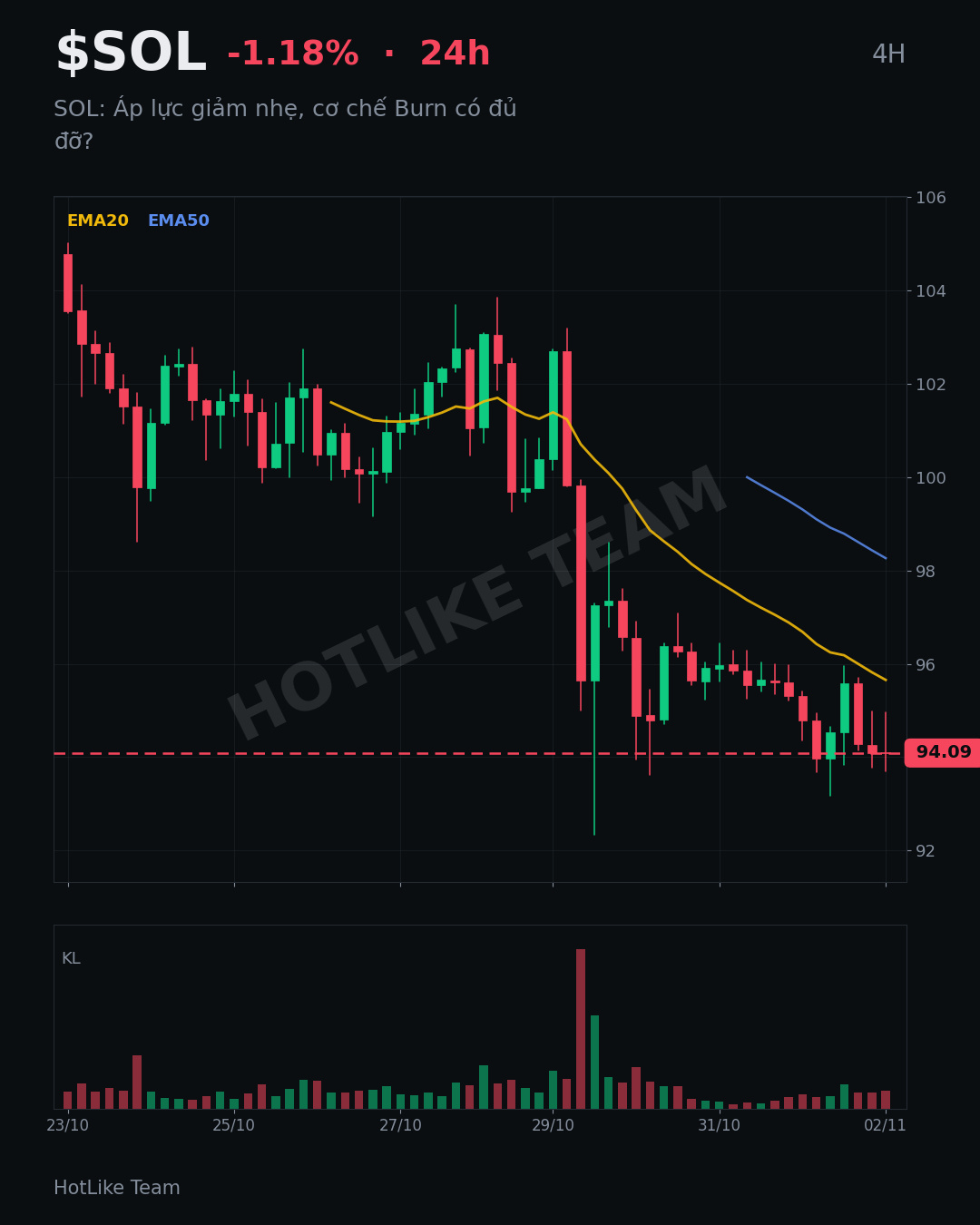
SOL: Selling pressure eases—can the burn mechanism provide enough support?
Solana ($SOL ) is undergoing a slight correction, down 1.18%, but market sentiment still seems very optimistic. I see that 77% of accounts are holding long positions, which is quite high while the price is falling.
SOL’s transaction fee burn mechanism is an important factor supporting the token’s value. When the network is highly active, fees are burned, reducing the supply. Will this mechanism be strong enough to withstand selling pressure if the market continues to fluctuate?
Compared with Ethereum, which also burns fees through its EIP-1559 mechanism, SOL has advantages in transaction speed and costs, encouraging adoption. However, short-term volatility remains a major challenge.
Is holding SOL for the long term, based on its solid fundamentals, the right strategy at this stage?
For informational purposes only; not investment advice. DYOR.
#SOL