🐼 You see a token called “USD” in a wallet. Is that enough to know what you’re receiving?
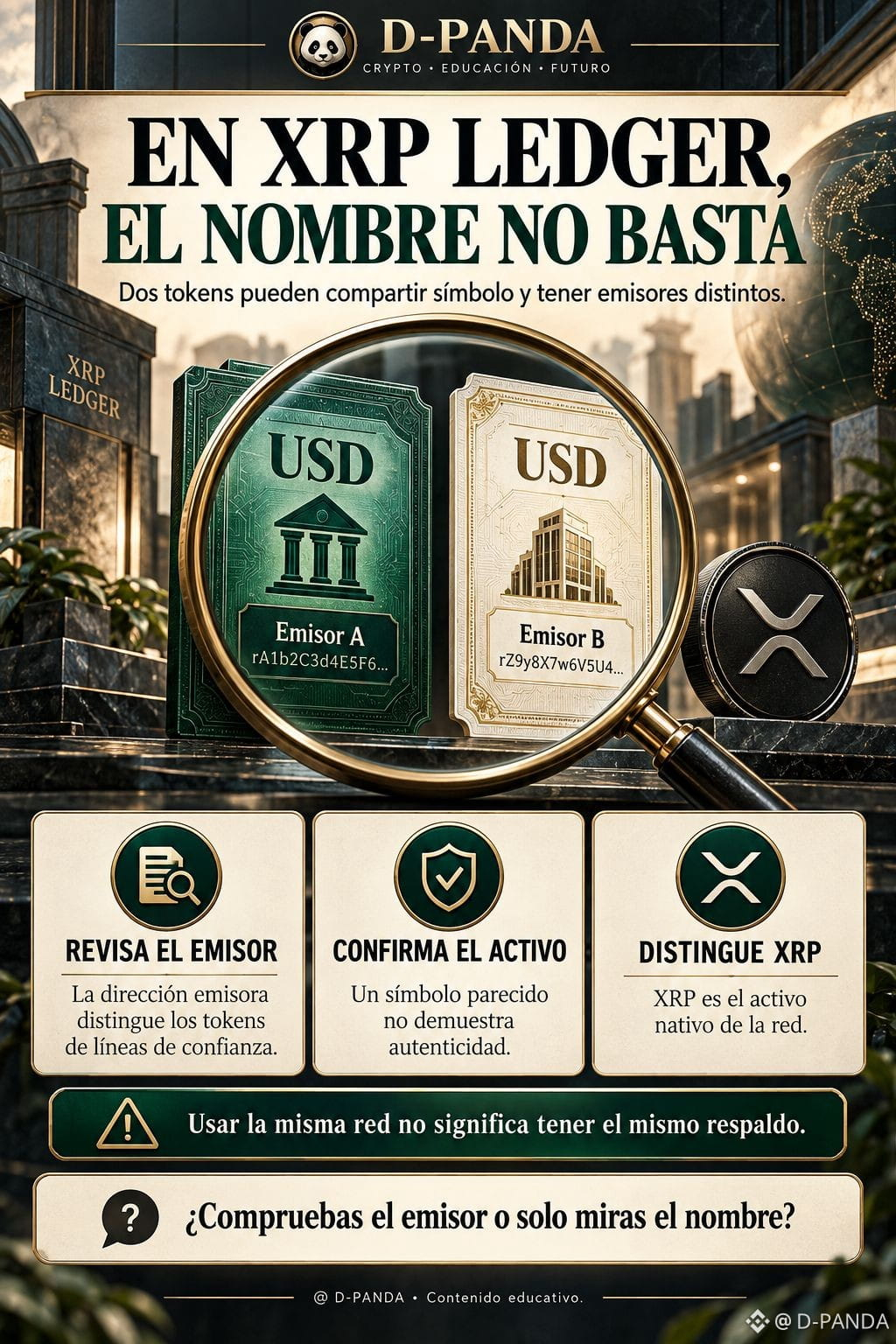
On the XRP Ledger, two trust line tokens can share the same currency code and have different issuers.
Example: “USD” from issuer A and “USD” from issuer B are distinct assets. The name alone doesn’t prove they have the same backing or terms.
To identify them, check the currency code and issuer address, and compare them with the project’s official information.
There’s also an important distinction: $XRP is the network’s native asset. Tokens issued by third parties on the XRP Ledger don’t become XRP just by using that blockchain.
A familiar name or similar-looking logo may catch your eye. Identifying the asset requires an additional check.
Do you check the issuer before accepting a token, or do you only look at its name?
$XRP #CryptoSecurity #DPANDA