
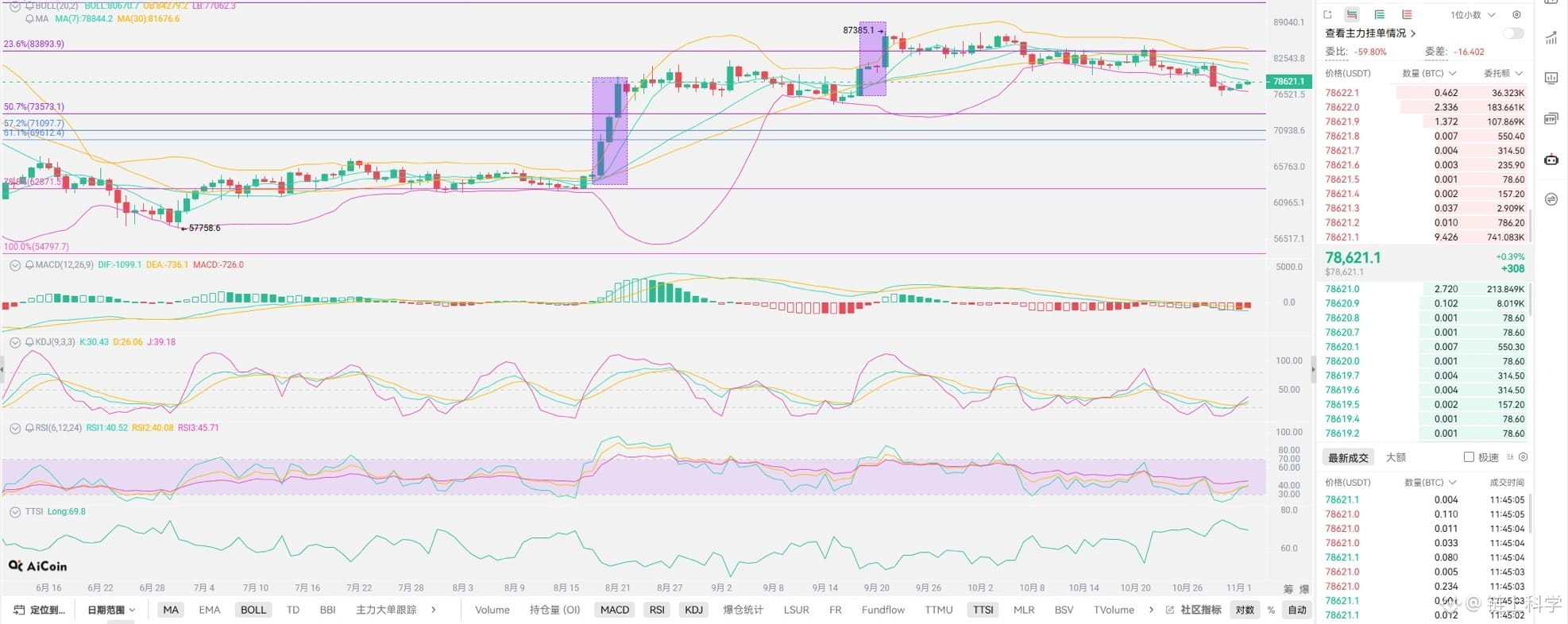

The day's price movement stayed between 77,462 and 78,388, with a range of less than 1,000 points. This is the calm after a period of extreme volatility. All the trading setups and price levels have been explained, and even the trends have been discussed in great detail. Repeatedly emphasizing the substantial profits has become rather tiresome, too. Today's article will answer some of the questions that have come up frequently recently. First, the exchange rate: since the push toward compliance began, Lao Cui has hardly mentioned exchange rates, because the domestic market clear-out, combined with the crypto sector's integration with stablecoins, has directly tied the US dollar to cryptocurrencies, greatly reducing the impact of exchange rates. Only users involved in foreign trade tend to pay more attention to this. Exchange rates are no longer very relevant as a reference for the crypto market. The exception is foreign-trade settlements, where the concentrated conversion of stablecoins can cause some volatility in the crypto market. At other times, you can all ignore exchange rates. As for markets linked to exchange rates, only the use of the CNY is worth watching. Domestic capital has entered the market, but currently there is no domestic capital in the crypto sector.
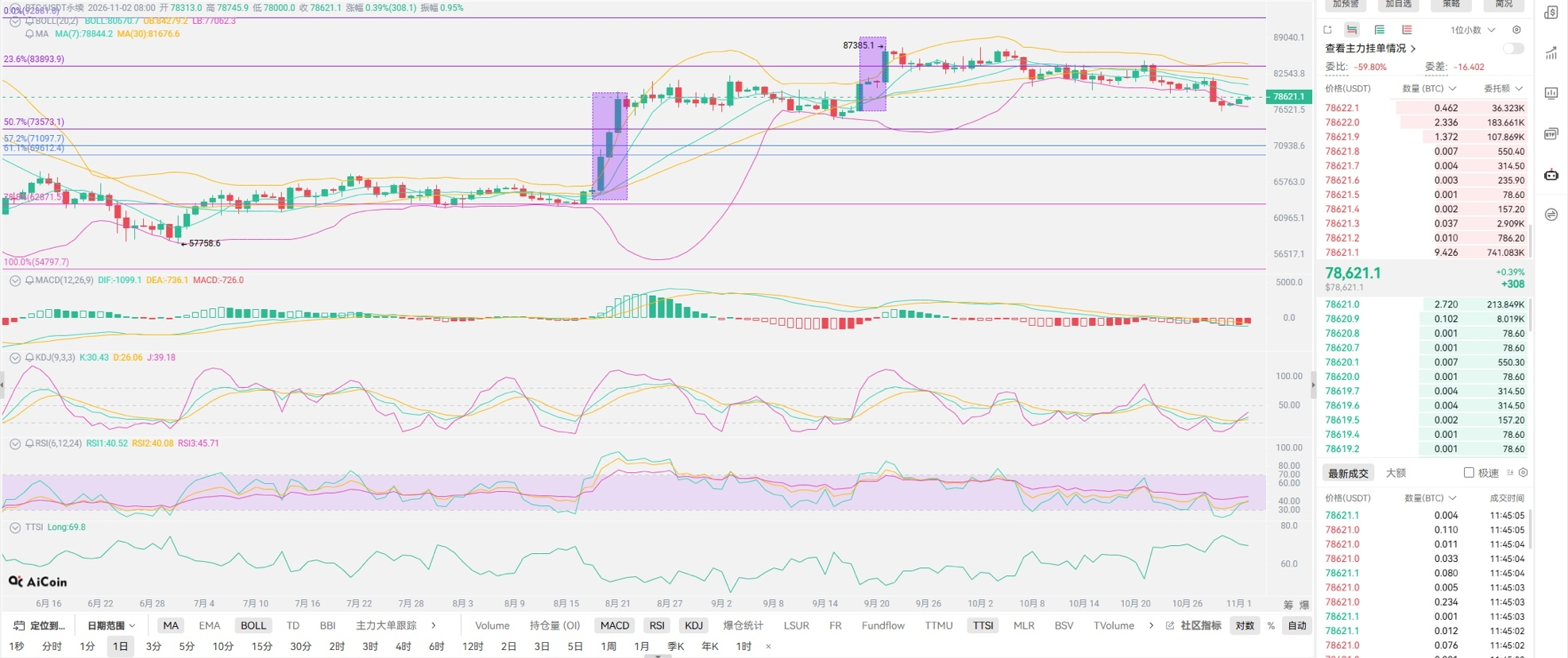
The second question is how to manage the risks of futures trading. Many of you have been very perceptive: Lao Cui has almost never posted on the day a move in the opposite direction began, and even the warnings he gave the day before were very accurate. Let me respond with a recent example: the day the rate-setting meeting’s decision was announced, nobody could have predicted the market action. There had been a substantial pullback beforehand, but that day the Asian session not only recovered to above 80,000, it even hit a high of 81,800. This kind of bear trap is certainly easy to misread. Lao Cui mentioned a week in advance that we might see a different trend. But one thing that could not be predicted was the high: Lao Cui certainly couldn’t have known that 81,800 would be the day’s high. Even if it had broken through to 85,000 that day, Lao Cui would have considered it a perfectly normal fluctuation. How much of a stimulus was the decision not to raise rates in October for capital markets? Lao Cui couldn’t foresee the underlying data, so the risk was enormous. Only once the news was fully out could the direction of the move be determined. Before then, any trade would have been a gamble—and the biggest taboo in futures trading is betting on a single move. Give that up, and you may see different returns, with greater consistency.
The third question: Could there be any positive news from the midterm elections and the December rate-setting meeting? Based on the data Lao Cui currently has, the probability of Trump losing the midterm elections and the probability of a rate hike in December are both still above 70%. We’ll see the midterm election data soon. It will be difficult for Trump to give the public a satisfactory account of the economy over the past two years, especially given the market volatility during the election period. Lao Cui even wonders whether the Democrats are behind this market movement—the timing is far too coincidental. There is no doubt that rates will be raised; there isn’t even a convincing excuse for not raising them. Japan, Canada, Europe, and even some smaller countries have already raised rates, paving the way for the US to do the same. Oil prices, Treasury yields, the collapse of US stocks, the collapse of gold, and inflation data are all telling us that something is wrong. Lao Cui has already shared his view of the trend. Whether you believe it is up to your own judgment.
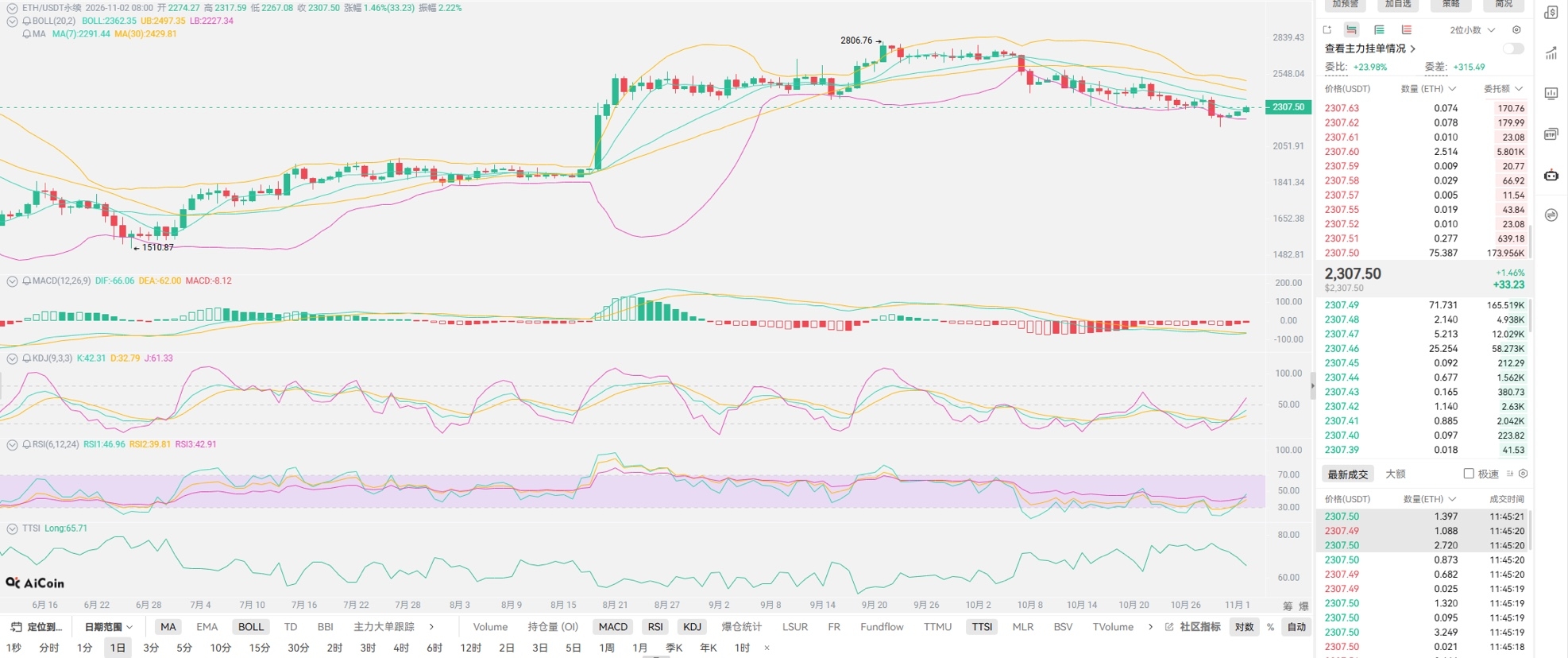
Lao Cui’s summary: Today’s discussion was more like defining a trend and reinforcing everyone’s understanding of the bearish outlook. In the short term, Bitcoin seems to be holding above the 78,000 level. While we’re at it, let’s also mention Ethereum and SOL. Ethereum’s key level is clearer: 2,300, which it has just broken through. SOL has already fallen below 100, with strong resistance at 96 keeping it firmly in check. In the short term, this can be considered a recovery, though the momentum isn’t particularly strong. Even if Bitcoin breaks higher by another 1,000 to above 79,000, it won’t change the short-term trend; at most, this is a move to pave the way for the midterm elections. Once the results of the midterm elections are announced, these levels will all be lost. Although it may be difficult to see new lows this year, new lows will definitely emerge in the first half of 2027. After that, there won’t be any more major negative news to drive Bitcoin to new lows. Spot traders can wait a little longer; it’s only a matter of time. Futures traders should definitely take a medium-term approach. A medium-term trade takes no more than a week, and short positions will be profitable. If you have any other specific questions, feel free to ask Lao Cui directly. Lao Cui will also be around today and will post an update on recent developments in his Moments.