

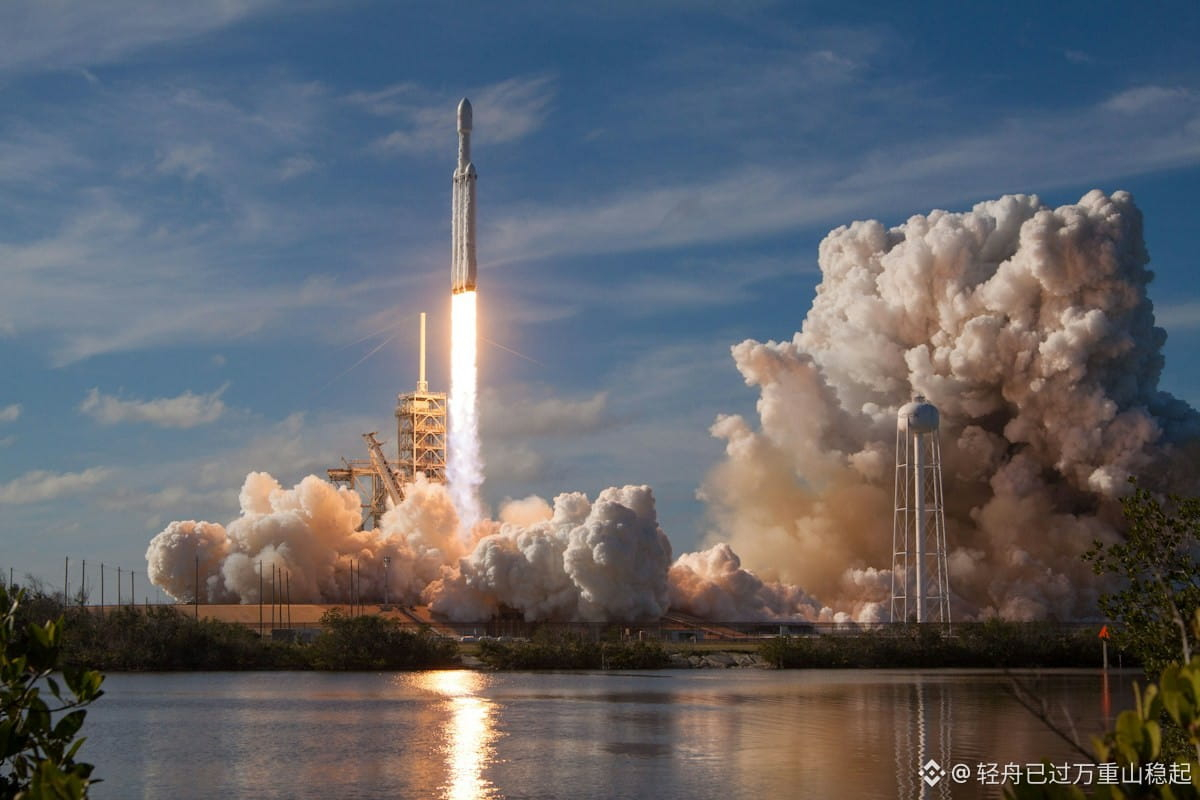
The 7th China Space Conference has just revealed a major development: China’s crewed lunar landing program is launching an uncrewed flight-rehearsal plan for the Lanyue lander! Many people wonder: back in the day, the U.S. Apollo program did it all in one shot with a single Saturn V. Now NASA’s Artemis program plans to refuel Starship 15 times in space, yet keeps facing delays. So why has China come up with a novel plan to launch the 26-ton Mengzhou spacecraft and the 26-ton Lanyue lander separately on two Long March 10 rockets, then rendezvous and dock in lunar orbit 380,000 kilometers away? The answer is that modular systems engineering outmaneuvers a single colossal vehicle: by using proven engines in parallel and highly precise orbital rendezvous, it entirely sidesteps the combustion instability of ultra-high thrust and the deadlock of cryogenic propellant transfer in deep space. Lanyue also maximizes payload by jettisoning its propulsion module midway through the mission and making the lunar module serve two purposes. This is much like Web3’s paradigm shift from struggling to boost TPS on a single chain to modular blockchains and cross-chain collaboration with Layer 2: the real key to engineering success has never been brute force at a single point, but architectural decoupling and efficiency reengineering! Which approach do you think is more promising? $BTC $BNB $ETH #SIREN #BTC #Crypto #AI #Web3
Join global crypto users on Binance Square
⚡️ Get latest and useful information about crypto.
💬 Trusted by the world’s largest crypto exchange.
👍 Discover real insights from verified creators.
Email / Phone number