
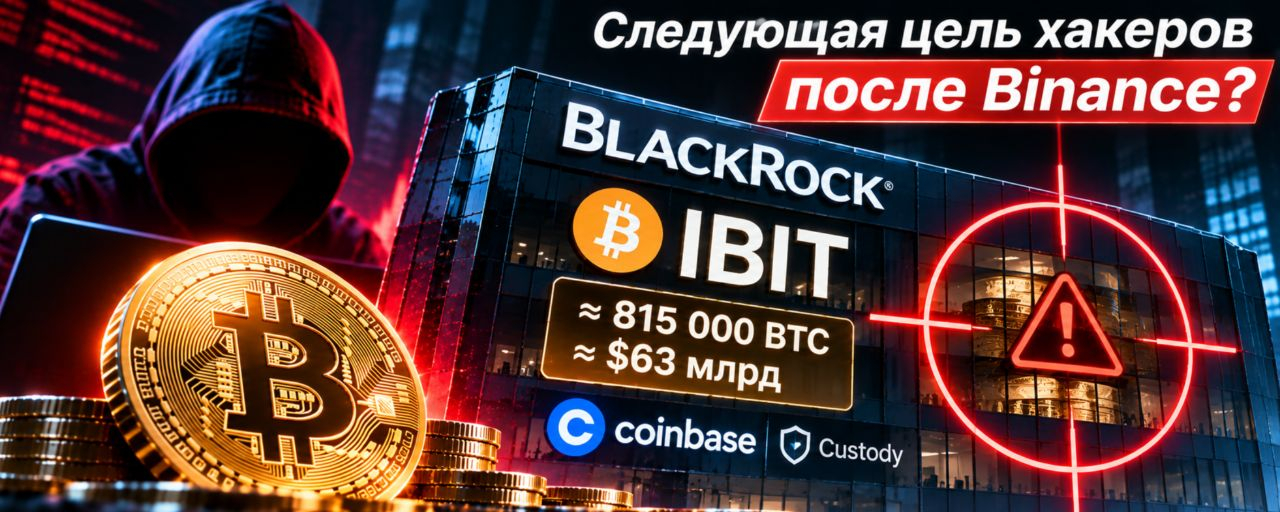

IBIT manages approximately 815,000 bitcoins worth around $63 billion. The fund’s primary custodian is the American cryptocurrency exchange Coinbase. Wang Yishi believes that concentrating such a large amount with a single digital asset custodian makes it an attractive target for malicious actors.
The founder of OneKey explained that hackers do not need to gain direct access to wallet private keys to steal cryptocurrency. They may try to breach the transaction-signing infrastructure and exploit the privileges of employees or internal services responsible for transferring funds.
Wang Yishi calculated that if $BTC $6 billion were stolen (as in the Binance case), the IBIT fund would lose about 9.5% of its assets. At its current valuation, that amounts to approximately $4 per share. The expert cited limited insurance coverage as an additional risk: BlackRock does not insure IBIT’s bitcoins separately. Coinbase has $320 million in insurance coverage, which applies to all of the company’s clients, not just the fund’s assets.
If the stolen bitcoins cannot be recovered, and payouts from the custodian and insurers prove insufficient, the remaining losses could have a significant impact on the price of IBIT shares. Unlike almost all stablecoins, stolen bitcoins cannot be frozen by a decision from a centralized issuer, Wang Yishi emphasized.
The growing volume of the leading cryptocurrency held by major funds will prompt hacking groups to pay increasing attention to custodial service infrastructure, the businessman believes.
Earlier, analysts at the TRM Labs platform named the North Korean group TraderTraitor as the suspected organizer of the attack on the Binance crypto exchange. Researchers linked the attackers’ actions to previous operations by hackers from North Korea.