
There’s a saying in the crypto world that I used to hate hearing: Making money isn’t the real skill; being able to keep it in your account is. I didn’t realize how painfully true it was until I gave almost all my profits back.
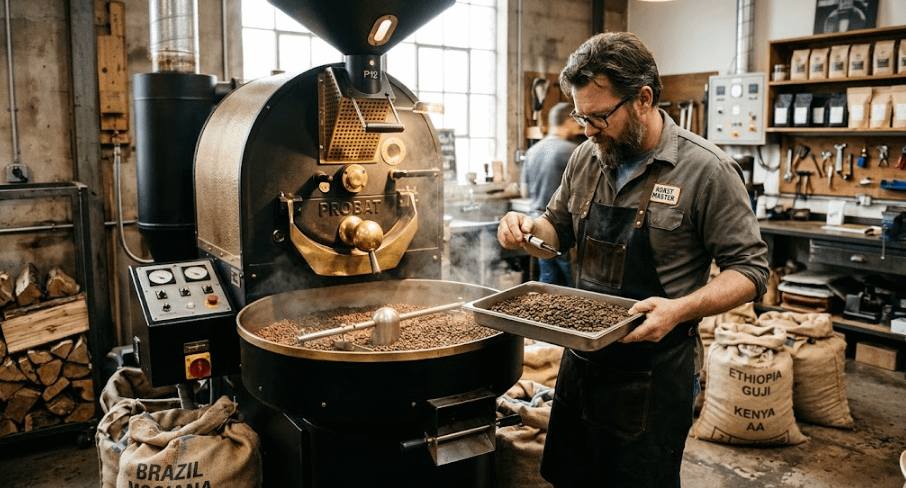
I’m 34 this year and work as a coffee roaster. When I first started out, the pay wasn’t great. I spent every day by the machines, studying where the beans came from, their moisture content, and roasting curves. Later, I saved up to buy my own equipment and began supplying beans to a few cafés. As the orders gradually picked up, I finally earned my first real nest egg.
In 2020, a customer who often came into the shop started talking to me about Bitcoin. I knew absolutely nothing about blockchain at the time. I just thought it sounded interesting, so I used a little spare cash to buy some Bitcoin on the spot market. I never expected to catch a rally, and the balance in my account ended up exceeding several months of hard-earned income. Honestly, that feeling can easily go to your head. I started thinking I might have found a faster way to make money than roasting coffee.
Later, I started trading contracts. My first few trades went well, and I grew more and more confident in my own judgment. When prices rose, I was afraid of missing out; when they fell, I saw a buying opportunity. If I lost money, I added to my position—and I even borrowed money to buy the dip. At first, I just wanted to earn a little extra income. In the end, I was waking up and checking the charts before anything else, and even while baking, I couldn't stop thinking about my account.
What finally brought me to my senses was a market reversal. I had an open position, and the price kept falling, but I thought the more it dropped, the better a bargain it was. The price didn't rebound after my first add-on, so I added again. By the time my losses had grown, I realized I had very little room left to maneuver. At the same time, my baking machine broke down and needed replacement parts. I stared at the repair quote for ages, unsure what to do—not because I didn't know how important the machine was, but because trading had left me so short on cash.
That was when I finally understood: I wasn't investing; I was betting with my real life. Coffee beans won't roast better just because I'm in a hurry, and the market won't suddenly rebound just because I've lost money.
Later, I took a break and reorganized my debts, living expenses, and business funds, focusing first on getting my main source of income back on solid footing. When I returned to the market, I stopped placing trades on gut feeling and set myself a few firm rules: check the trend first, then look at trading volume and key support and resistance levels; if there's no clear entry signal, wait—don't chase a big bullish candle; set a stop-loss before every trade, then determine the position size based on the stop-loss distance, and never try to ride out losses by repeatedly adding to a position; when the market reaches my target, take profits in stages instead of imagining every trade will hit the exact top.
Another important change: I used to want to open another trade right away after a loss to prove myself. Now, if I have two losing trades in a row, I close the app and wait until I've calmed down before reviewing them. During the review, I look not only at profits and losses, but also at whether my reasons for entering the trade still held up, whether I followed my stop-loss, and whether I rushed in because I was afraid of missing out.
This approach hasn't made me rich overnight, and my account hasn't recovered particularly quickly, but at least it no longer swings wildly like it used to. Over time, I paid off some of my earlier debt and opened a small baking studio of my own. I wouldn't say I'm rolling in money now, but when a piece of equipment breaks, I can get it repaired promptly, and I don't have to worry about everyday expenses. That sense of security feels more real than suddenly seeing a string of extra digits in my account.
I've come to feel that trading is a bit like baking. Beans need the right temperature and enough time—you can't just turn up the heat because you're in a hurry to get the batch done. Trading is the same: position sizing, stop-losses, and patience are all essential. The most expensive lessons in the market often don't come from getting the direction wrong, but from refusing to stop even when you know you're wrong.
If you're also stuck repeatedly chasing rallies and selling off in a panic, you're welcome to join our group and share ideas. We can keep an eye on trends, trading volume, and key levels, and talk about position management and reviewing trades. We don't expect to win every trade. Let's focus on keeping a good rhythm and protecting our capital first—that's what gives us the confidence to keep going.