Gold has broken down and fallen. At what level could be a good opportunity to buy the dip?
1. Liquidity-driven selling
A sharp drop in U.S. tech stocks triggered liquidity needs among some investors, prompting them to sell highly liquid assets such as gold to meet margin calls or cover losses in other assets.
2. Pressure from inflation and interest rate expectations
After a slight pullback, crude oil prices continued to rise, pushing up inflation expectations and expectations for Fed rate hikes. If this further drives up Treasury yields and real interest rates, it will increase the opportunity cost of holding gold and put pressure on gold prices.
Outlook:
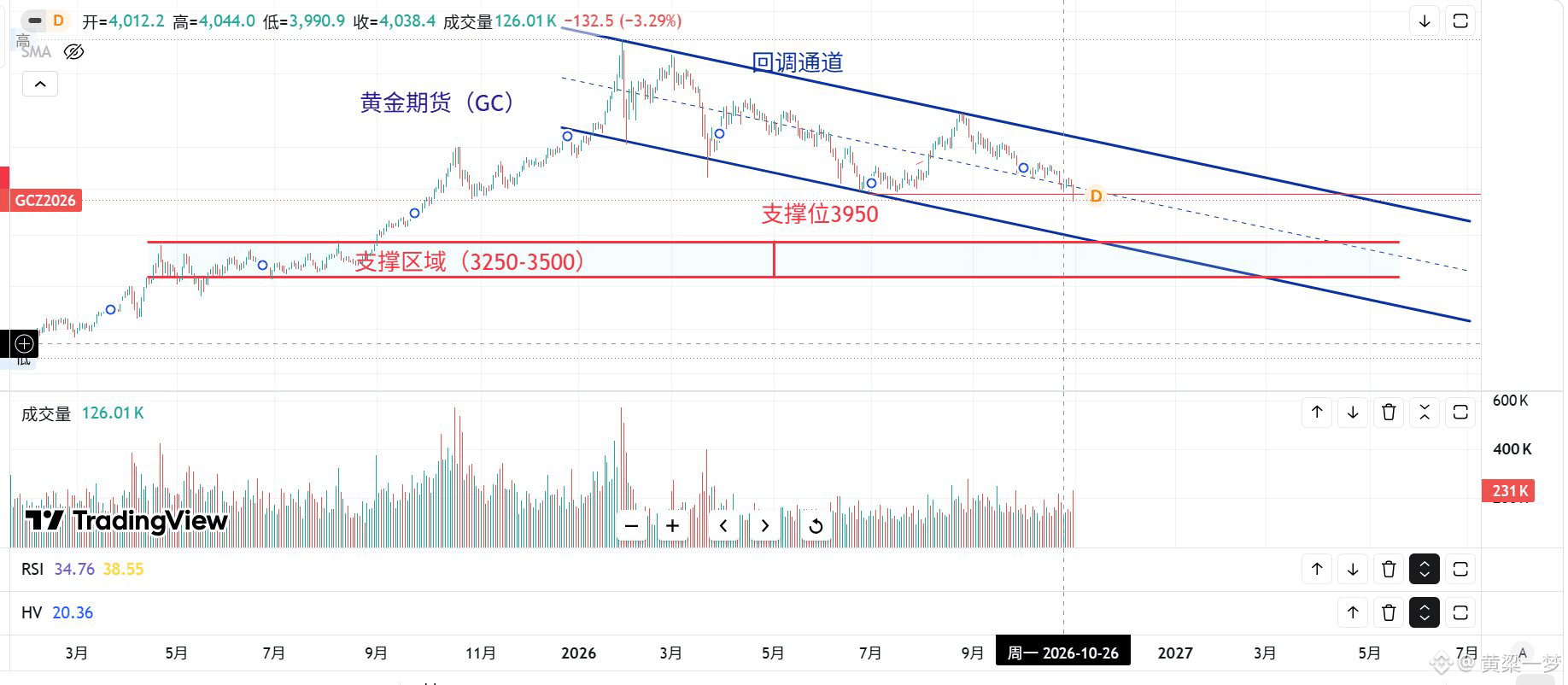
In terms of volume and price action, gold saw a sharp, high-volume decline on October 30, indicating significant selling pressure in the market.
From a macro perspective, the medium-term correction in U.S. tech stocks may not be over, and the risk of further declines is high. This could trigger additional liquidity-driven selling.
Meanwhile, tensions in the Middle East remain high, and markets are concerned that U.S.-Iran tensions could escalate further. If the United States takes new military action against Iran after the midterm elections, crude oil prices could rise further, exacerbating pressure from inflation and interest rate expectations.
Overall, gold still faces considerable downward pressure in the short term. This breakdown is more likely to be genuine than a false one.
So, where is the next important support level for gold?
Historically, $3,250–$3,500 was an important consolidation zone where gold traded sideways for several months from April to August last year, so this area should provide fairly strong support.
Gold has now fallen below $3,950. There is little historical trading support above $3,500, so I think gold could fall further to test the $3,250–$3,500 zone, while also reaching the lower boundary of the correction channel.
Trading strategy:
I plan to wait for gold to retreat to the $3,250–$3,500 zone before gradually building a position.
If a clear signal that the decline has stopped appears—for example, a high-volume rebound, bullish volume-price divergence at the lows, or bullish divergence on the daily RSI—I will consider increasing my position.
$XAU