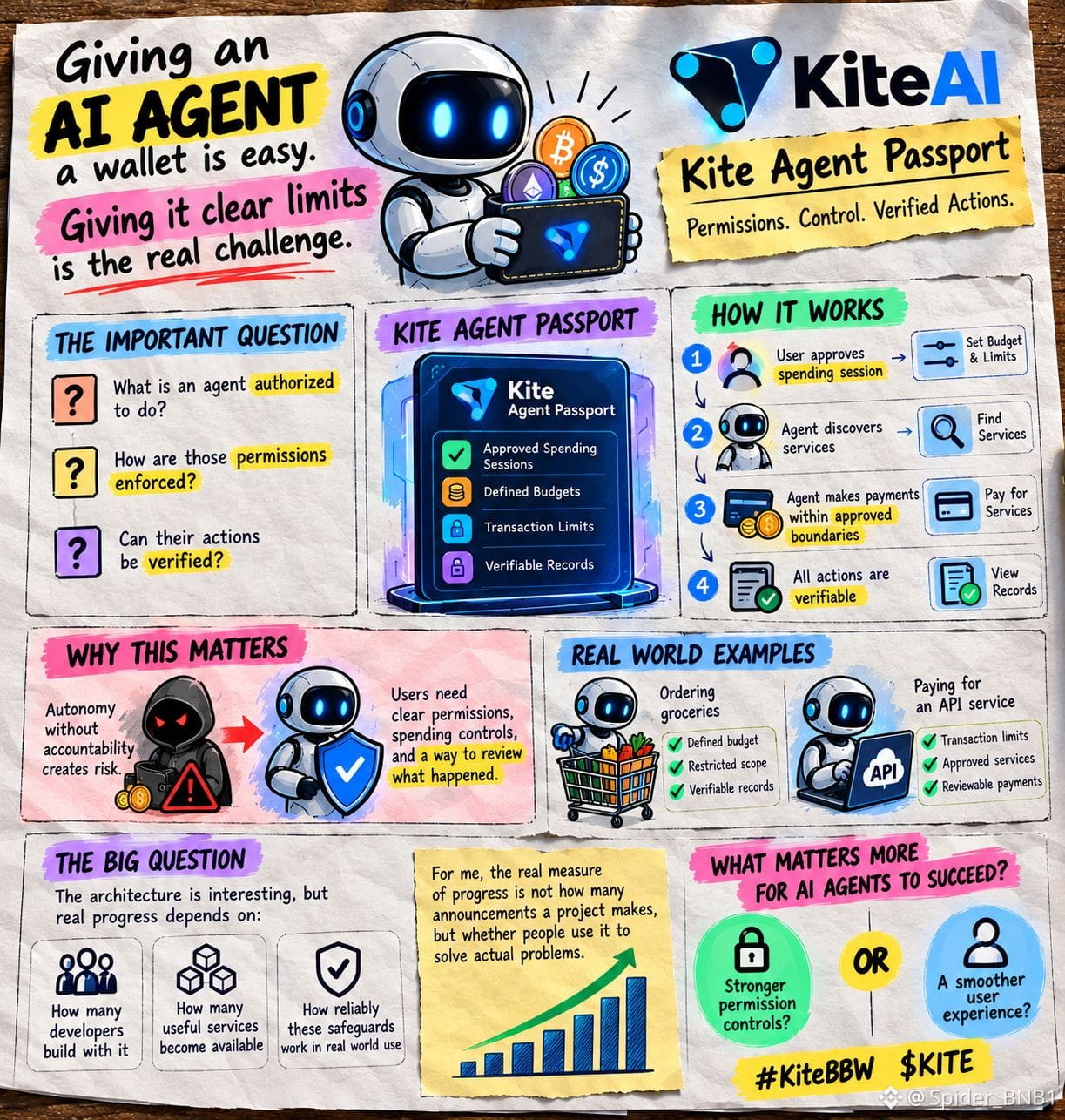

Giving an AI agent a wallet is easy. Giving it clear limits is the real challenge.
Most conversations about AI agents focus on what they can do. I think the more important question is what they are authorized to do, how those permissions are enforced, and whether their actions can be verified.
This is what interests me about @GoKiteAI and Kite Agent Passport. It lets users approve spending sessions with defined budgets and transaction limits, while agents can discover services and make payments within those approved boundaries.
The design matters because autonomy without accountability creates risk. Users should not have to trust an agent blindly with their funds. They need clear permissions, spending controls, and a way to review what happened.
Imagine an AI agent ordering groceries or paying for an API service. A defined budget, restricted spending scope, and verifiable payment records could make that process more practical without requiring approval for every individual transaction.
My main question is adoption. The architecture is interesting, but I want to see how many developers build with it, how many useful services become available, and how reliably these safeguards work in real-world use.
For me, the real measure of progress is not how many announcements a project makes, but whether people use it to solve actual problems.
What matters more for AI agents to succeed: stronger permission controls or a smoother user experience?
#KiteBBW $KITE
$牛来
$AIOT