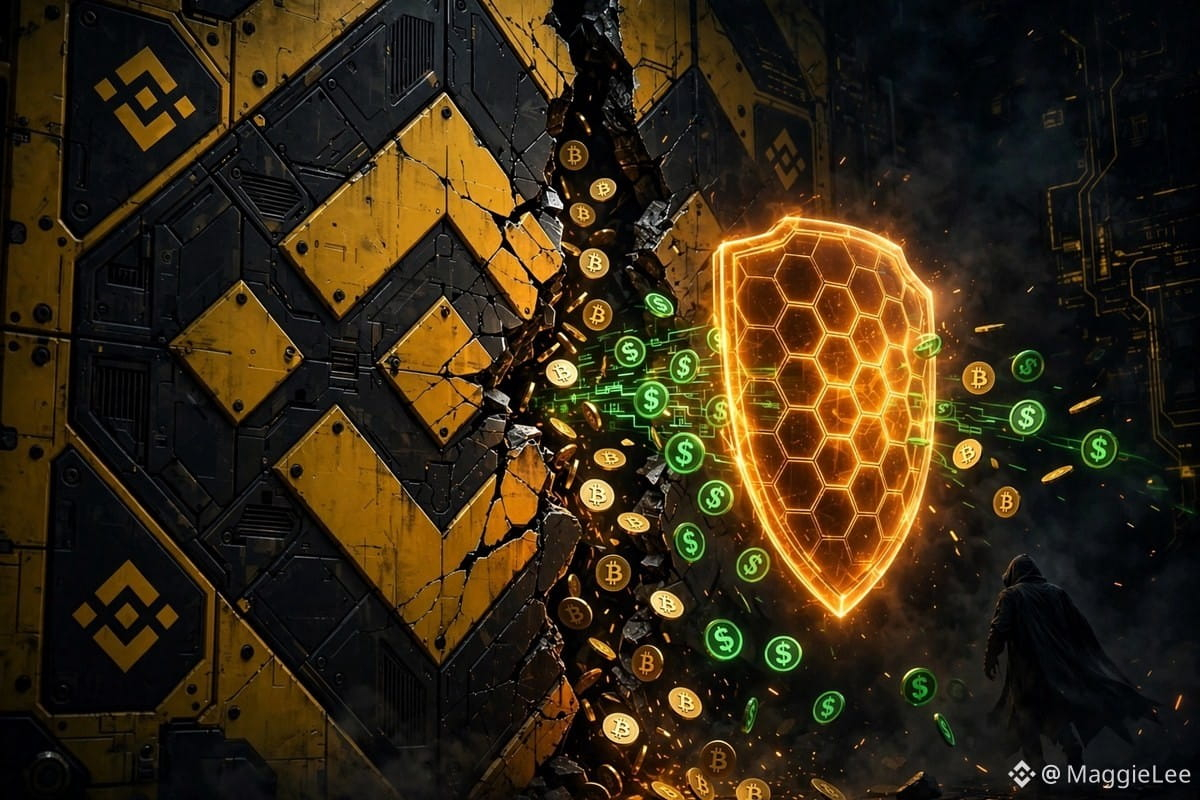
Hackers made off with $6.3 billion in 20 minutes; Binance replenished 90% within 48 hours—today is a vote of confidence for the crypto world.
First, the facts: On 10-29, about $6.3 billion was drained from hot wallets across ten chains in roughly 20 minutes (TRM Labs puts the figure at $6.36 billion); 100 executives watched helplessly as the losses ballooned from $1 billion to $6 billion. Tether and Circle froze about $2.6 billion in stablecoins within an hour, bringing the total frozen on-chain to about $3 billion. The hackers still have around $2.4 billion, including about 18,270 BTC, which they are moving in small batches of 1,000 or 100.
Third update, 10-31: The replenishment rate rose from 80% to 90%, and reserves now cover 100% of ten major tokens: BTC, ETH, USDT, BNB, SOL, USDC, XRP, USD1, RLUSD, and ZEC. Where did the money come from? SAFU, the contract insurance fund, and company treasury together set aside $6.34 billion. The platform is absorbing all the losses; users won't bear any of them.
But “replenished” doesn't mean “recovered”—that 90% was bought back with Binance's own money, not wrested from the hackers. The trust is in Binance's balance sheet, not the hackers' conscience. The FBI has pointed the finger at North Korea's TraderTraitor; the stolen assets are being converted into ETH to launder them. The cat-and-mouse game isn't over.
The real test is today: withdrawals resume in phases on 11-1. Whether they go smoothly, and whether there's a rush of withdrawals that day, will be more telling than any statement. Once the zero-knowledge proof of reserves is released on 11-3, whether the numbers actually add up will be the real proof.
So don't rush to declare either “Binance is amazing” or “Binance is finished.” Keep an eye on two things: the length of the withdrawal queue, and where the hackers' $2.4 billion goes.
$BNB $BTC $ETH
#币安 #黑客事件 #SAFU #提币恢复 #Proof of Reserves
Personal research; not investment advice.