
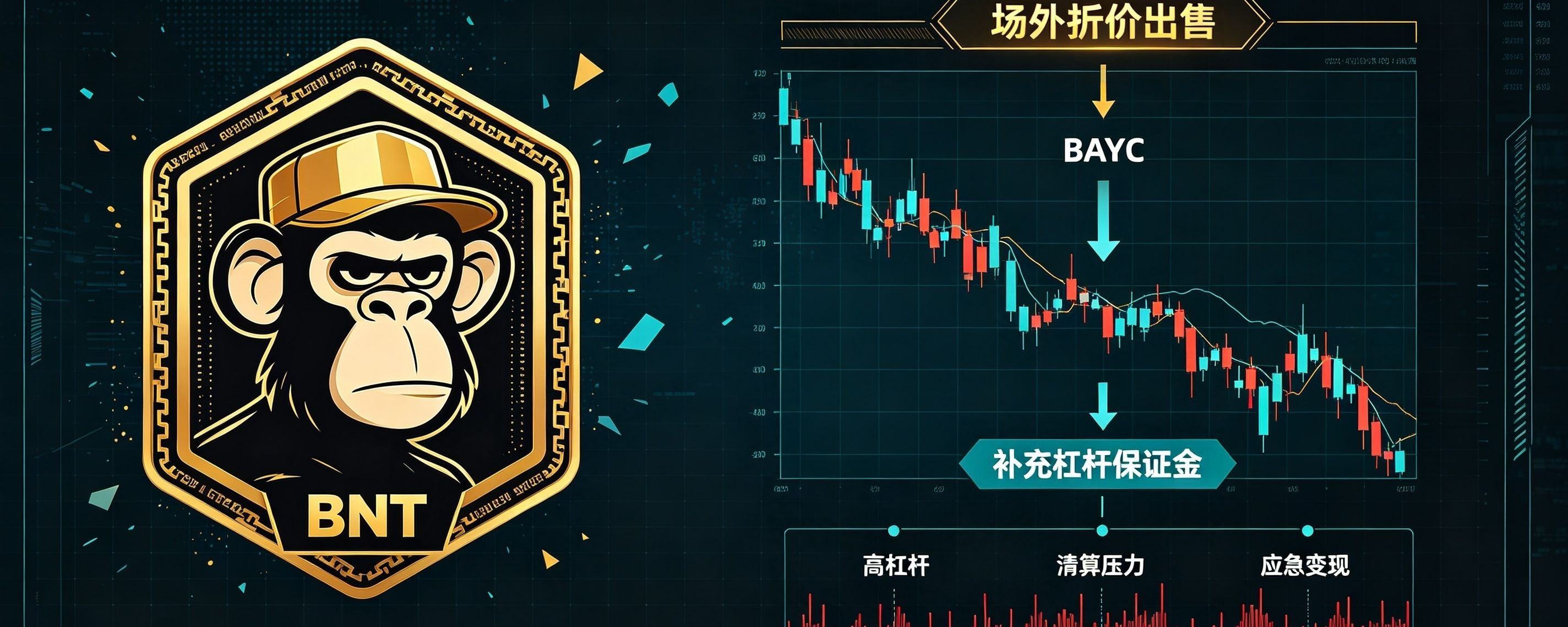

Once one of the best-known whales in the BAYC Bored Ape ecosystem, Machi Big Brother (Jeff Huang) is reportedly selling BAYC again. Unlike sales through public NFT listings on platforms such as OpenSea and Blur, this time he is offloading blue-chip Apes through an over-the-counter deal. It also confirms that he continues to face margin pressure from highly leveraged positions: the Bored Apes that were once collectibles are increasingly being liquidated to keep his contract positions alive.
Looking back at the NFT bull market, Machi Big Brother was one of BAYC’s most important early holders. He once accumulated dozens of Bored Apes in a single purchase and gifted BAYC NFTs to celebrities in the Chinese-speaking entertainment industry multiple times, directly helping Bored Apes break into the mainstream in Chinese-speaking communities. He was one of the key figures behind BAYC’s rising popularity. At its peak, his wallet held large amounts of BAYC, MAYC Mutant Apes, and APE tokens, making him a signature whale in the NFT market. Now, however, the market environment has reversed, and his trading logic has completely changed: BAYC is no longer a long-term collectible, but an “emergency reserve” that can be quickly liquidated to top up margin.
Compared with listing on the open market, selling BAYC over the counter has some clear advantages: it avoids trading slippage on platforms and eliminates the need to wait for a sale at the floor price. When funds are urgently needed, assets can be converted quickly, making this approach suitable for situations where margin must be topped up immediately to prevent a futures position from being liquidated. But the drawbacks are also significant: OTC trades often require steeper discounts, and the final sale price may well fall below the current floor, further magnifying losses. Past on-chain records show that Machi Big Brother has sold BAYC at a loss several times, with some losses approaching 90%. He spent tens of ETH on some purchases, only to eventually offload them for single-digit amounts of ETH.
The root cause behind this OTC sale is once again his long-standing high-leverage ETH long strategy. Monitoring on several previous occasions has shown that whenever ETH pulls back and his margin falls short, he sells blue-chip NFTs from his collection to raise funds and add to his long positions on Hyperliquid. This creates a cycle of “price decline → liquidation risk → selling NFTs to top up margin.” Despite being liquidated several times, he continues to maintain high exposure, making this an extremely risky strategy.
This event also reflects the structural difficulties facing the blue-chip NFT sector as a whole. BAYC, which carried social and collectible value during the bull market, is seeing more and more whale holders choose to exit at a discount, while liquidity continues to shrink. When whales sell blue-chip NFTs in bulk at discounted prices, they also send a persistent bearish signal to the market, undermining the confidence of ordinary holders.
For market participants, this case is another wake-up call: even top-tier blue-chip NFTs can suffer sharp declines in valuation. And when high leverage is used continuously, with collectibles serving as collateral, a sustained move in the opposite direction can force investors to sell high-quality assets at a deep loss, setting off a downward spiral in asset value.