
An incident in the crypto world is making the community rethink how to protect assets on the blockchain.
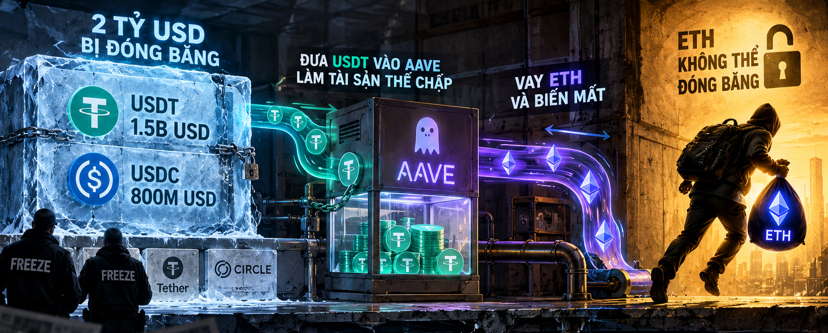
After billions of dollars in USDT and USDC were frozen, many people thought the hacker had run out of ways to escape.
But the story isn’t that simple!
🔍 The notable trick lies in DeFi
According to information shared, the hacker took advantage of the Aave protocol:
* Used the stolen USDT as collateral.
* Borrow a large amount of ETH from the protocol.
* Move it into assets with different control mechanisms.
* When USDT is frozen, the borrowed ETH is not automatically recovered.
This is an example of how freezing one type of asset does not mean controlling all fund flows on the blockchain.
However, note that the loan still exists and remains subject to the protocol’s risk management and liquidation mechanisms. We cannot conclude that the hacker has escaped the debt or that Aave has definitely suffered a loss.
⚠️ A BIG LESSON FOR THE CRYPTO MARKET
1. For businesses and exchanges
It’s not enough to protect hot and cold wallets. They must also monitor all on-chain fund flows, control access, and develop an incident response plan.
2. For individual investors
* Don’t keep all your assets on one exchange.
* Use a cold wallet to store BTC long-term.
* Enable 2FA and Passkeys, and maintain a trusted withdrawal address list.
* Don’t connect your wallet to DeFi websites from unknown sources.
* Never reveal your 12/20/24 recovery words.
💡 MY TAKE
In crypto, blockchain technology can be transparent, but that doesn’t mean assets are always safe.
A transaction can be confirmed in minutes, but recovering stolen assets can take months—or may even be impossible.
Investors shouldn’t focus only on whether BTC will rise to $100,000 or fall to $70,000.
First, ask yourself:
If an exchange runs into trouble tomorrow, 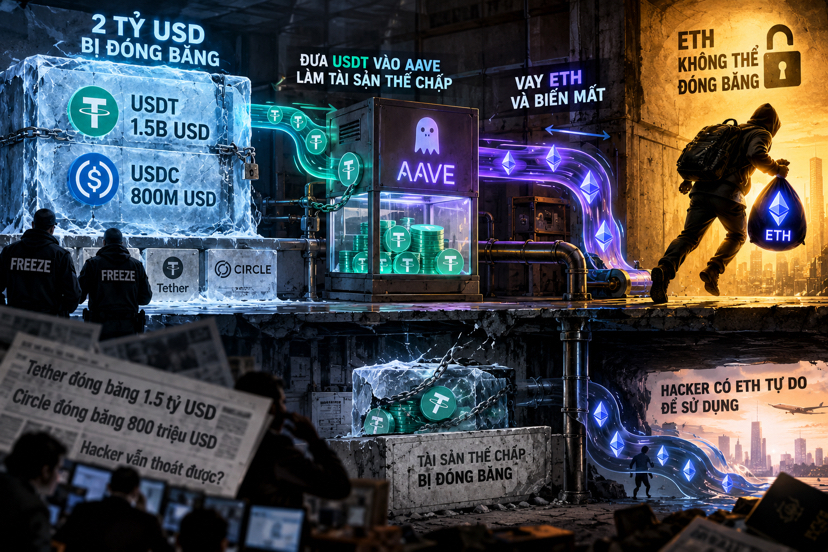 will I still be in control of my Bitcoin?
Crypto investing isn’t just about making profits. Protecting your assets is what matters most!
#BTC #BINANCE #DEFI #AAVE #CRYPTOSECURITY #BITCOIN