📰 Why will Samsung’s increased foundry investments in the U.S. and South Korea shake up the semiconductor industry’s second half?
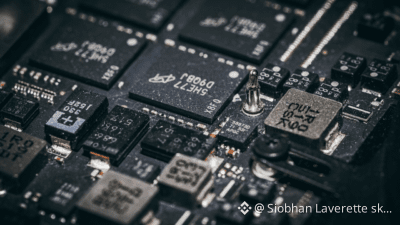
Samsung Electronics has announced increased investment in its foundries in the United States and South Korea. This isn’t simply about spending more money—it’s about securing a chokehold on future AI and HPC (high-performance computing) markets. Put simply, Samsung is using geopolitics to navigate the technology race, directly affecting how global chip production capacity is allocated.
Why does this news matter?
The fundamental reason is that Samsung isn’t just addressing a weakness; it’s playing its biggest card: geopolitics. The global semiconductor industry is shifting from “technology iteration” to “capacity alignment.” The U.S. in particular wants to use the CHIPS and Science Act to keep advanced manufacturing capacity at home. By proactively increasing investment in the U.S. and South Korea, Samsung is not only “dangling a carrot” in front of the U.S. but also keeping its own options open. This means the balance of power in the global semiconductor market is being reshuffled. A technological edge alone is no longer enough; whoever controls production capacity has the loudest voice.
The market impact can be seen on several levels. First, in the short term, this could boost the share prices of U.S. semiconductor equipment makers, such as Applied Materials and Lam Research, because Samsung’s capacity expansion means it will need more equipment. Second, over the long term, if the U.S. continues to restrict equipment exports under the CHIPS Act, Samsung may be forced to accelerate localization, which would be a major positive for related industries in South Korea. A similar historical example is the U.S. restrictions imposed on ASML’s lithography machine exports to China in 2022, which ultimately pushed China to accelerate domestic substitution.
Investment outlook
💡 This means that more of the leverage in the future AI computing-power race could end up in the hands of Japan and South Korea, potentially providing an indirect boost to ETH. In the short term, however, the market is more focused on how the U.S. CHIPS Act is implemented in practice. If the Act is undermined, Samsung’s expansion plans could amount to little more than rhetoric. This outlook would no longer hold if the U.S. suddenly relaxed its restrictions on equipment exports.
$BTC $ETH #BTC #ETH
This article is not sponsored by any project, and the author does not hold any of the assets mentioned.
⚠️ This is not investment advice. Forecasts are for reference only.