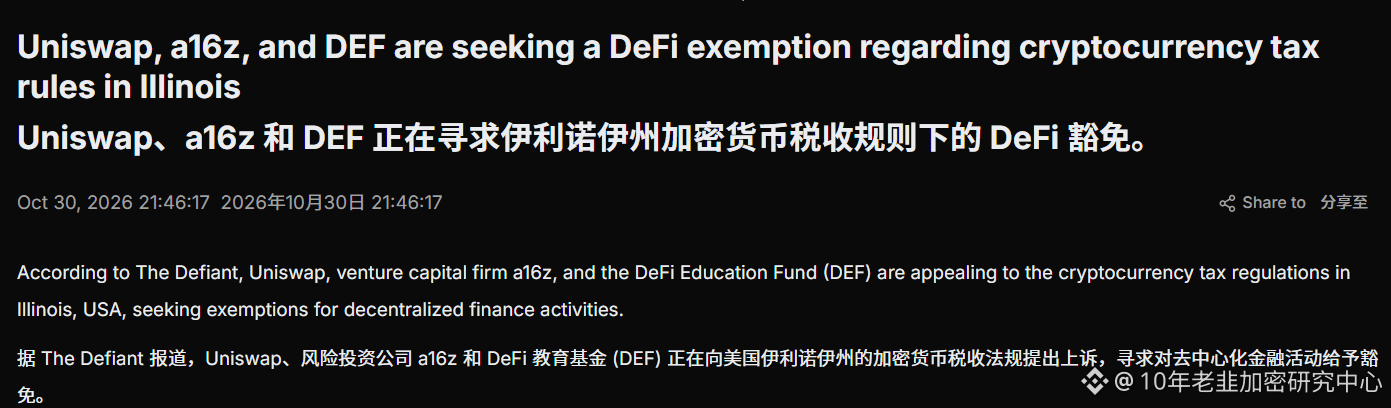
#uniswap与a16z寻求伊利诺伊州defi税收豁免
【Follow Old Chive, build your wealth】
The U.S. crypto industry is once again locked in a tax debate!
On October 30, Uniswap Labs, renowned investment firm a16z, and the DeFi Education Fund jointly submitted comments to the U.S. state of Illinois, calling for changes to digital asset tax rules to prevent certain DeFi activities from being taxed.
📊 What impact could this have on crypto tokens?
$UNI : Uniswap is a direct participant in this initiative. Clearer tax boundaries for DeFi could reduce uncertainty for protocol operations and users.
ETH: Ethereum is a key infrastructure layer for DeFi. Improvements to the regulatory environment for DEXs, lending, and liquidity protocols could indirectly support the growth of the ETH ecosystem.
$ARB 、$OP : These Layer 2 networks host a large amount of DeFi activity, and tax rules for cross-chain and on-chain interactions will also affect the cost of using ecosystem applications.
Cross-chain sector: Clear exemptions for wallet transfers and bridging activities could reduce tax-related uncertainty for users conducting cross-chain transactions.
📌 What are they mainly objecting to?
1️⃣ Wallet transfers and cross-chain bridges should not be taxed twice
The organizations argue that users should not be taxed based solely on the value of their assets when withdrawing them from an exchange to a self-custody wallet or transferring them through a cross-chain bridge.
2️⃣ They oppose requirements for protocols to record users’ private keys
DeFi protocols typically do not custody users’ assets and cannot access their private keys. Requiring protocol operators to keep records of private keys would pose security risks and could also conflict with the design principles of non-custodial architecture.
3️⃣ The 0.2% digital asset tax is at the heart of the dispute
Illinois previously passed the Digital Assets Tax Act, setting a 0.2% tax rate on certain business activities conducted by digital asset brokers. In September, the state tax department published a draft of the implementing rules and sought public feedback. With this submission, the industry is seeking to explicitly exclude DeFi protocols, front-end interfaces, and certain self-custody and cross-chain activities.