


🕵️ $6.3 BILLION: ARE THE HACKERS ALREADY GETTING AWAY? WHO MANAGED TO FREEZE THE CRYPTO, AND WHO DIDN'T?

The first part of this story made the crypto market question Binance's security.
But now an even more interesting question arises: what happened to the billions stolen in the hack?
And this is where the real chase begins.
⏱️ 20 minutes that changed everything
According to analytics firm TRM Labs, the attackers moved around $6.36 billion through Binance wallets across several blockchains.
The most astonishing part is that most of the transactions took place in about 20 minutes.
This doesn't look like an ordinary theft, where the perpetrator gradually withdraws the money.
Judging by the speed and coordination of the transactions, the operation had been planned in advance.
🧊 $3 BILLION was stopped!
Once the attack was detected, a massive effort to track the funds began.
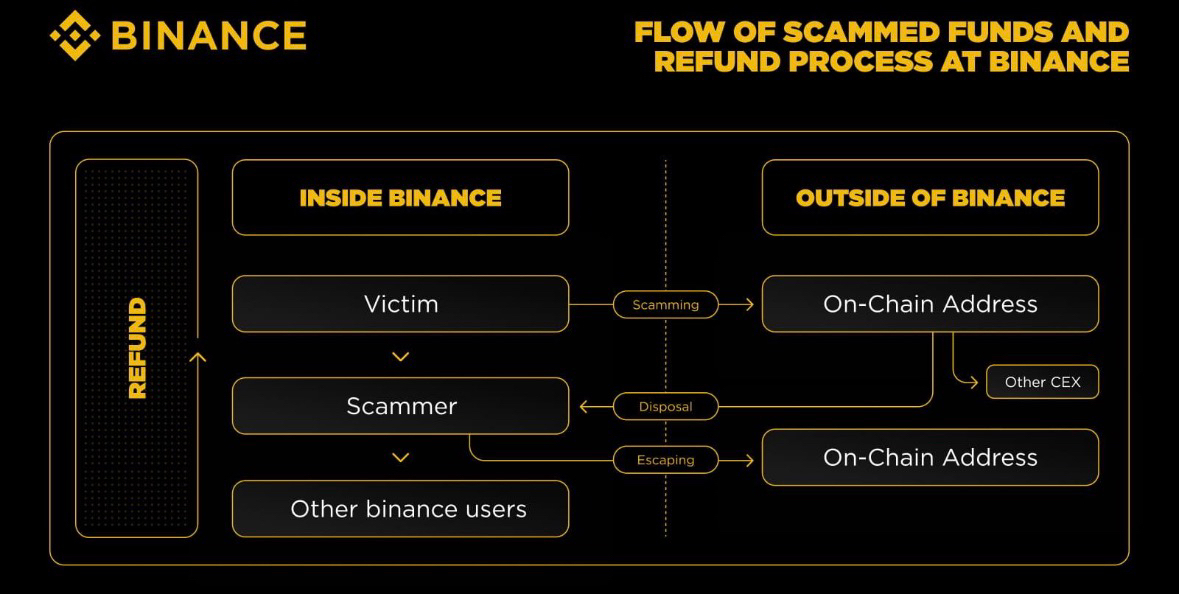
Crypto exchanges, analytics firms, and stablecoin issuers joined the operation.
Tether, Circle, and other market participants helped freeze assets linked to the attack.
But there's an important caveat.
Not all cryptocurrencies can be frozen in the same way.
For example, USDT and USDC have issuer-level freezing mechanisms.
But ordinary Bitcoin cannot simply be switched off at a company's command.
That's exactly why some funds could be stopped while others continued moving.
🇰🇵 Does the trail lead to North Korea?
Analysts at TRM Labs and Chainalysis link the attack to the TraderTraitor group, which is associated with North Korean hacking organizations.
In their assessment, the attack methods resemble previous major operations, including the 2025 Bybit hack.
But Binance has not officially named the perpetrators yet.
🔄 How are criminals trying to cover their tracks?
According to Chainalysis, after the theft, funds began moving en masse between numerous addresses.
The money wasn't simply sent to a single wallet.
It was split up, transferred between addresses, and moved through various transactions, making it harder to track.
Analysts have noted signs of an automated money-laundering scheme.
It turns into a real race: some try to muddy the trail, while others try to reconstruct the transaction chain.
⚠️ What happens next?
Binance has promised to compensate for confirmed losses using its own funds.
The company is also preparing an update to its Proof of Reserves system, which allows users to verify that reserves are available.
Withdrawals have been temporarily suspended pending the completion of security checks. Binance expected to restore them within approximately 40–42 hours of the management announcement.
But the most interesting question remains: will the crypto industry be able to recover the remaining assets and identify those involved in the attack?
🧞 Good Genie has a question
Imagine you sent Bitcoin to another wallet, then realized a few minutes later that you'd entered the wrong address.
In a traditional banking system, you can sometimes try to cancel a transfer.
On the blockchain, it's much more complicated.
Do you think major crypto exchanges should be able to jointly freeze suspicious funds, or would that give them too much power over other people's money?
💬 There's certainly plenty to debate here.
Good Genie continues to follow the investigation. 🔮