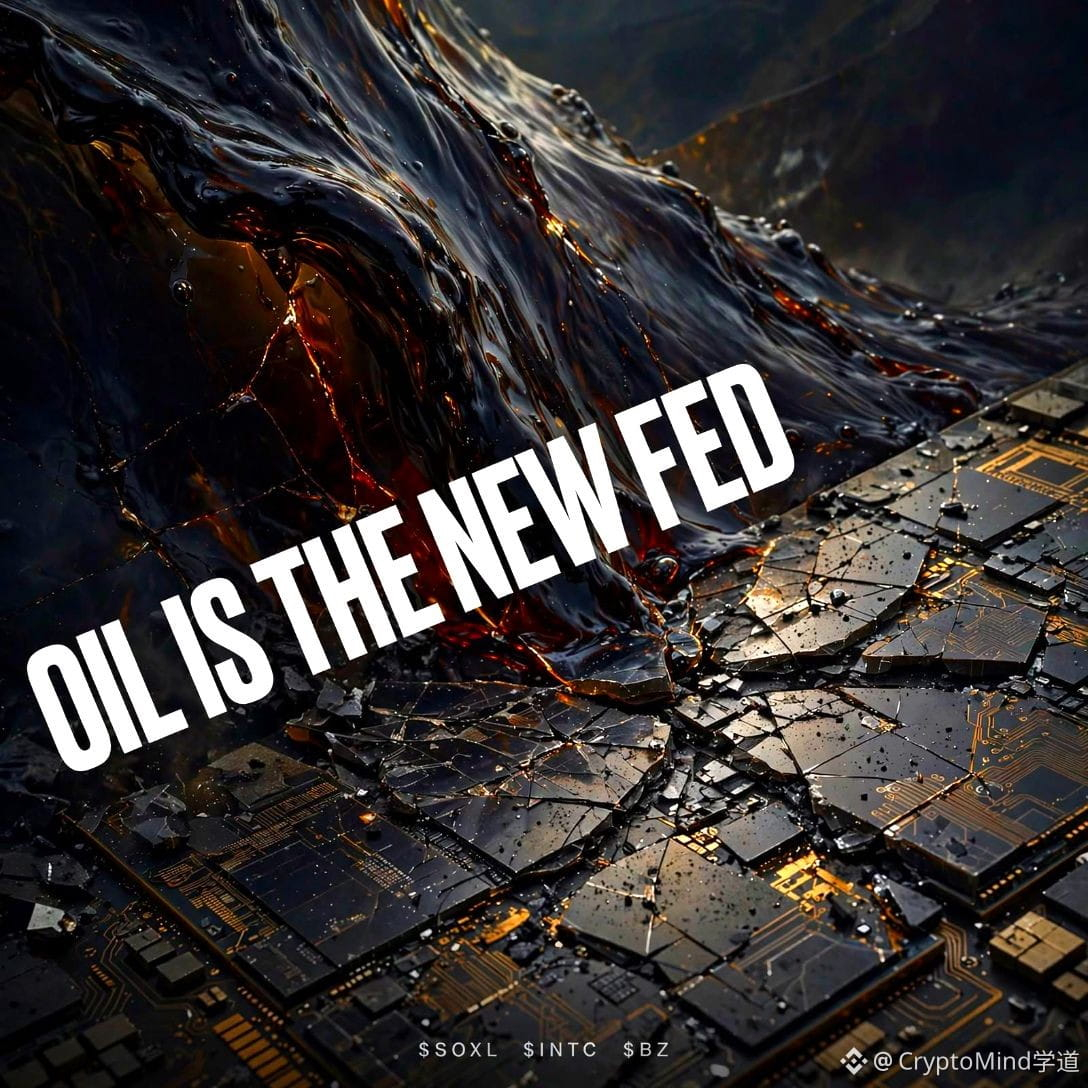
Brent crude is quietly doing the Fed’s tightening, and the semiconductor complex is taking the collateral damage... 📝
the macro mechanism is a classic supply-side inflation shock cascading into the cost of capital. Energy prices have broken out, with Brent pressing above $113 as geopolitical supply disruptions persist. This forces the inflation narrative to reprice higher, pushing December Fed rate-hike odds back onto the table and keeping the 10-year Treasury yield anchored near the 5% threshold.
High-multiple semiconductors are the most sensitive assets to this regime. They are long-duration growth instruments, and when the discount rate stays elevated, their present value gets compressed. The AI capex cycle is now facing a funding-cost wall. The narrative of "AI return skepticism" is merely the spark; the structural fuel is the bond market refusing to ease.
$SOXL has been gutted, collapsing over 43% in October as leveraged longs capitulated. The RSI sits at 31, reflecting exhaustion but not yet a structural floor. $INTC was crushed to an RSI of 18 after a guidance shock exposed the PC-market cracks, showing how quickly idiosyncratic weakness gets amplified when the liquidity backdrop is hostile.
Meanwhile, $BZ is the only asset in this trio with pricing power, sitting at an RSI of 80 near $115. Capital is rotating from growth into energy and value.
If energy-driven inflation keeps the Fed boxed in, which asset class actually provides real protection?