
Binance demonstrates resilience after hack.
The cryptocurrency market faced the most significant security incident in its history. The hack involving Binance moved approximately $6.3 billion, with suspected involvement by Lazarus.
The attack affected various assets, including BTC, ETH, XRP, and USDT. The investigation points to a possible compromise of a DevOps engineer’s computer, which may have allowed the attacker to exploit pre-signed transaction authorizations and insert the execution of an unverified contract.
Despite the scale of the incident, there are important signs that Binance managed to contain a significant portion of the damage.
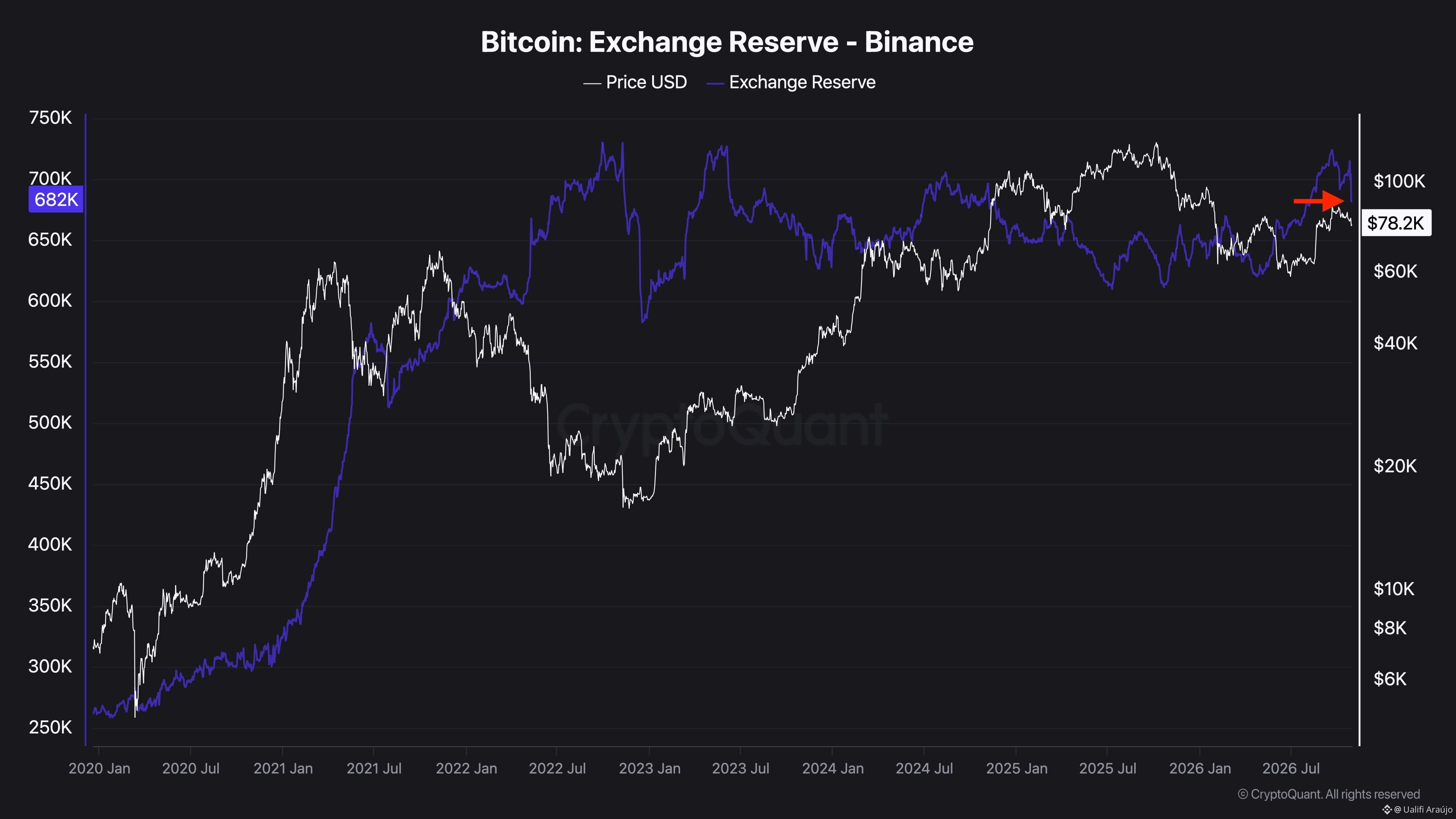
The exchange froze approximately $3 billion in assets. Another relevant point is the behavior of the platform’s reserves. Even amid large asset movements, reserves saw relatively moderate declines:
• BTC: -3.1%, with more than 682,000 BTC remaining.
• ETH: -8.5%, with approximately 3.3 million ETH.
• XRP: -8%, remaining at 2.47 billion units.
• USDT: -6.3%, with approximately US$ 34,1 billion.
The recorded movements included withdrawals of 18,279 BTC, 185 million XRP, and $1.67 billion in USDT. In the case of Ethereum, 246,840 ETH moved in two waves.
Even in the face of an incident of this magnitude, the data presented on its reserves do not currently indicate a scenario of widespread impairment of the platform’s liquidity.
In addition, Binance stated that it will use its SAFU fund and its own resources to cover any potential losses, reaffirming its commitment to protecting users.
The incident is another reminder that security and risk management are essential in the crypto market. However, the ability to absorb a shock of this magnitude without a proportional deterioration in reserves is a significant sign of institutional resilience.
In times of stress, the strength of the underlying structures matters as much as the size of the companies.