
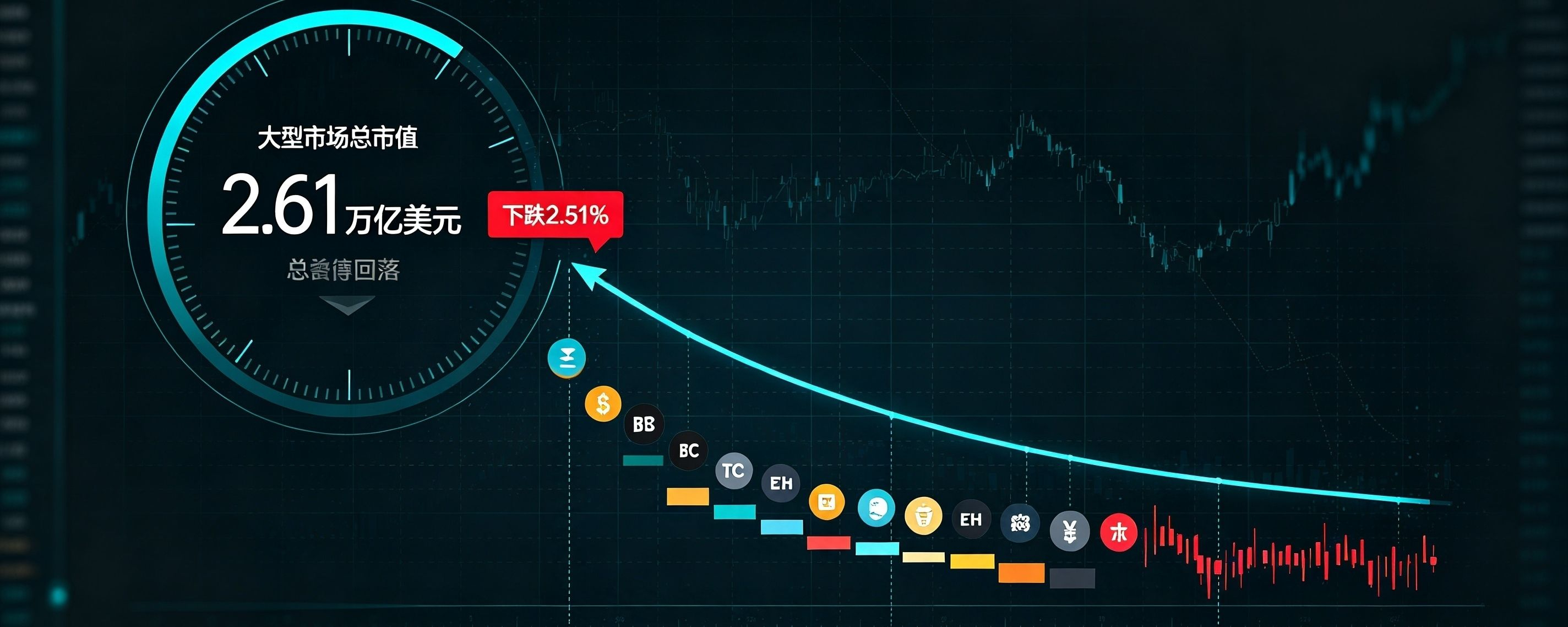

Market monitoring data shows that the crypto market remains generally weak. The total market capitalization of all cryptocurrencies fell 2.51% to $2.61 trillion, as overall risk appetite continued to cool.
Markets are broadly lower, with leading cryptocurrencies such as Bitcoin and Ethereum leading the decline and most altcoins also moving down. Only a small number of stablecoins have held steady. As total market capitalization retreats, market jitters have intensified somewhat. Leveraged positions continue to be liquidated in the futures market, with concentrated long-position closures further amplifying intraday volatility.
A combination of factors is weighing on market performance. Concerns stemming from the recent exchange security incident have yet to fully subside, while expectations that interest rates will remain elevated are putting pressure on risk assets. On the capital front, spot ETF inflows have slowed, and without sustained institutional buying support, the broader market is struggling to mount a strong rebound.
From a market-structure perspective, Bitcoin’s share of the crypto market’s total capitalization has remained relatively stable, indicating that this pullback reflects a broad market downturn rather than an isolated move in any single coin. Traders are focused on whether the total market capitalization can hold above the key support zone of $2.6 trillion. A sustained break below it would likely trigger a fresh wave of stop-loss selling; if support holds here, the market may enter a choppy bottoming phase.
Analysts warn that market sentiment is fragile, and news or macroeconomic data could trigger sharp volatility. Crypto assets are highly volatile, and leveraged futures trading carries substantial risk. When the broader market is weakening, traders should reduce leverage, manage position sizes, and avoid large losses caused by concentrated liquidations.
