

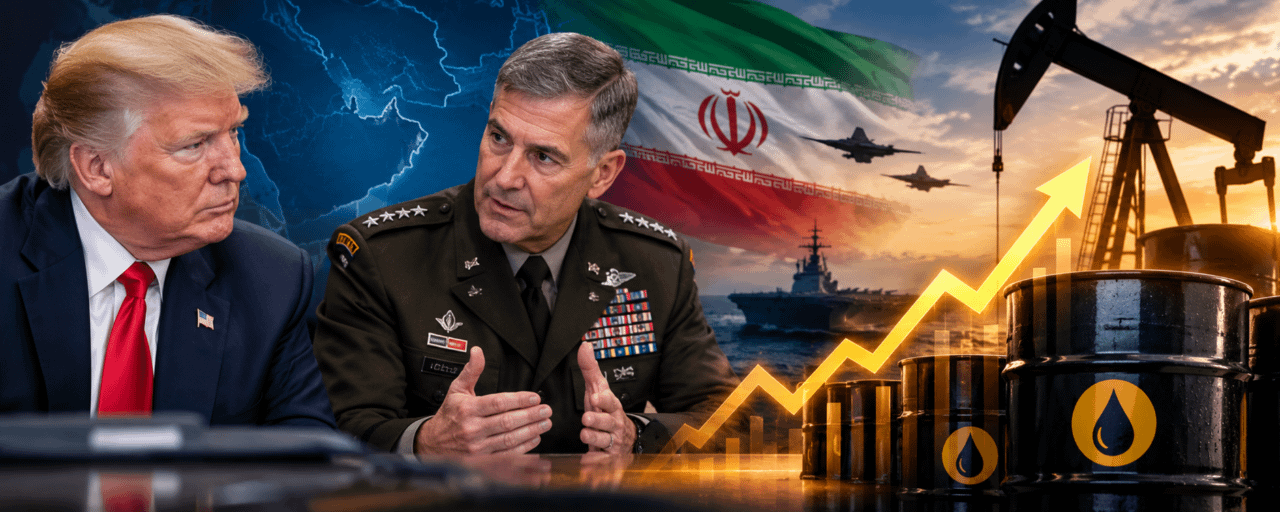

Oil is rising in early Friday trading after the Wall Street Journal reported that a top U.S. commander in the Middle East had briefed President Donald Trump on military options for Iran on Thursday. Buyers took the hint.
Adm. Brad Cooper, who leads U.S. Central Command, known as CENTCOM, made the trip in person, an unusual step by his standards. The Journal, citing U.S. officials and others with direct knowledge, said Defense Secretary Pete Hegseth and Joint Chiefs Chairman Gen. Dan Caine were in the room as Washington weighs resuming major combat operations.
The optics alone have fed speculation that the administration is edging toward renewed military action against Iran. The Pentagon and CENTCOM declined to comment.
Gulf capitals have been getting their own message. Trump administration officials have told Arab Gulf states to be ready for a short, intense campaign once the midterm elections are over, the Journal reported.
Trump has not exactly talked the idea down. At a rally last week, he looked back on the heavy U.S. and Israeli campaign earlier this year, which Washington calls Epic Fury. "We may do another little Epic Fury, or they'll agree," he said.
What the Pentagon Has Been Packing
Whatever the final decision, the groundwork is visible. Over recent weeks, the Pentagon has sent additional air defenses, munitions and supplies to the Middle East, according to the Journal, and has moved some troops off bases considered vulnerable. The Army is also shifting another Patriot battery to Israel. That last move carries a complication, because the U.S. is short on interceptors and has been racing to resupply them.
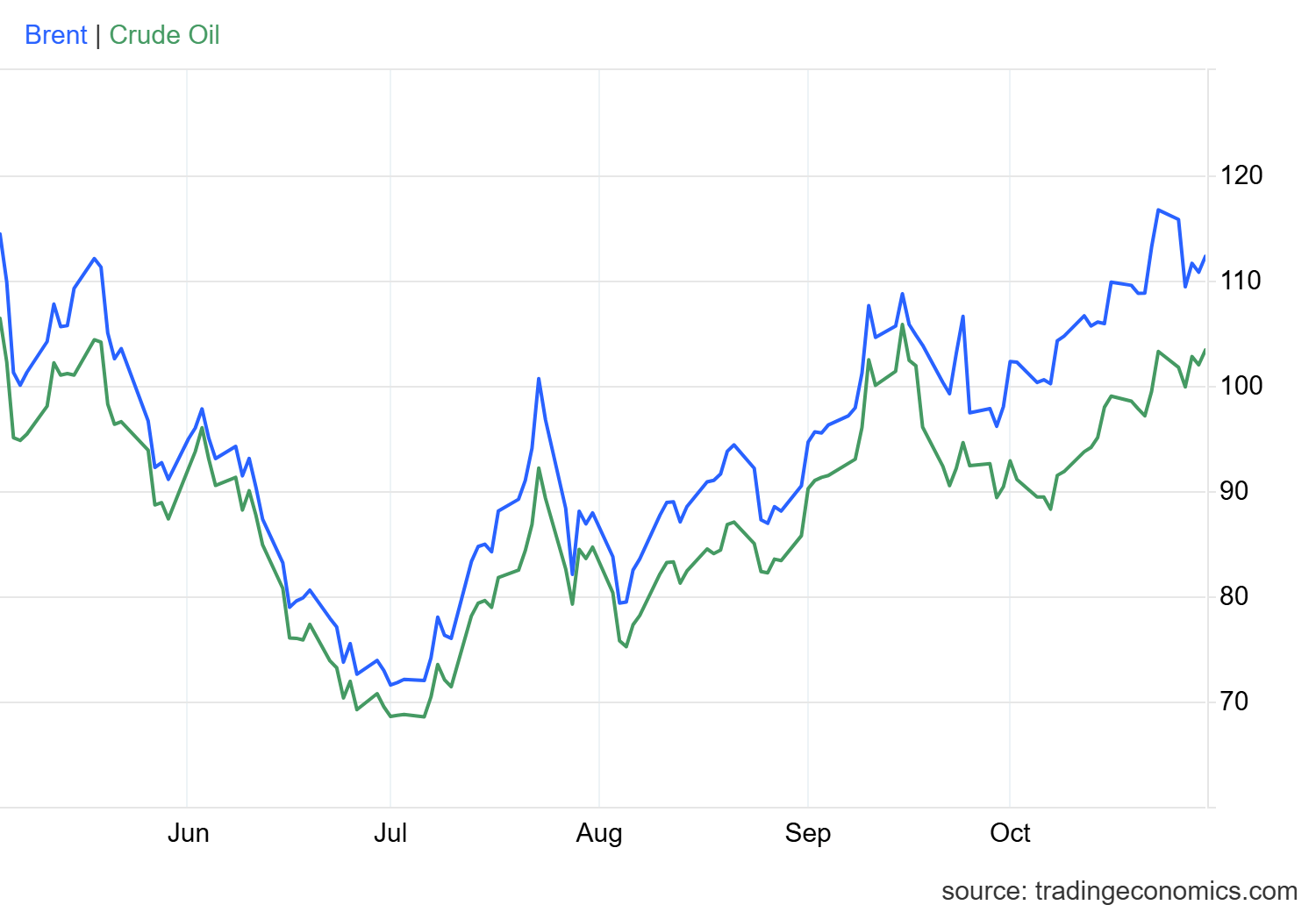
WTI crude is trading up 1.21% at $103.23 a barrel. Brent’s nearest contract, which expires Friday, is trading at $112, while the December futures have gained 1.24% and are trading at $116.30, and Reuters reports it is on course for a fourth straight monthly gain.
Tehran, for its part, has threatened U.S. and Gulf interests across the region if Washington launches new strikes. Reporting from September adds to the picture: the Journal said Iran has restarted ballistic missile assembly from stockpiled components in underground facilities.
Crude had been softer until post-settlement trading, when reports of several tanker attacks, Saudi missile interceptions and fresh worries about shipping security in the Strait of Hormuz pushed the risk premium higher.
At sea, threats are already turning into incidents. Attacks on commercial ships have been picking up, and the latest came late Thursday. The UK Maritime Trade Operations center, or UKMTO, said it had a report of an incident 25 nautical miles northeast of Khasab, Oman, where a third party described an outbound vessel on fire from an unknown cause.
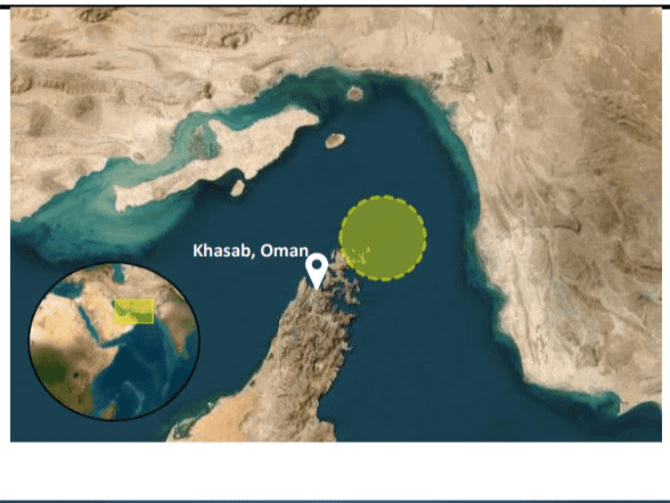
A verified report followed. The crew is safe, and there was no environmental impact.
According to UKMTO, a small boat had pulled up on the tanker's port side and attached two explosive devices to the hull above the waterline. The blasts started a fire in the engine room that briefly disabled the ship. It has been put out, and the vessel continued to its next port of call.
UKMTO told ships to transit with caution and report anything suspicious while authorities investigate. Who carried out the attack has not been established.
Mines are the other half of the maritime story, and nobody agrees on that one either. Iran's armed forces claimed that at least four tankers caught fire after striking naval mines while trying to pass through the strait. The Islamic Revolutionary Guard Corps, or IRGC, said three of them hit mines on an unauthorized southern route, after allegedly switching off radar and navigation systems and ignoring warnings from its navy. Iran's army later reported a fourth vessel, east of the strait, damaged and unable to move.
The claims arrived a day after the U.S. military said it had cleared key shipping routes through the waterway, a position CENTCOM has repeated as Iran's mine reports have piled up.
A Navy Its Own Admiral Says Is Still Afloat
Iran's navy has found an advocate. Rear Adm. Jalil Moghadam, the Army Navy coordinating deputy, told the state-run news agency IRNA in an interview published Thursday that the navy has carried out more than 20 operations against U.S. warships and about 300 aimed at American interests during the war, using missiles and drones. He offered no evidence for either figure. Trump and other U.S. officials have repeatedly said the navy is destroyed.
His rebuttal arrives as a question rather than a data point. If the force were finished, he asked, why have opposing forces stayed 500 or 600 kilometers from the Strait of Hormuz, and 300 kilometers from Iran's maritime borders? There is, he said, a force standing in their way, and "that force must be the Navy."
Riyadh Hears the Blasts
The land borders of the Gulf are no calmer. Explosions rocked the Saudi capital on Thursday, hours after the Iran-backed Houthis reported deadly strikes on residential areas of western Yemen. The group's health ministry put the initial toll at 12 dead and blamed Saudi Arabia.
The Saudi-led coalition said air defenses downed two ballistic missiles that the Houthis launched toward Riyadh, spokesman Turki al-Malki wrote on X. Agence France-Presse correspondents heard at least eight explosions as a phone alert warned of a "hostile aerial threat." Civil defense warnings covering Riyadh, Kharj and the southern city of Najran were lifted soon afterward.
None of this is new. The Houthis have been pressing hard on the kingdom, and their strikes on the Riyadh airport forced a two-week closure and the cancellation of flagship events, which puts Saudi economic diversification plans at risk. Daily exchanges of fire between the Houthis and Yemen's Saudi-backed, internationally recognized government have continued since a years-long truce fell apart over the summer.
A Letter Still Waiting for an Answer
Vice President JD Vance wrote to Mohsen Rezaei, secretary of Iran's Supreme National Security Council, and multiple outlets reported the letter as an attempt to restart peace negotiations. Tasnim, the semi-official agency closely affiliated with the IRGC, said Iran has not yet responded.
Tehran, according to Tasnim, is not prepared to drop any of its core conditions for a ceasefire. They include lifting the American blockade of Iran's ports, easing sanctions and giving Iran access to frozen financial assets held abroad, among other things.
Parliament Speaker Mohammad Bagher Ghalibaf was more direct. Iran's conditions, he wrote on X, have been stated repeatedly and clearly to the mediators, and the "carrot-and-stick approach has no effect on Iran." Progress, he said, will come only once all seven of its conditions are agreed.
Trump has offered a narrower description of the letter. He said it was a focused outreach meant only to help get medical supplies into Iran.
Kyiv Eases Off the Refineries
Fuel prices are shaping decisions well beyond the Gulf. Ukraine has reportedly suspended attacks on Russian oil refineries after pressure from the Trump administration, and the pause is expected to run past the midterms and into November.
Washington wants to limit fuel-price pressure and keep its diplomacy with Moscow alive, with envoys Jared Kushner and Steve Witkoff pursuing renewed negotiations with Russia. Kyiv wants something in return: a halt to Russian attacks on Ukrainian energy infrastructure and additional air-defense support. No formal halt has been announced in Kyiv.
A Watchdog Passes, and Moscow Praises Musk
The Pentagon's inspector general has declined to investigate the disruption of U.S. intelligence sharing with Ukraine and of Kyiv's access to the Starlink and Starshield systems. In a letter to a bipartisan group of senators on Tuesday, Inspector General Platte Moring III described the episode as a contractual dispute outside his purview.
Putin, for one, has kind words for the man at the center of it. At a Moscow summit with African leaders on Wednesday, he called Elon Musk a "genius" and said Russia stays in close contact with him as it builds a Starlink rival of its own.
Putin Puts a Year on the Risk
Putin had more to say once the summit wrapped up on Thursday. Several European countries, he said, are preparing for a possible conflict with Russia by 2030. Moscow is ready if it comes to that but has no wish to start one. "We want no war with Europe," he told reporters.
He also cautioned against letting tensions in the Baltic Sea escalate, pointing to the Strait of Hormuz as the situation nobody should want to repeat there.
The remarks followed this week's calls with the leaders of Norway and Finland, which Putin said he welcomed as steps toward restoring relations with European countries. Finland's President Alexander Stubb and Norway's Prime Minister Jonas Gahr Stoere said they took part as leaders of their own nations, not on behalf of Europe as a whole.
Israel's Vote Leaves the Door Open
One more result landed this week. Prime Minister Benjamin Netanyahu and his allies won 53 seats in Israel's general election, ahead of the main opposition bloc's 48 but short of the 61 needed to govern without further backing. Arab-led parties took 19 of the Knesset's 120 seats, so neither camp has an easy route to a majority.
The Date Everyone Is Watching
The calendar is the only fixed point. The midterms are Tuesday, and nearly everyone in this story seems to be waiting on them. What comes after is anyone's guess, and crude is already trading on it.