
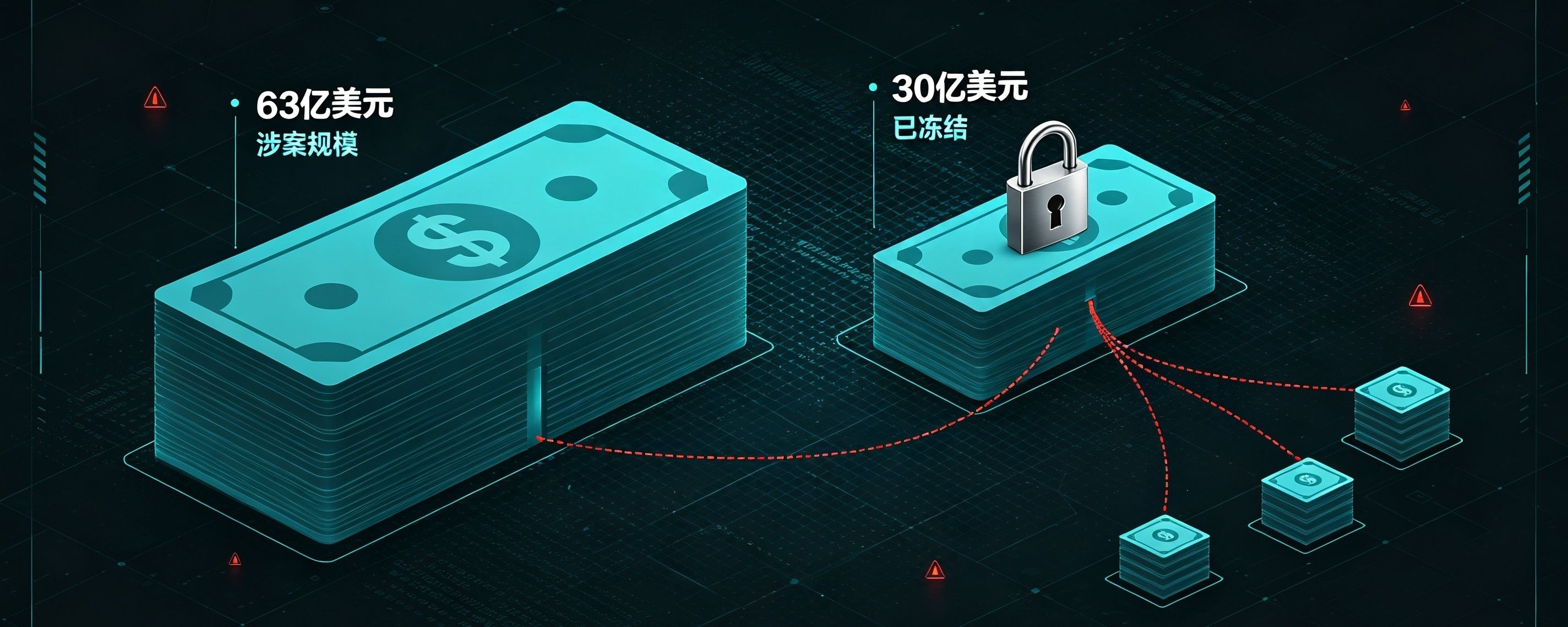

An on-chain investigation firm has updated statistics on the Binance security incident. The total value of assets stolen in the incident was approximately $6.3 billion. To date, coordinated efforts by various parties have intercepted and frozen $3 billion in funds connected to the incident, nearly half of the total. The remaining approximately $3.3 billion in stolen funds is still under the hackers’ control, and tracing efforts are ongoing.
The assets frozen in this operation were frozen with the cooperation of stablecoin issuers such as Tether and Circle and on-chain investigation teams. USDT accounted for the largest amount frozen and was the primary asset used to intercept the funds. The frozen tokens are locked at blacklisted addresses and cannot be transferred, exchanged, or moved across chains, temporarily blocking the hackers’ cash-out channels. The funds not yet recovered are spread across multiple public blockchains and intermediary addresses. The hackers continue to use methods such as splitting transfers, cross-chain transactions, and mixing to obscure the funds’ trail and make tracing more difficult.
Market analysts believe that the successful freezing of $3 billion in assets has significantly reduced the event’s ultimate realized losses and eased market panic. However, the funds that were not frozen remain a potential source of selling pressure. If the hackers transfer them to exchanges in batches and sell them, this could still affect the crypto market. Binance reiterated that the platform will cover all user losses, users’ funds will not be affected, and compensation will come from the SAFU fund and the platform’s own funds.
Security researchers say the incident also highlights the dual nature of stablecoin issuers’ blacklist-based freezing mechanisms: they can quickly limit losses and recover substantial assets in major thefts, but the centralized authority to freeze funds continues to fuel debate in the industry over decentralization and regulatory control. The investigation is ongoing, and officials have yet to publish a full postmortem report. Key points to watch include the movement of the remaining stolen funds and when deposits and withdrawals will resume.
Investors should continue to verify information and avoid trusting unofficial compensation links or third-party withdrawal services. Phishing scams are common during the fallout from major security incidents. Crypto assets are highly volatile, and market prices can swing repeatedly as the tracking of stolen funds progresses.