What is this token used for?
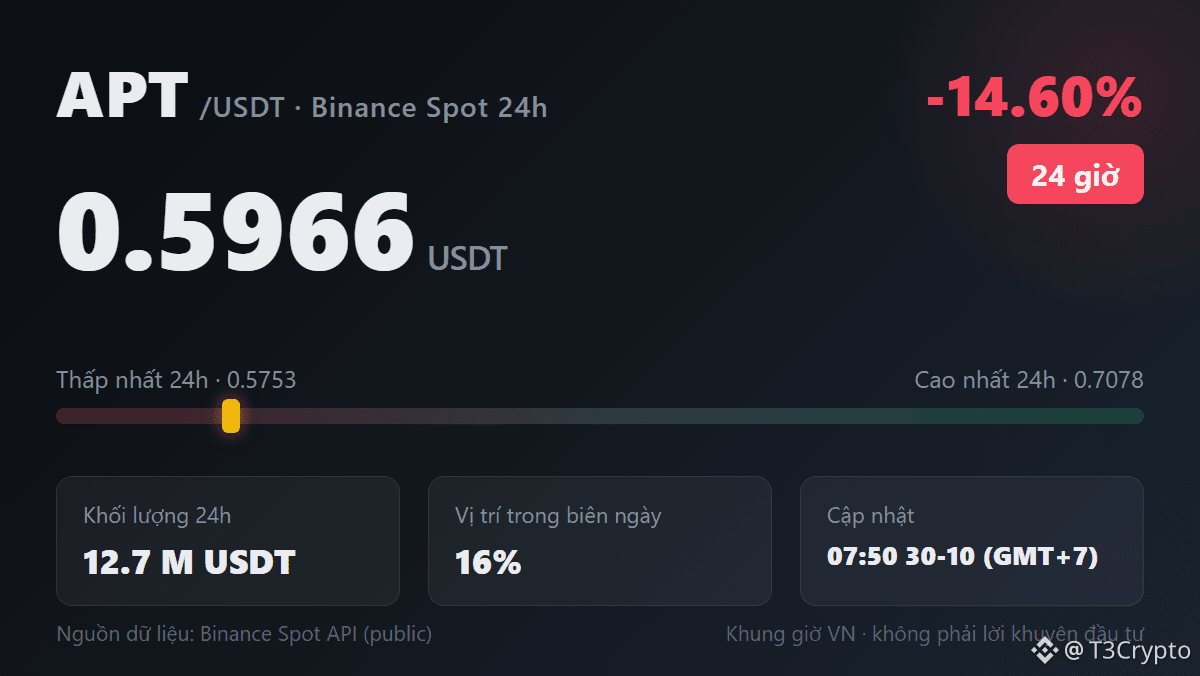
$APT fell to 0.5966 USDT, down 14.60%.
Trading took place over 24 hours, with a volume of 12.7 million USDT.
$XLM fell to 0.1597 USDT, down 7.21%.
Volume: 13.6 million USDT.
$BTC retreated to 77,002.97 USDT, down 5.16%.
Volume: 2.13 billion USDT.
BTTC is a TRC-10 utility token on the Tron blockchain, used to pay fees when sharing files via P2P, while Ethereum ETFs help investors gain exposure to ether without holding it directly.
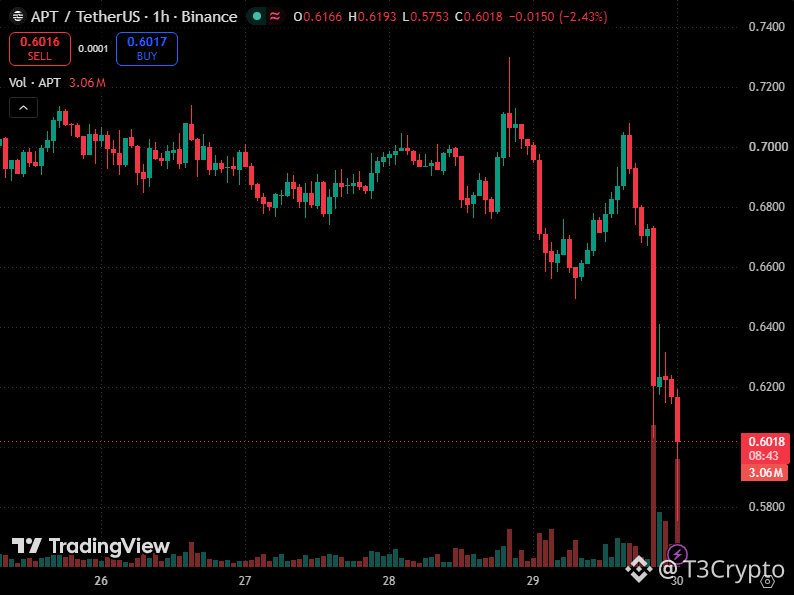
$APT touched an intraday low of 0.5753 USDT, and its volume of 12.7 million USDT indicates overwhelming selling pressure.
The high of 0.7078 USDT is far above the current price, reflecting a sharp correction.
$APT 's volume of 12.7 million USDT indicates strong selling pressure, while $XLM 's volume of 13.6 million USDT remains significantly lower, even though its price also fell.
$XLM fluctuated around a low of 0.1577 USDT, with a volume of 13.6 million USDT indicating weak liquidity.
The high of 0.174 USDT remains far away, leaving a large downside gap.
$BTC retested the support level of 76,760 USDT, with a volume of 2.13 billion USDT indicating that trading remained active despite the price decline.
The high of 81,971 USDT is now a psychological resistance level.
$BTC 's volume of 2.13 billion USDT continues to indicate high liquidity, even as it retreated to the support level of 76,760 USDT.
The lows of 0.5753 USDT for $APT and 0.1577 USDT for $XLM were both below their closing prices, indicating a sharp correction.
P2P and Spot both meet the need to own tokens, but in different ways: P2P allows users to trade directly with one another, reducing intermediary costs and suiting those who want to manage their own wallets, while Spot offers a market with transparent pricing and high liquidity, making it suitable for beginners who want a simple experience.
P2P users typically save more on fees for small trades, while Spot offers faster execution for large orders, helping reduce the risk of slippage.
Both methods rely on the same payment network, so the choice depends on each person's trading habits and level of technical knowledge.
Are you using Spot or P2P?
Would you call this good news or bad news? Which side are you on? Leave a comment.