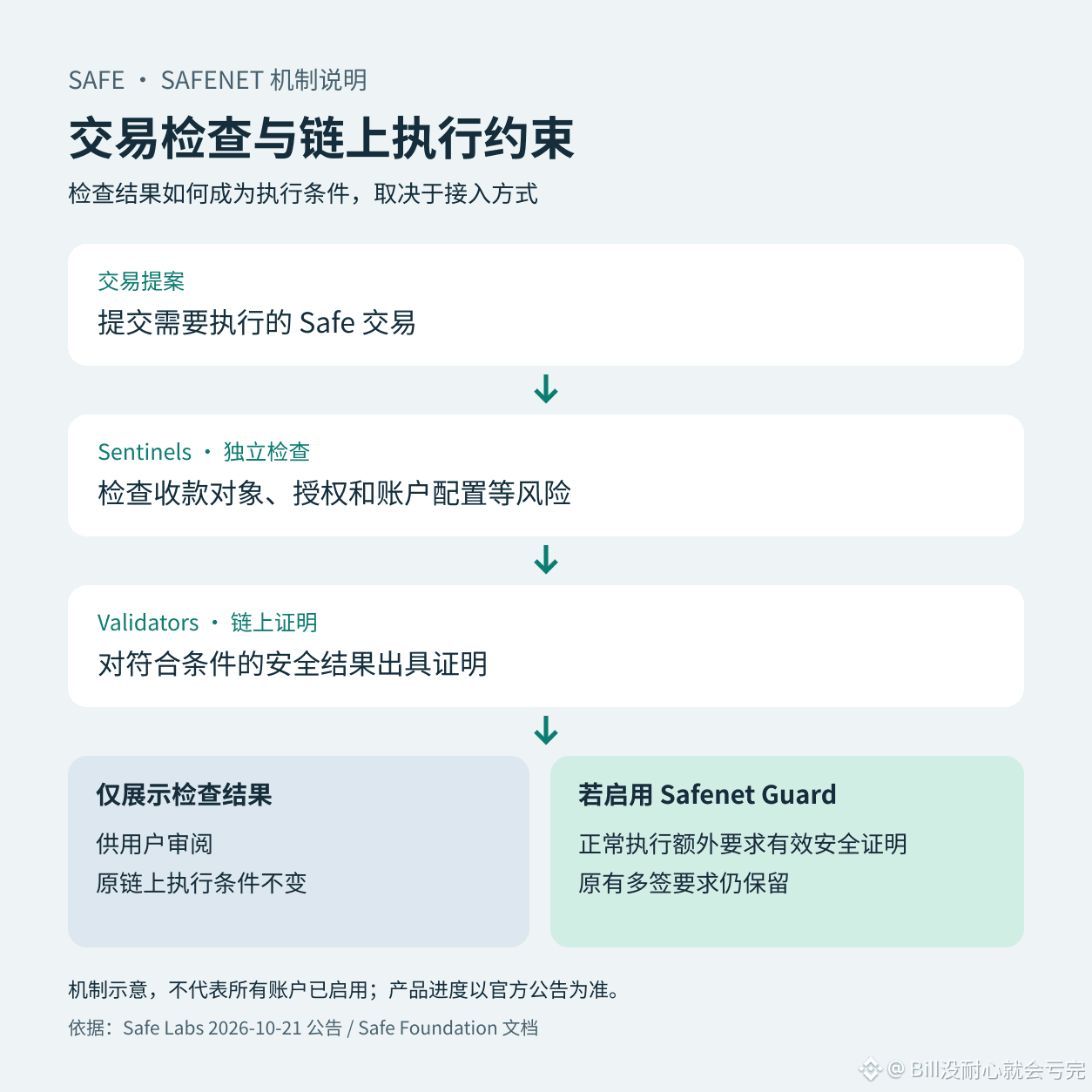

A wallet showing the results of a transaction check does not mean that on-chain enforcement is enabled. Safe recently launched Safenet, and this distinction is more important to understand than the security label itself.
Safe Labs announced on October 21 that Safenet is now available to Safe Pro users. Transactions are first checked by independent security providers, then validators attest on-chain to results that meet the requirements. Checks cover risks such as recipient address substitution, dangerous approvals, and changes to account owners or signature thresholds.
But an integration that only displays check results does not change the existing on-chain execution conditions. Once Safenet Guard is enabled, a valid security attestation becomes an additional requirement for normal transaction execution; the original multisig threshold remains in place. The announcement lists displaying checks for more Safe multisig users and optional enforcement through Guard as plans for after 2027. This should not be taken to mean that every account has it enabled today.
When managing assets with a multisig, in addition to checking who signed, you also need to check exactly what was authorized and which execution constraints are actually enabled on the account. Security checks can still miss things, and on-chain operations carry risks.
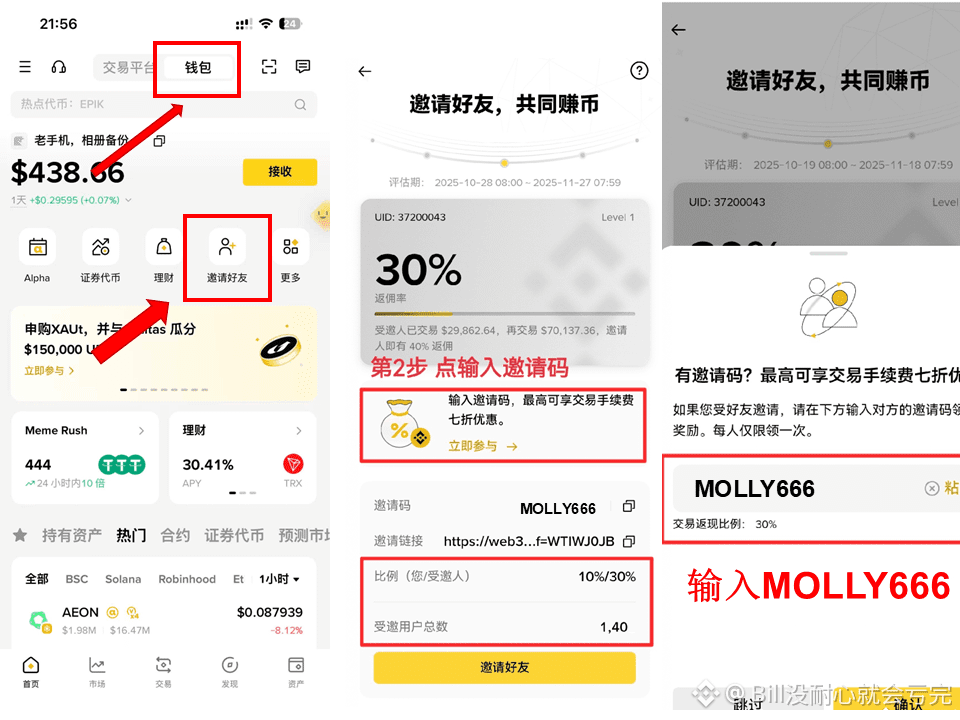
Binance Wallet invitation code: MOLLY666