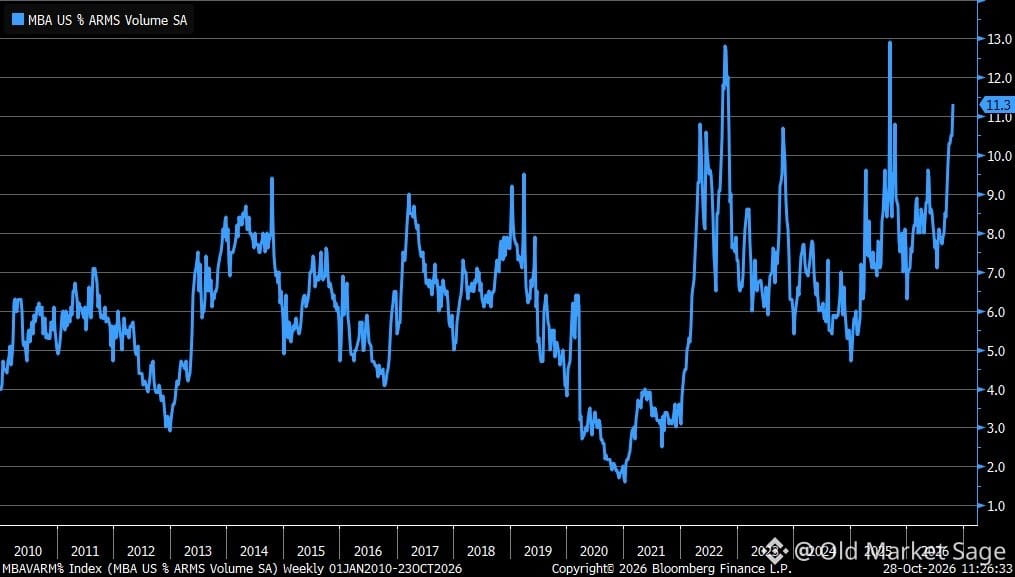
ARMs are having a moment again.
Adjustable-rate mortgages just hit their highest share of loan activity in over a year. When fixed rates stay stubbornly high, people start taking the gamble—lower payment now, rate risk later.
This is classic behavior. Nobody wants to wait. The math feels better upfront. But ARMs are a bet on the future, and most people are bad at pricing that bet.
History says this: when ARM activity spikes, it's usually because buyers feel trapped. They need to move, to buy, to act—so they accept the terms. It's not confidence. It's compromise.
Watch what people do with their money when rates stay elevated. They don't sit still. They adjust. They stretch. They take on risk they don't fully understand.
The question isn't whether rates will come down. It's whether they come down before the reset.