🚨 UBS cuts its target for South Korea’s stock market! KOSPI target lowered from 8,000 to 7,500 points—is a stronger won becoming a new pressure point?
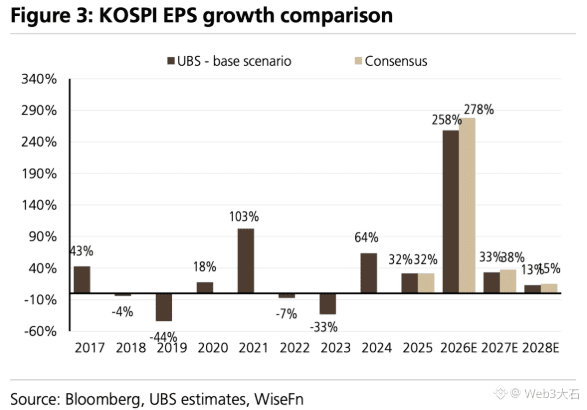
On October 29, UBS lowered its 12-month target for the Korea Composite Stock Price Index (KOSPI) from 8,000 to 7,500 points. The reason isn’t simply pessimism about the South Korean economy; UBS is concerned that a stronger won could squeeze corporate profits. 📉
How should we understand this? Here’s an analogy: many South Korean companies earn money through exports. After selling products overseas, they convert their foreign-currency earnings back into won. If the won strengthens, the same amount of foreign-currency revenue may convert into fewer won. And if companies’ costs don’t fall at the same time, their profits may be squeezed. Of course, the impact of exchange rates also depends on companies’ overseas production, cost structures, and hedging arrangements, so not all companies will be affected equally.
📌 My view: A rising stock market isn’t just about whether the economy is doing well; it’s also about how much profit companies ultimately retain. For the South Korean market, in addition to monitoring demand for chips and the AI supply chain, keep an eye on the won’s movements and whether earnings expectations for exporters are continuing to be revised downward.
🔥 Also, 7,500 points is simply UBS’s 12-month target—not a level the market is certain to reach. Investors shouldn’t focus only on the index number; they should also watch whether exchange rates, corporate earnings, and market expectations are moving in sync. What truly determines how far the stock market can go isn’t just how compelling the story sounds, but whether profits materialize! $SKHYNIX $IDOL $BEAT