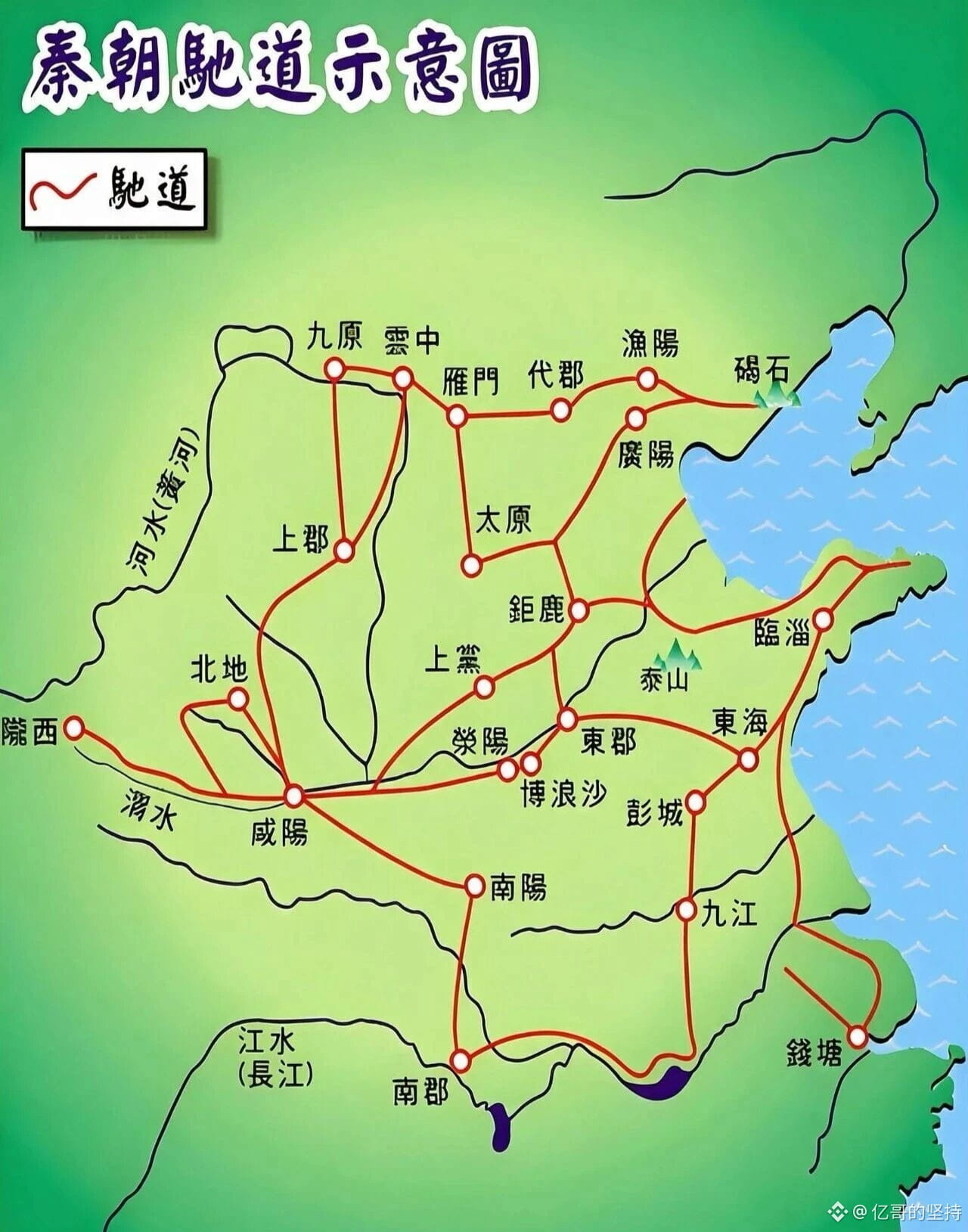
Did you know? After unifying China, the Qin also had “highways”—the imperial roads.$HYPE $BNB $INJ
The Qin imperial roads were a network of major state highways built after the Qin unification. Radiating outward from Xianyang, they formed a nationwide transport network. The main routes included the Eastern Road, which ran east through Hangu Pass to the lands of Qi and Yan; a southeastern route through Wu Pass to the Wu, Chu, and Jianghan regions; a western route connecting to Longyou; the Shangjun Road leading north to northern Shaanxi; and the Qin Straight Road, which ran directly to Jiuyuan.
The roads were wide and built of rammed earth, with rows of trees planted along both sides. They were constructed to strict standards and reserved for the passage of chariots and horses. Their main purposes were to relay government orders, deploy troops, facilitate imperial tours, and strengthen central control over the regions.
The imperial roads overcame barriers between regions, encouraged the movement of goods and the exchange of cultures, and laid the foundations for the ancient postal-road system. They vividly demonstrated the Qin dynasty’s formidable capacity for organization and mobilization, and had a profound influence on road building in later generations.