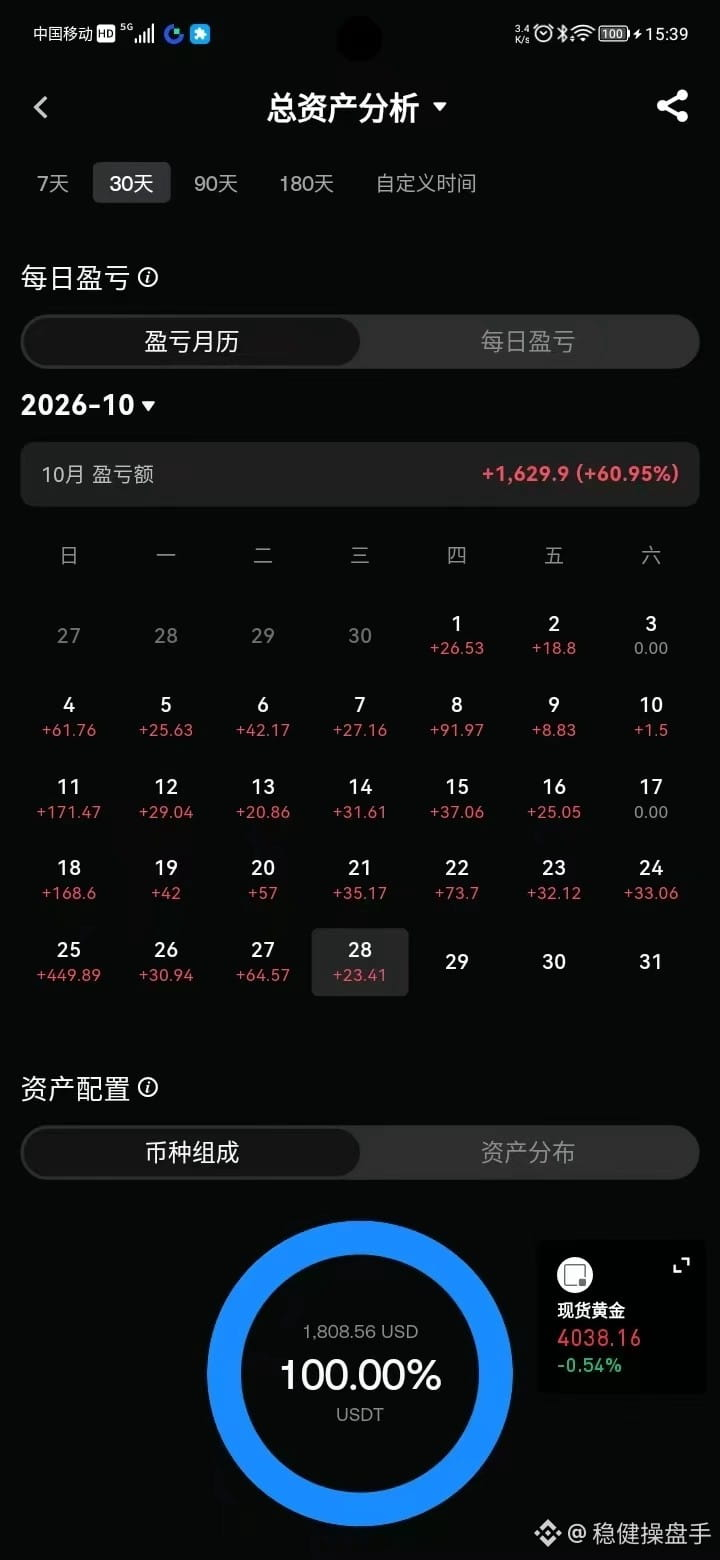
How can you grow a small amount of capital into a large one? Many people get the very first step wrong. $EVAA
First, the conclusion: the smaller your capital, the less you should be trading short-term every day.
Many people think that with a small amount of capital, they should jump in and out quickly and grow it through short-term trades. That’s really a mindset of trading time for growth and hoping to get rich overnight. What small accounts should actually focus on is the medium to long term, growing through compounding and doubling their money.
For example, with 30,000 in starting capital, first think about how to triple it in one big move, then triple it again in the next. After two or three such moves, you could have 400,000 or 500,000. That’s better than trying to make 10% today and 20% tomorrow—you’ll eventually ruin yourself that way.
Adding to a position with your profits is something you do only when a major opportunity comes along.
For ordinary people, compounding a position is pretty much the only way to grow a few tens of thousands into a million. But it’s not something you do every day. Succeed at it three or four times in your entire life, and that can be enough to turn zero into tens of millions.
The prerequisites are plenty of patience, high-confidence opportunities, and adding only to long positions.
How risky is compounding a position?
Many people hear about compounding positions and assume it’s risky. In fact, the risk comes from the leverage you choose, not from compounding itself.
Suppose you have 50,000 in starting capital, and that 50,000 is profit. You open a Bitcoin position at 10,000, using 10x leverage in isolated margin mode, with a position size of just 10%—that is, 5,000 in margin. In practice, that’s equivalent to 1x leverage. Set a 2% stop loss, and you’ll lose only 1,000 if it’s hit, or 2% of your total capital.
If the trade goes your way, continue adding to the position using 10% of your total capital, with the same 2% stop loss. Add as the price rises to 11,000, then 15,000. A 50% rally could bring you about 200,000 in profit; catch two such moves and you’d have around a million.
Note: You don’t make 100x through daily 10% or 20% compounding. You make it through two 10x gains, three 5x gains, or four 3x gains.
Compounding a position isn’t inherently risky; leverage is. You can do it at 10x or even 1x. I usually use 2x or 3x.
Risk management is the key.
In the end, trading isn’t about gambling. It’s about recognizing the size of an opportunity. Trade small during normal conditions, and only go big when a major opportunity comes along.
The smaller your capital, the more you should focus on the long term and let compounding do its work. Be patient about adding to positions, control your position size, and keep leverage low.
This article is just a personal reflection. Be cautious with anything involving money, and protect your own hard-earned cash. $IDOL