
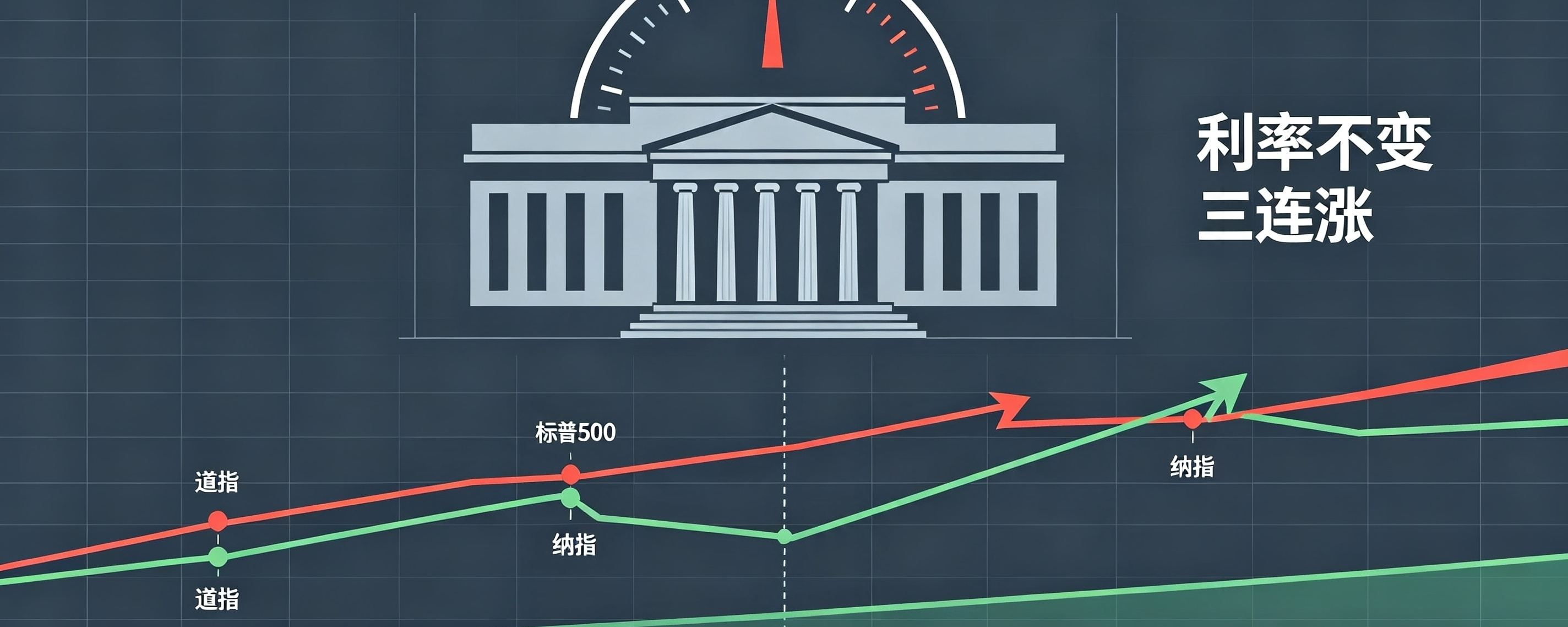

On October 28 local time, the Federal Reserve concluded its two-day FOMC meeting and announced that it would keep the target range for the federal funds rate unchanged at 3.75%–4%. The decision was in line with the prevailing market expectation, and the three major U.S. stock indexes continued to rise, posting gains for a third consecutive session.
The vote on this rate decision was 10–2. Federal Reserve Governor Lisa Cook and Cleveland Fed President Beth Hammack dissented, favoring another 25-basis-point rate hike. In its post-meeting statement, the Fed said that U.S. consumer spending remains resilient, but inflation is still above the 2% policy target. The Committee will continue gathering economic data before assessing the appropriate stance of monetary policy going forward, and has not entirely ruled out further rate hikes. At a press conference, Fed Chair Warsh noted that credit conditions for businesses and households had tightened somewhat since the September rate hike, but overall financial conditions were not yet extremely restrictive. Inflation risks still warrant continued vigilance.
At the close, the Dow Jones Industrial Average rose 97.53 points to 52,475.1, up 0.19%; the S&P 500 gained 0.28% to 7,743.98; and the Nasdaq Composite rose 0.27% to close at 26,549.85. Sector performance was mixed, with technology and energy leading the broader market, while utilities and real estate declined. Storage stocks surged, with shares of storage companies such as SK hynix climbing sharply.
Market trading data show that despite the pause in rate hikes this time, investors have not completely ruled out further increases. The CME FedWatch tool shows that markets are still pricing in the possibility of another Federal Reserve rate hike at its December meeting. Analysts note that the short-term pause in interest rate increases has given risk assets some breathing room, supporting the current three-session rally in U.S. stocks. However, the rally’s staying power will still depend on inflation data, Treasury yield movements, and corporate earnings. If inflation rebounds, the Fed’s resumption of rate hikes would put renewed pressure on the stock market.