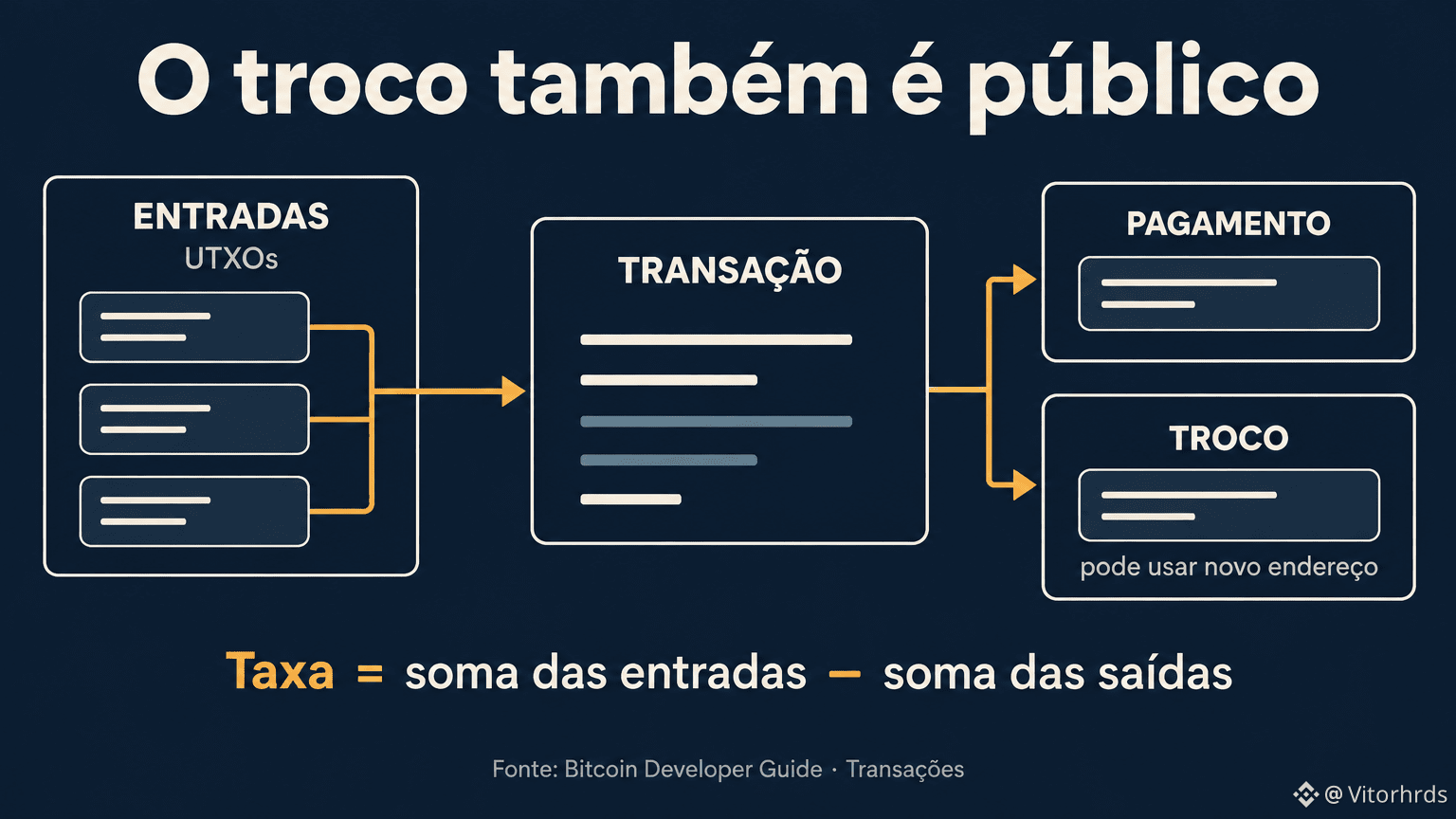
In $BTC, a wallet doesn’t need to have a UTXO that exactly matches the payment amount. It can combine existing inputs and create two outputs: one for the recipient and another as change, returning the excess to the wallet itself.
The fee is the difference between the sum of the inputs and the sum of all outputs. So, in a transaction, not every output represents a payment to someone else—and the change address may be new.
There’s also a privacy detail: inputs and outputs are public. Reusing addresses or linking an address to your identity makes it easier to correlate transactions. A new address reduces reuse, but doesn’t guarantee anonymity; classifying an output as “change” may also rely on heuristics, rather than certainty about who controls the address.
The transaction structure can be verified on the blockchain; the identity behind an address cannot necessarily be.