Unitree’s first earnings report: net profit up 2.7x, non-GAAP profit down 18%
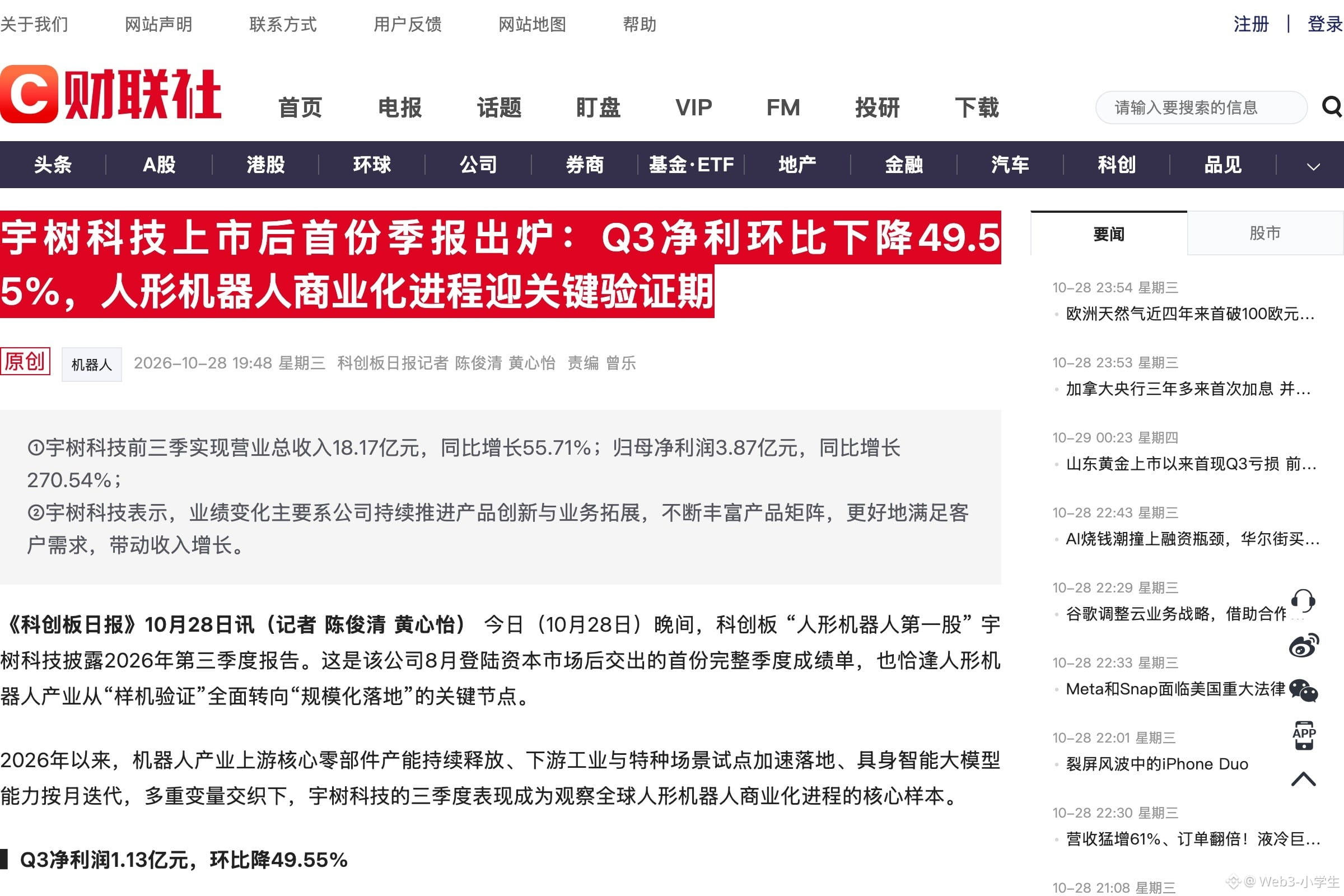
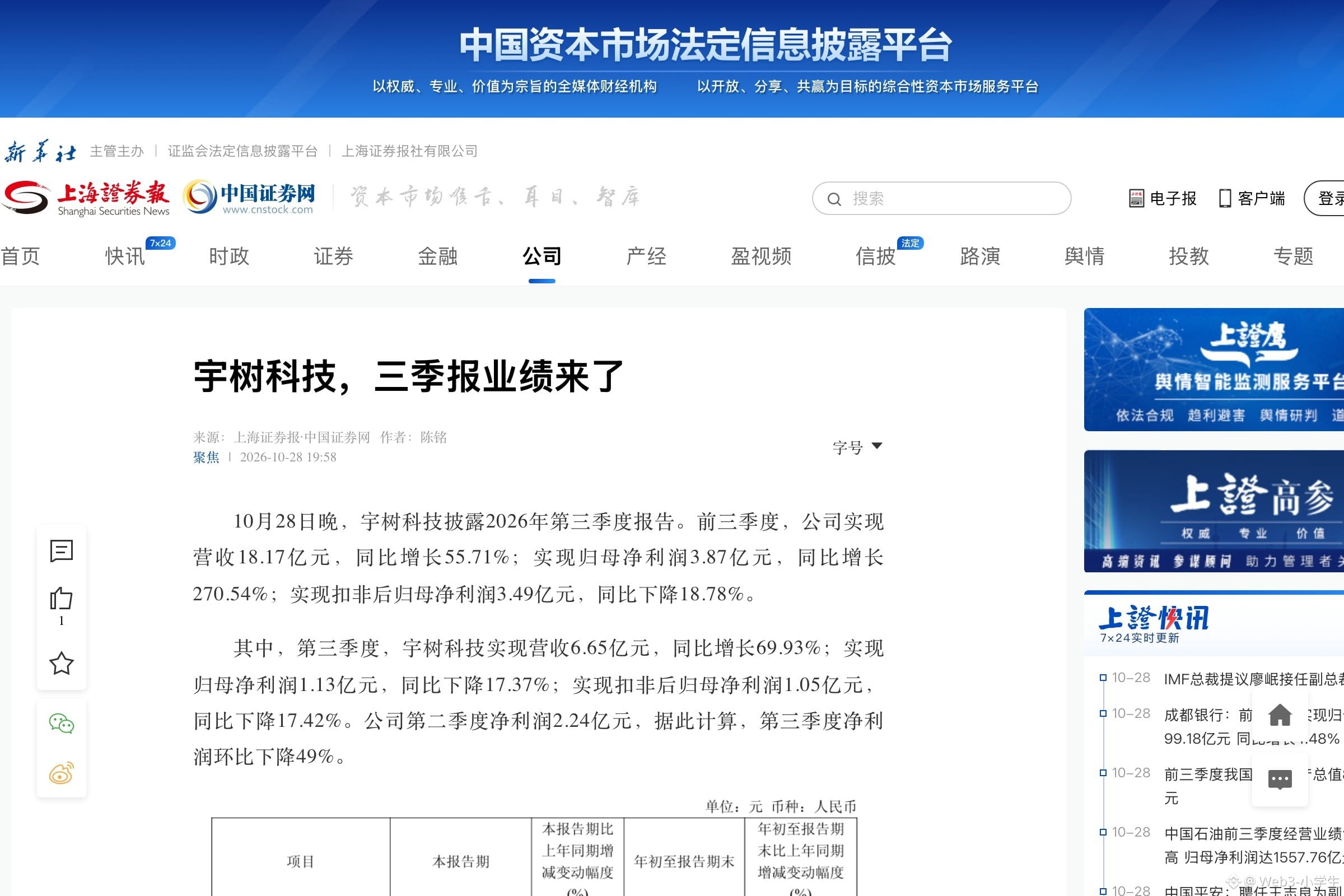
Unitree released its first earnings report since going public last night. In the first three quarters, revenue was 1.817 billion yuan, and net profit was 387 million yuan, up 2.7x. What really supported that pace, though, was last year’s one-time share-based payment.
The underlying business is actually heading down.
After excluding non-recurring gains and losses, non-GAAP net profit for the first three quarters was 349 million yuan, down 18% year over year. That number is what it really earned from selling one machine after another.
Quarterly performance makes it even clearer. In Q3, revenue was 665 million yuan, up nearly 70% year over year, while net profit attributable to shareholders was 113 million yuan, down 17% year over year. In Q2, it was still 224 million yuan.
In one quarter, profit was cut in half.
Where did the money go?
Straight into the lab.
Q3 R&D spending was 127 million yuan, up 2.5x year over year, accounting for 19% of revenue that quarter.
Revenue rose by 270 million. Spending rose by 90 million.
Selling expenses were also climbing. In the first three quarters, they came to 230 million yuan, compared with 76 million yuan in the same period last year. In the half-year report, the company itself said the Spring Festival Gala brand promotion campaign was the main reason.
But the market didn’t price it by revenue. Yesterday it closed at 695.9 yuan, up more than 8% in a day, up 54% in October, giving it a market cap of 281.5 billion yuan.
Ten days earlier, it was still trading at 404 yuan intraday.
My view is that valuation for robotics companies should not be judged by orders, but by how long they can keep burning R&D before it has to stop. Unitree’s operating cash flow for the first three quarters was 194 million yuan, down 55% year over year.
There’s a note in the report that’s especially easy to skip over. The company said the sharp increase in R&D was mainly due to investment in embodied large models and computing power. Put simply, some of the extra money a robotics company spends eventually flows into the racks at $NVDAB .
Using Tesla as a reference actually makes sense too. In the valuation of $TSLAB , the option value of Optimus has never had a clear pricing basis. For the world’s largest shipper, net profit still fell 17% in its strongest quarter.
Whether Unitree can spread R&D costs through scale is still an open question. It only has one quarterly report so far.
What’s truly worth remembering is the structure: robotics companies first sell the whole machine, then hand the money over to R&D and computing power, and only what remains becomes profit. On the chain, the shovel seller gets paid first.
Any hardware company telling a story about embodied AI will eventually have to turn cash into computing power first, then hope scale can bring unit costs down.
Because the story talks about what it can do, while the financial report records how much it paid to get there.
$BTC is now at 80,500, and risk appetite on the Nasdaq side is still adding heat to this robotics rally.
#股票财报季 #美股 #NVIDIA