An eight-point economic cooperation list between the U.S. and Russia has surfaced. On the same day, WTI December futures rose 1.87%, trading at 101.77 at 19:43. Every item on the list is contingent on “the end of the conflict,” so it cannot determine oil prices today.
According to the Financial Times and The New York Times, the U.S. side is led by envoys Steve Witkoff and Jared Kushner, while the Russian side is represented by Dmitriev, head of the Russian Direct Investment Fund. Ukraine and Europe are not directly involved. The list includes an offshore oil and gas joint venture on Sakhalin Island; resuming Russian oil sales to Europe via the Druzhba pipeline; Lukoil transferring some overseas assets to a White House-linked investor; Novatek participating in liquefied natural gas projects in Alaska; supplying gas through the remaining Nord Stream pipeline; U.S. airlines resuming flights through Russian airspace; transferring management of the Zaporizhzhia nuclear power plant to a U.S. entity; and easing sanctions on potash.
Eight items, and not one of them can get underway tomorrow.
A Xinhua feature at 17:19 reported on the list. Four hours later, at 18:21, TASS quoted Russian Deputy Prime Minister Novak as saying that Russia was not negotiating with the United States about returning to oil projects.
Those two statements do not contradict each other. The verb he denied was “negotiating,” and he was talking about oil projects.
The U.S. side’s own caveat is even firmer: any economic agreement must be part of a comprehensive peace framework, and nothing has been finalized.
There is a precedent. In 2006–2007, amid pressure from environmental regulators, the Sakhalin-2 project was forced to hand control to Gazprom. In 2022, Russia used a decree to take control of Sakhalin-1, stripping ExxonMobil of its 30% stake.
A list can be signed; getting people to come back is another matter.
The force driving oil prices today isn’t on the list. The Houthis said they had struck Saudi Arabia’s Ras Tanura refinery, but Saudi officials have not confirmed it. The day before, Saudi officials said they had intercepted three missiles and four drones. The claim is unconfirmed, but it explains the 1.87% rise better than a list that only takes effect “after the conflict ends.”
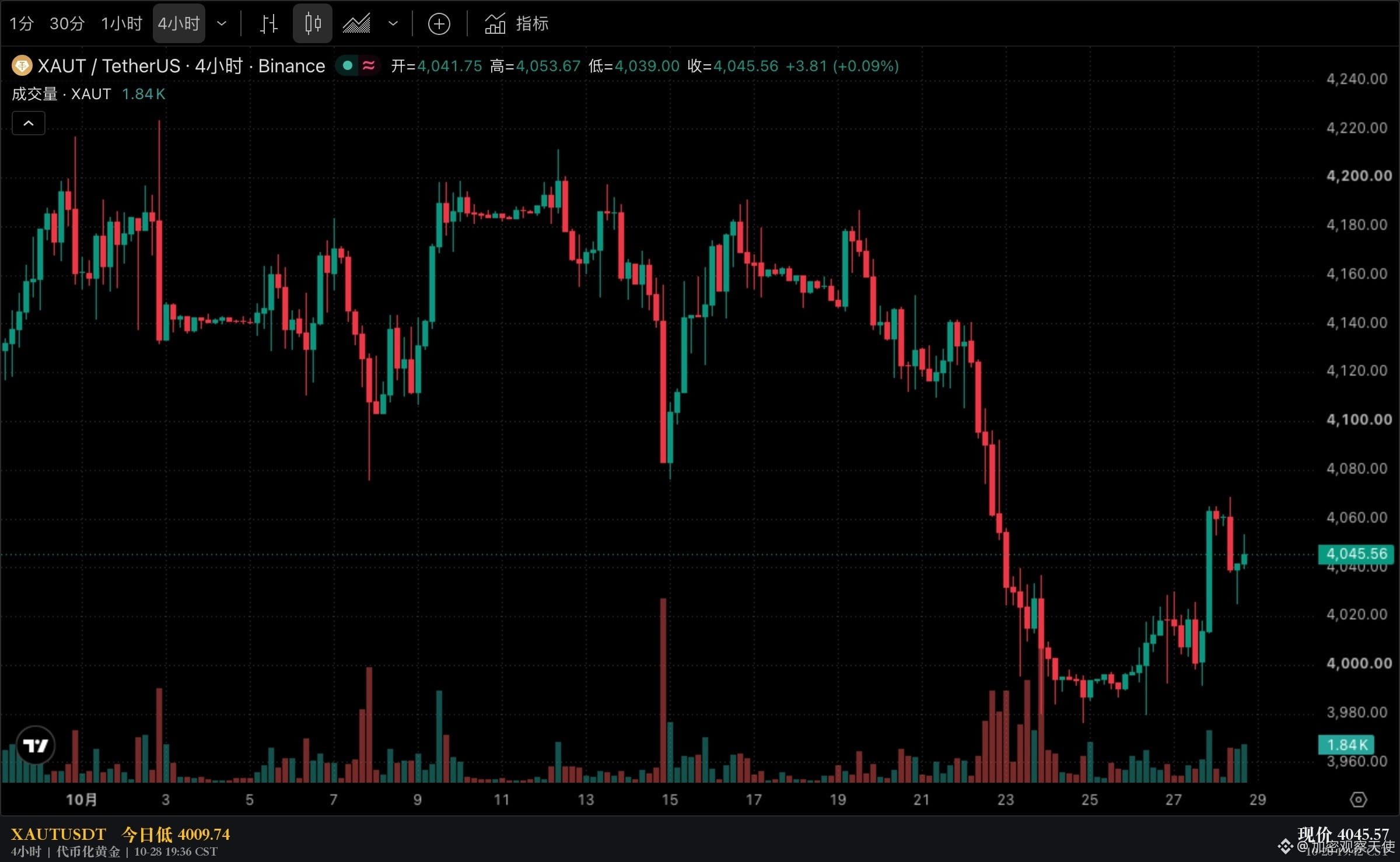
Gold hasn’t reacted to the list either. At 19:43, COMEX gold was at $4,059.4, down 0.37%. The U.S. Dollar Index stood at 102.36, virtually unchanged. The accompanying image shows tokenized gold XAUT, which is a dozen or so dollars cheaper than COMEX gold—not the same market.
The list says what might be gained in the future; oil and gold prices reflect what is scarce now. So the two prices can move in opposite directions at the same time without either one being wrong.
I couldn’t find out when these eight points might become contracts. But the answer to what happened with Sakhalin two decades ago is there in the announcement of the change in ownership.
Looking at this list, #地缘政治 , which will be implemented first: energy, or aviation and potash?
The above is based on publicly available information and personal analysis, and does not constitute investment advice.