China’s Buffett buys toys, and is already sitting on a paper loss of billions.
We tend to think that if you’re committed to the long term, your portfolio won’t look too bad on paper—as if, as long as time is on your side, any unrealized loss today is just a temporary report card. Duan Yongping’s purchase of Pop Mart has punctured that illusion a little.
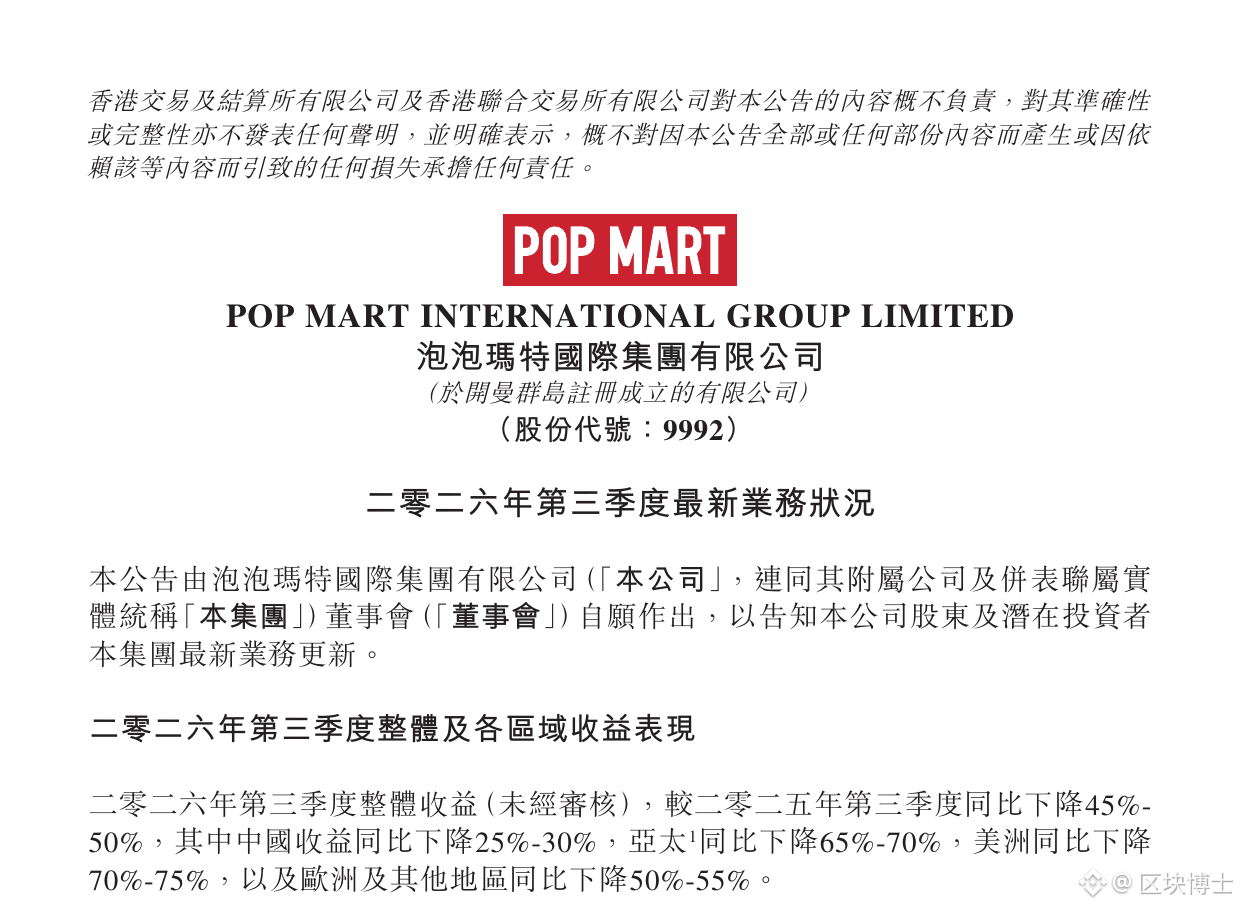
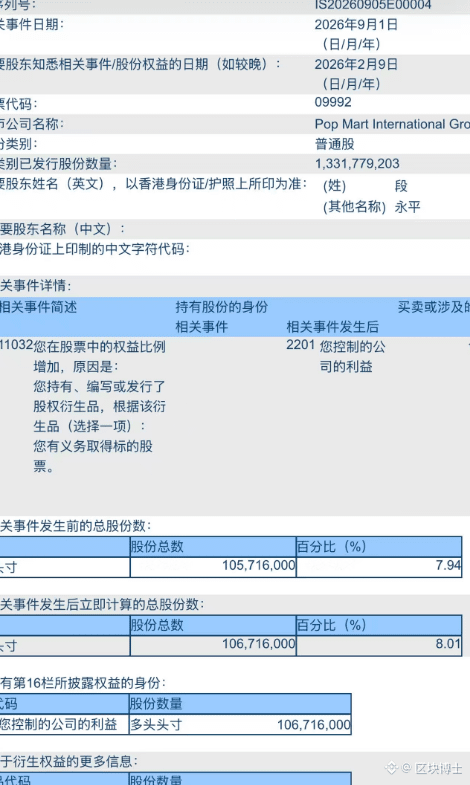
A Hong Kong Stock Exchange business update said that in the third quarter of 2026, overall revenue fell 45% to 50% year on year, revenue in the Americas dropped 70% to 75%, and online revenue in China also fell 45% to 50%. Management said LABUBU had set the bar exceptionally high last year. Around the same time, public disclosures showed that he held about 107 million shares through H&H, or roughly 8.01%, and said he would probably buy some more, but keep his stake below 10%. He had previously said he was unlikely to sell within the next ten years.
He didn’t go all in and buy the shares outright, either. In April, he wrote on Xueqiu, “Pop Mart Insurance Company is officially open for business.” He later confirmed that he was selling put options: collecting a premium upfront, then agreeing to take the shares at a set price if the stock fell to around that level. The strike prices were mostly just above HK$150. The premium was pocketed upfront, lowering his effective cost somewhat. Later, he also sold covered calls and had options expire and settle, causing the long-position figures disclosed to the HKEX to fluctuate. That doesn’t mean he suddenly changed his mind about holding for ten years.
Based on an estimated average cost of around HK$150, media reports have calculated that, with the share price now in the low HK$130s, his position is sitting on a paper loss in the tens of billions of Hong Kong dollars. He hasn’t disclosed his exact cost, and it’s difficult to verify the options-related shareholdings, so this is someone else’s estimate, not his actual account statement. Still, even the estimate is staggering.
Look at it another way, and this unrealized loss may not sting him quite so much. Selling puts to acquire shares means waiting for the price to fall to a level at which you’re willing to buy. You receive the premium upfront, and if the shares fall and you take delivery, it’s a bit like deducting part of the insurance premium from your cost. He has even said that if a put expires unexercised, you keep the premium for free; if it’s exercised, he feels he’s made even more. A paper loss of tens of billions would be breaking news for an ordinary investor. For him, it’s closer to an entry receipt for a long-term position.
A long-term investment will probably spend some time underwater before you know whether you were right. Believing in a company’s prospects over the next ten years doesn’t mean your position is already in the green. And using put options to lower your acquisition price doesn’t mean an unrealized loss won’t hurt—it just makes the pain a little more manageable. An IP boom is more like a passing spell of good fortune than an automatic competitive moat. Treating last year’s peak as next year’s floor will only inflate expectations.
Climbing a mountain means you can’t stay at the summit forever. If you’re willing to spend ten years testing an idea, you have to get used to long stretches along the way when you can’t see any payoff. This is not investment advice. Always do your own research.
$BTC $ETH