$BTC is the boldest monetary experiment of all!
Some people say Bitcoin is a scam?
Meanwhile, their own fiat currencies keep losing value!
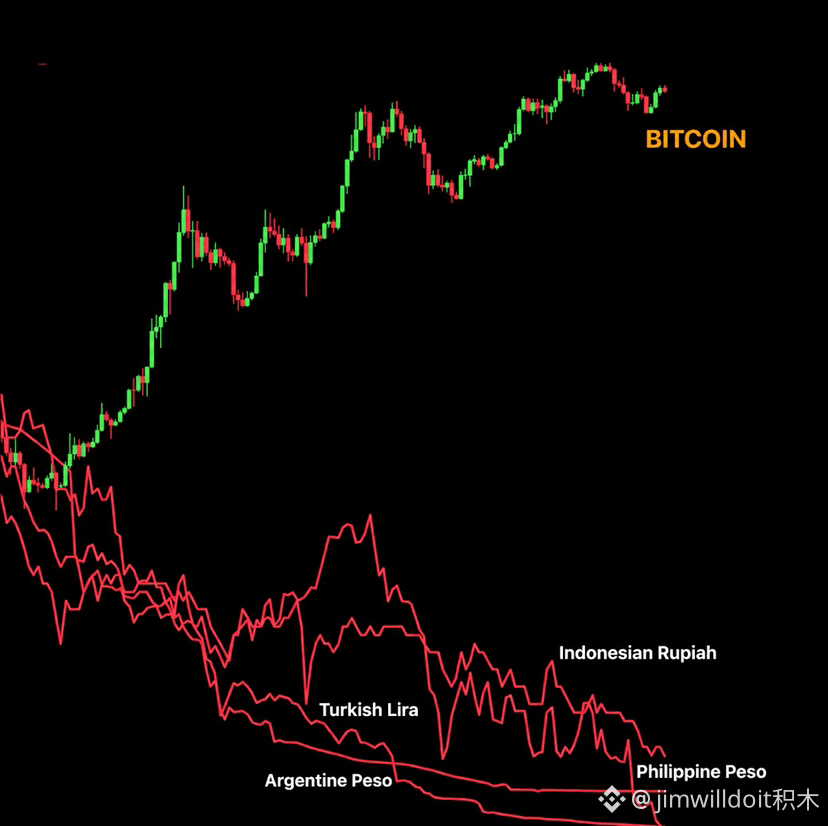
The Turkish lira and Argentine peso are both weakening.
This chart lays bare the gap between the two monetary models!
As the chart shows, Bitcoin has generally trended upward amid volatility, while fiat currencies such as the Turkish lira, Argentine peso, Indonesian rupiah, and Philippine peso have declined to varying degrees. The Turkish lira and Argentine peso in particular have long faced pressures from inflation and currency depreciation, which have also eroded ordinary people’s purchasing power. By contrast, Bitcoin’s supply cap of 21 million coins has drawn growing interest from investors focused on monetary scarcity and long-term value preservation.
The real question worth considering isn’t how much Bitcoin has risen in the short term, but which can better preserve purchasing power over the long term. Fiat money supply can be adjusted through monetary policy, whereas Bitcoin’s issuance rules are set in advance by its protocol. Of course, BTC itself is also highly volatile, and the chart’s performance depends on the currency used to measure it and the time period covered. It shouldn’t be taken to mean that Bitcoin is always safer than fiat. But as some countries continue to face pressure from currency depreciation, the reason Bitcoin is attracting attention is becoming increasingly clear.
Fiat currencies’ purchasing power can be slowly eroded by inflation, but Bitcoin’s scarcity won’t change with any one country’s monetary policy.
The market may be bearish on BTC in the short term, but the long-term contest over monetary value is far from over!
Tap the card below to get started! 👇
$ETH $ZEC