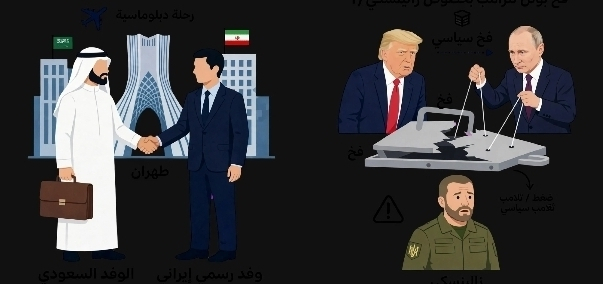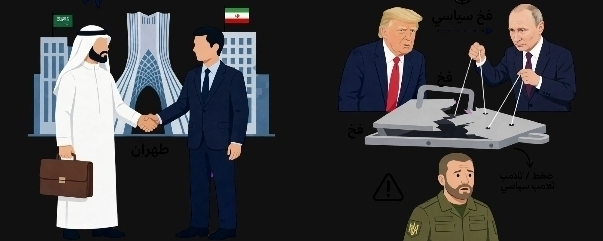

Anyone following the superficial headlines might think America is the maestro, but the truth is that Putin set a complex, double strategic trap for Trump—and Trump fell for it hook, line, and sinker.
It began with a secret visit to Russia by the CIA director last August. He realized there was “something substantial in the works”—either to deconflict or to strike a major deal. This was confirmed when Kushner sat down with Putin in Moscow on September 5.
Putin’s offer: “I’ll pressure Iran to open Hormuz and ease its terms, bringing down the oil prices that are choking you. In return, you pressure Ukraine to accept a ceasefire and stop it from bombing Russian oil refineries and processing plants.”
Trump was under intense domestic pressure: diesel had reached $7 and $8 a gallon in some states—a figure capable of costing his party the congressional midterms. So he saw the offer as a lifeline and agreed immediately.
Early October: a diesel deal—Russia supplies diesel to America to save Trump and bring prices down, while America turns a blind eye and eases sanctions on Russian oil and gas exports.
Trump did his part: he publicly attacked Zelenskyy and accused him of causing diesel prices to rise by bombing Russian refineries, and offered an “energy truce.” More alarming still, he restricted the capabilities of the Starlink satellites Ukraine relies on to keep Kyiv’s missiles and drones from reaching deep into Russia. In other words, he militarily paralyzed Zelenskyy and left him weaker in the face of a Russian strike.
The second part: On October 19 and 20, Lavrov flew to Iran to deliver the American offer that had been “cooked up” in Moscow, while Russian officials sat down with Zelenskyy to impose the same de-escalation.
The surprise: Iran’s Revolutionary Guard flatly rejected the offer, without conceding a single word. Iran’s leadership sensed that they were trying to circumvent it, so it escalated on the ground: it directly targeted oil tankers violating the rules in the Gulf—specifically, ships that do not pay transit fees to Tehran.
The result: panic in the global market, and oil shot from $100 to $117 a barrel in a single blow. Iran sent a clear message: “We control the energy routes, not you.”
Trump found himself in a historic bind: he cannot pressure Iran to open Hormuz and lower gasoline prices before the election, nor can he back down and make peace with Zelenskyy, who felt betrayed and began relying more on Britain and Germany. He lost Ukraine and won no concessions from Iran.
After the slap: Trump threatened Iran with a new attack. Iran responded with a direct threat to strike America and its allies and expand the war across the region, and insisted that the memorandum of understanding be implemented in full through Pakistani mediation, without side deals.
The secret behind Iran’s ferocity: a U.S. strategic mistake. Washington thought the assassinations of Iranian leaders in February and March would break the regime, but instead they killed off the pragmatic wing that might have negotiated. The current leadership is 180 degrees different: shaped by revenge, control, and expanding its capabilities. It sees the war as an opportunity to redraw the Middle East on its own terms, and is neither intimidated by sanctions nor swayed by deals.
This is where Saudi Arabia’s defiance of Washington becomes clear: On October 26, 2026, Saudi Defense Minister Prince Khalid bin Salman arrived in Tehran at the head of a delegation that included Pakistan’s army chief, Asim Munir, and Turkey’s intelligence chief, Ibrahim Kalin, as part of the “Mecca Mutual Defense Agreement.” Saudi Arabia’s foreign ministry said the visit aimed to de-escalate tensions and encourage dialogue and diplomatic solutions.
That is the public explanation, but why did Riyadh really defy Washington? It realized that the American security umbrella has holes in it and cannot protect its allies: America can strike Tehran, but it cannot protect the Gulf from Iran’s retaliation. Leaving the Gulf at the mercy of a war decision made in Washington for the sake of Netanyahu’s electoral interests would mean ruin for the region. So Saudi Arabia decided not to wait for the American green light, and to move with Turkey and Pakistan toward Tehran to establish a regional non-aggression network and a new security system that excludes America and Israel from its arrangements.
Saudi Arabia’s message to Iran: We are ready to make major concessions and reach a regional agreement, in exchange for one guarantee: that the Gulf states be excluded from any Iranian retaliatory strike if America or Israel acts recklessly and hits your facilities. This move, together with the Gulf states, Jordan, Qatar, the UAE, and Saudi Arabia refusing to let their territory and airspace be used against Iran, is a practical declaration that American dominance has fallen and an act of defiance against the American will.
American options: CNBC and The Wall Street Journal reveal plans for intensive U.S.-Israeli strikes lasting several days: nuclear facilities, energy infrastructure, and missile and drone factories. More alarming still, they are considering using the GBU-43 “Mother of All Bombs” to penetrate fortifications and mountains, while mobilizing cruise missiles from U.S. ships in the Arabian Sea.
Economic siege: Treasury Secretary Scott Bessent announced a suffocating campaign: closing the Shib crossing between Iraq and Iran, while Pakistan halted truck traffic through its border crossings. Trump is threatening to end the Iran file soon, and may have postponed the strike until after the November election, while Netanyahu is pushing for an immediate attack.
Iran’s response: leaks about plans to target American diplomats, along with a public message that any strike would be met with attacks on U.S. bases, ships, airports, and pipelines in the countries of the region—in other words, expanding the war to civilian targets.
The West’s most terrifying threat: an Iranian military spokesperson said undersea fiber-optic cables in the Strait of Hormuz would be targeted. Cutting them would paralyze the digital economy, crash stock markets, and cut communications to entire countries. Iran says: “You want to hit us with the Mother of All Bombs? We’ll send the region back to the Stone Age and sever the lifelines of technology.”
The bottom line: Trump fell into a Russian trap that cost him his leverage, Iran responded with a “dead hand” doctrine and rejected the trade-off, and Saudi Arabia recognized the American vacuum and Washington’s inability to protect its allies, so it defied Washington and flew to Tehran with Turkey and Pakistan to secure its rear and build a new regional alliance. As America and Israel assemble the “Mother of All Bombs,” Iran is responding with threats that could paralyze global energy and internet infrastructure. We are at a crossroads: a regional settlement that drives America out, or a great explosion that consumes everything.
Is this the beginning of the end of the great powers’ dominance?