

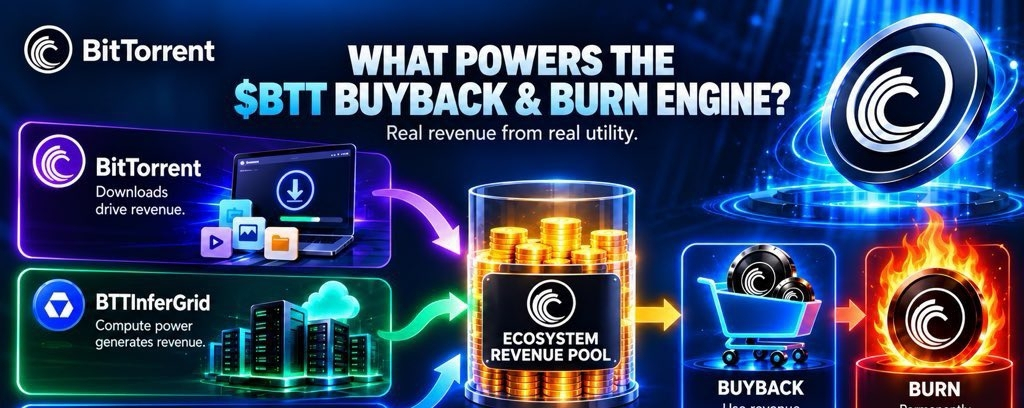

𝗪𝗵𝗮𝘁 𝗥𝗲𝗮𝗹𝗹𝘆 𝗣𝗼𝘄𝗲𝗿𝘀 𝘁𝗵𝗲 $𝗕𝗧𝗧 𝗕𝘂𝘆𝗯𝗮𝗰𝗸 & 𝗕𝘂𝗿𝗻 𝗘𝗻𝗴𝗶𝗻𝗲?
Imagine a decentralized ecosystem where people use different products to download files, access computing resources, and interact with blockchain applications.
Every time these services generate revenue, there is an opportunity to connect that business activity with the wider token economy.
That is the idea behind BitTorrent’s $BTT Buyback & Burn mechanism.
Rather than focusing only on token market activity, the mechanism draws attention to something happening behind the scenes: the revenue generated by real utility across the ecosystem.
So, where does the funding come from? Let’s break it down. 👇
♤ 1. 𝗕𝗶𝘁𝗧𝗼𝗿𝗿𝗲𝗻𝘁: 𝗥𝗲𝘃𝗲𝗻𝘂𝗲 𝗙𝗿𝗼𝗺 𝗗𝗼𝘄𝗻𝗹𝗼𝗮𝗱 𝗦𝗲𝗿𝘃𝗶𝗰𝗲𝘀
BitTorrent has built its name around peer-to-peer file sharing, allowing users to distribute and download files across a decentralized network.
Beyond basic file sharing, download acceleration and in-app services can generate revenue through the product experience.
This creates one potential source of business activity that contributes to the wider $BTT buyback mechanism.
♤ 2. 𝗕𝗧𝗧𝗜𝗻𝗳𝗲𝗿𝗚𝗿𝗶𝗱: 𝗥𝗲𝘃𝗲𝗻𝘂𝗲 𝗙𝗿𝗼𝗺 𝗗𝗲𝗰𝗲𝗻𝘁𝗿𝗮𝗹𝗶𝘇𝗲𝗱 𝗖𝗼𝗺𝗽𝘂𝘁𝗶𝗻𝗴
Computing resources are becoming increasingly important as applications require more processing power.
BTTInferGrid introduces decentralized computing into the BitTorrent ecosystem, with revenue generated through compute leasing.
The underlying idea is straightforward: computing resources can provide a service, users can access that service, and the activity can generate revenue.
This adds another utility-driven revenue stream to the ecosystem.
♤ 3. 𝗕𝗧𝗧𝗖: 𝗥𝗲𝘃𝗲𝗻𝘂𝗲 𝗙𝗿𝗼𝗺 𝗢𝗻-𝗖𝗵𝗮𝗶𝗻 𝗔𝗰𝘁𝗶𝘃𝗶𝘁𝘆
Blockchain networks need transaction fees to facilitate on-chain operations.
BTTC, the BitTorrent Chain ecosystem, supports blockchain activity where gas fees are generated by transactions.
As users interact with supported applications and move assets on-chain, this activity can contribute another source of revenue to the broader buyback mechanism.
♤ 𝗛𝗼𝘄 𝗗𝗼𝗲𝘀 𝗧𝗵𝗶𝘀 𝗖𝗼𝗻𝗻𝗲𝗰𝘁 𝘁𝗼 $BTT?
Here is where the different pieces come together.
Revenue generated across these services provides the funding basis for the $BTT buyback mechanism. As funds are allocated to buybacks, $BTT can be purchased from the market and burned according to the mechanism’s rules.
A token burn permanently removes the burned tokens from circulation.
The important distinction is that ecosystem activity, revenue allocation, buybacks, and burns are separate steps. Their actual impact depends on the revenue generated, the amount allocated, and how the mechanism operates.
𝗪𝗵𝘆 𝗗𝗼𝗲𝘀 𝗧𝗵𝗶𝘀 𝗠𝗮𝘁𝘁𝗲𝗿?
The bigger picture is about connecting token economics with the utility of the products built around the token.
BitTorrent, BTTInferGrid, and BTTC serve different purposes, but their activities can contribute to a shared economic mechanism.
If adoption and revenue grow, the funding available for buybacks may also increase, depending on the mechanism’s allocation rules and operating costs.
This does not guarantee price appreciation, but it provides a framework for understanding how product usage can connect with $BTT’s supply dynamics.
𝗧𝗵𝗲 𝗙𝗶𝗻𝗮𝗹 𝗧𝗮𝗸𝗲𝗮𝘄𝗮𝘆
A token ecosystem becomes more interesting when there is a clear connection between what its products do, the revenue they generate, and the economic mechanisms designed around the token.
For $BTT, the buyback and burn model puts that connection in focus.
Real utility. Revenue generation. A mechanism designed to connect ecosystem activity with token supply.
Explore the full mechanism: bittorrent.com/btt/buyback-bu…
#BitTorrent #BTTC