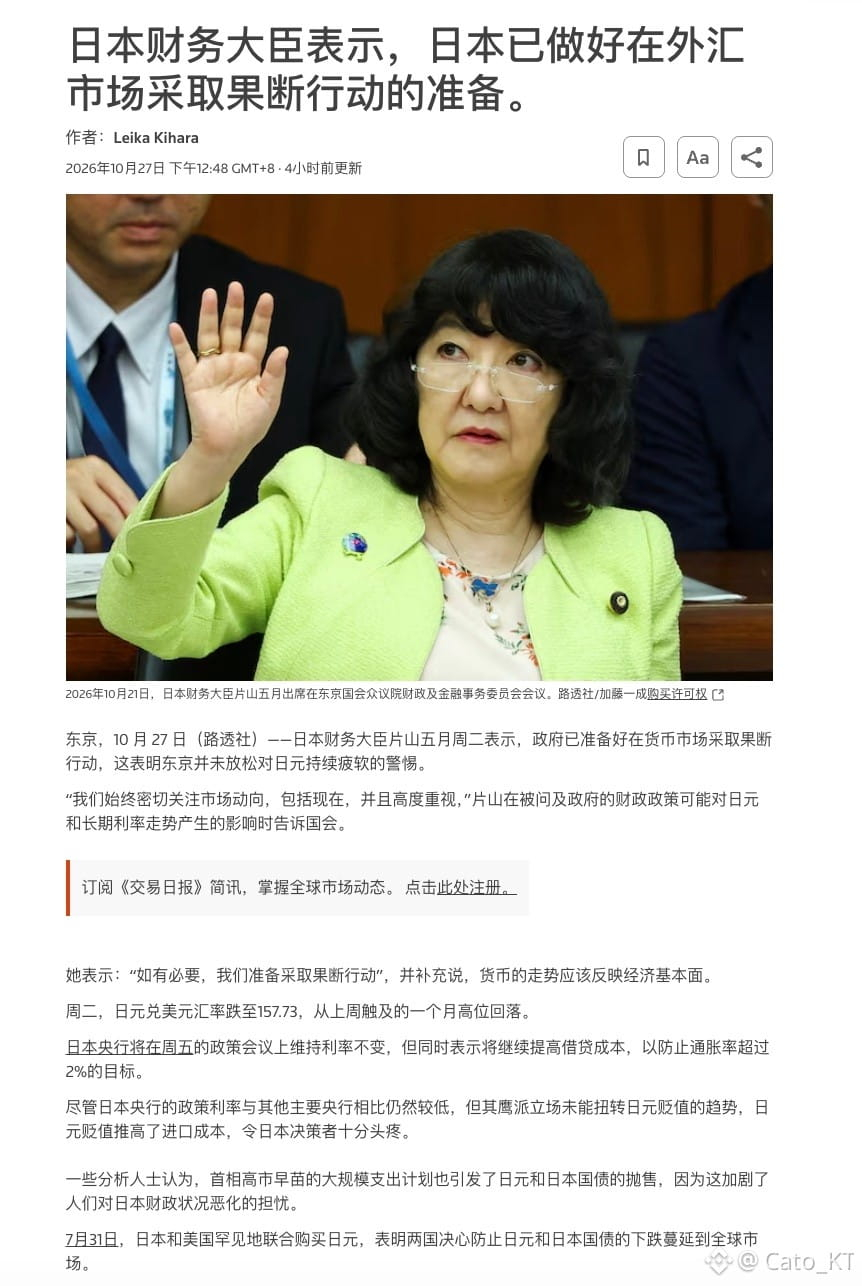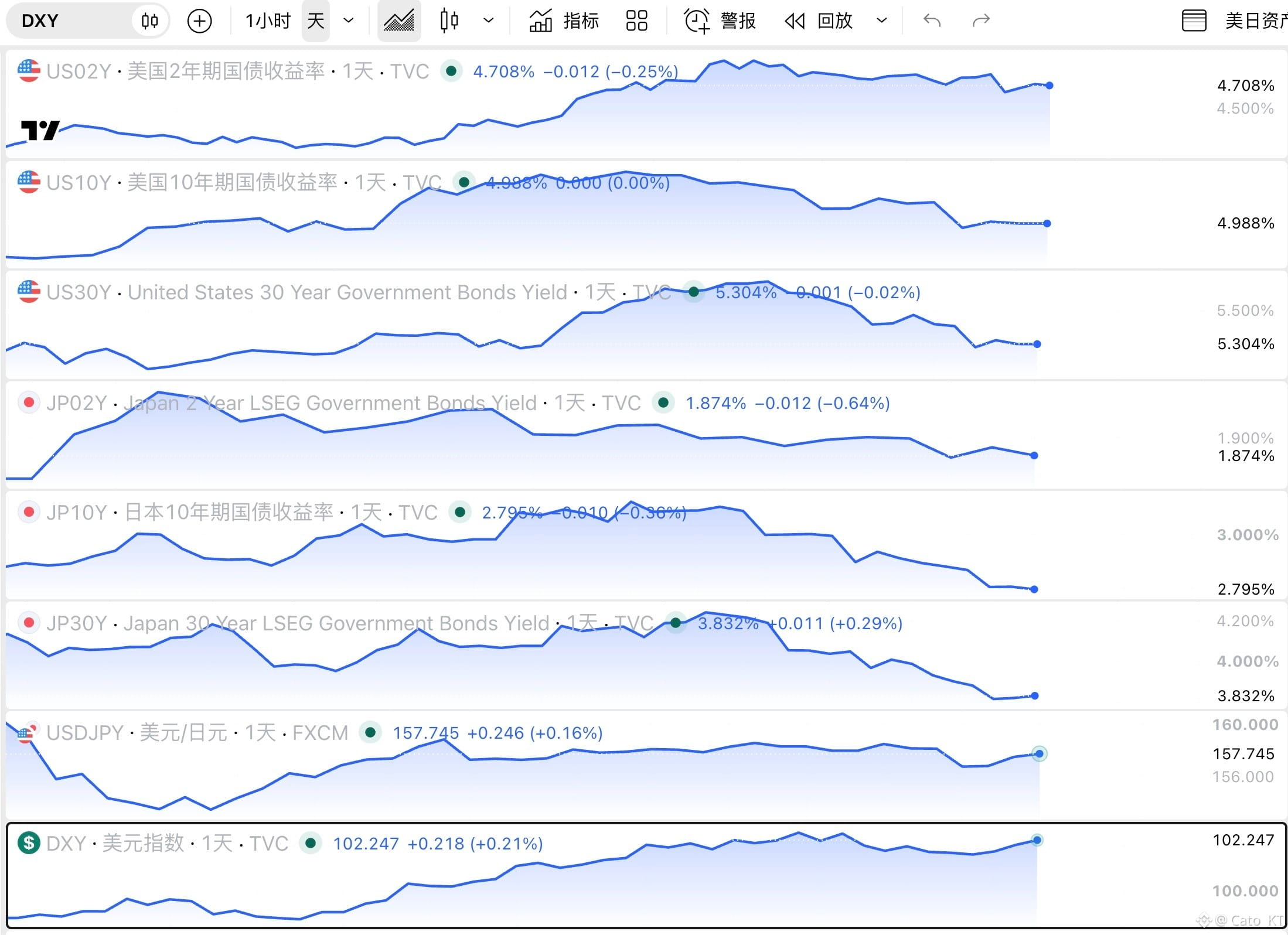
Another tail risk this week is the BOJ’s policy meeting, scheduled for this Friday, October 30. The market’s prevailing expectation is that it will pause rate hikes in October.
For markets, an October pause is already the baseline expectation. The question is whether it will be a dovish pause or a hawkish one. If the October pause is intended to pave the way for a December rate hike, that would deliver another shock to risk markets and yen carry trades, making this a tail-end macro risk following the Fed.
Next, we need to see whether the U.S. and Japanese central banks are in sync, and how tolerant they are of inflation. The BOJ previously aimed to push inflation to 2%, but recently several BOJ officials have said inflation must be prevented from breaking above 2% and getting out of control. This means that if inflationary pressures rise, an October pause is likely to be hawkish, which would drive up Japanese government bond yields and strengthen the yen.
By contrast, the Fed holds its policy meeting before the BOJ. So we need to see whether the two are in sync. If both deliver hawkish pauses, the impact on the U.S.–Japan interest rate differential will be limited. But if the Fed pauses dovishly or neutrally while the BOJ signals a hawkish pause, the U.S.–Japan rate differential will narrow further, placing additional constraints on financial liquidity. And since this falls at the end of the trading week on Friday, this tail risk is worth keeping an eye on!#比特币再度跌破8万美元