🚨 POLYMARKET IS UNDER U.S. REGULATORY SCRUTINY AGAIN!
Prediction markets are booming.
But the real challenge may not be trading volume. It may be compliance!
On October 27, Reuters exclusively reported:
The CFTC is investigating whether Polymarket violated its 2022 settlement agreement.
A central commitment was restricting U.S. users from accessing its offshore platform.
Four key areas under review 👇
🌍 ① Effectiveness of geolocation restrictions
📢 ② Compliance of U.S. advertising activities
🔐 ③ Customer onboarding and protections on its U.S. platform
⚖️ ④ Whether historical controls met regulatory obligations
Important!
An investigation is NOT a finding of wrongdoing!
Earlier related investigations closed in 2025 without charges.
Here's the real question:
INNOVATION OR REGULATION?
Are prediction markets a new frontier of financial innovation or a growing regulatory challenge?
CORE VARIABLES:
MARKET ACCESS × COMPLIANCE
What I'm watching:
👀 Any formal findings from the CFTC 👀 Polymarket's cross-border access controls 👀 Prediction market regulation 👀 Compliance developments among competitors 👀 BTC, ETH and BNB capital flows and risk sentiment
This is NOT a direct bearish signal for BTC, ETH or BNB.
But it highlights an industry-wide reality:
User growth can accelerate quickly. Compliance cannot be ignored!
👇 Which side are you on?
🟢 INNOVATION: Give prediction markets more room to grow
🔴 REGULATION: Prioritize compliance and customer protection
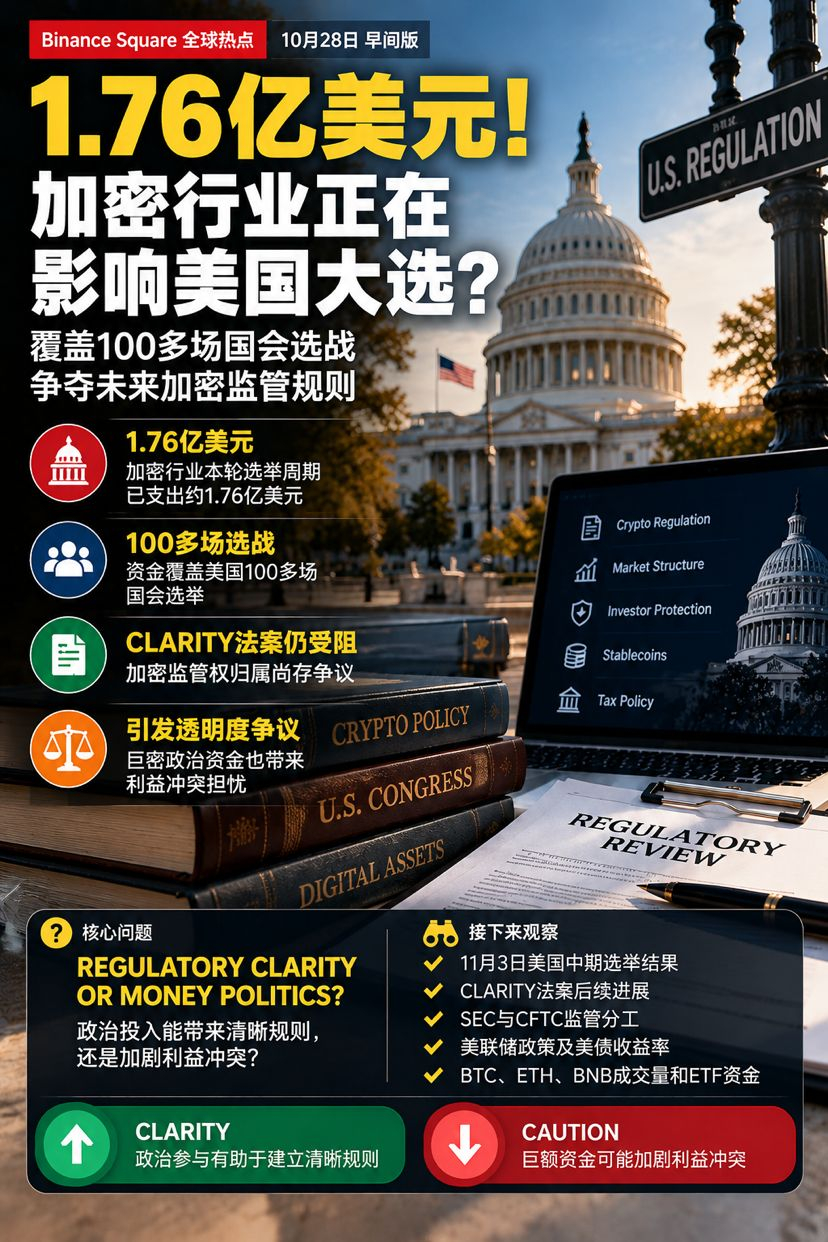
🚨 $176 MILLION! IS CRYPTO RESHAPING U.S. POLITICS?
With the November 3 U.S. midterm elections approaching, a major battle over the future of crypto regulation is unfolding!
A Reuters investigation published October 27 reveals:
💰 Crypto groups have spent roughly $176 MILLION this election cycle
🏛️ Spending covers more than 100 congressional races
📊 Fairshake and its affiliates spent about $150.8 MILLION through October 20
Why spend so much?
The real objective isn't just winning an election. It's building a lasting regulatory framework for crypto!
Four important signals 👇
⚖️ ① The CLARITY Act remains stalled, with regulatory jurisdiction disputed
🏦 ② The industry seeks bipartisan support to reduce future policy reversals
🔍 ③ Massive political spending also raises transparency and conflict-of-interest concerns
₿ ④ BTC, ETH and BNB may respond to policy expectations, but short-term price direction remains uncertain
Here's the real question:
REGULATORY CLARITY OR MONEY POLITICS?
CORE VARIABLES:
ELECTION RESULTS × LEGISLATIVE PROGRESS
What I'm watching:
👀 November 3 U.S. midterm election results 👀 Progress on the CLARITY Act 👀 SEC and CFTC jurisdiction 👀 Federal Reserve policy and Treasury yields 👀 BTC, ETH and BNB volume and ETF flows
Remember:
Political spending doesn't guarantee legislation will pass — or that crypto prices will rise!
👇 What's your take?
🟢 CLARITY: Political participation can help establish clearer rules
🔴 CAUTION: Massive spending may intensify conflicts of interest
🚨 Saudi Arabia’s largest refinery attacked? Global energy markets face a new risk!
Latest news on the evening of October 27:
Yemen’s Houthi militants claim they used ballistic missiles to attack Saudi Arabia’s Ras Tanura refinery, sparking a fire.
The refinery has a capacity of around 550,000 barrels per day!
⚠️ Key reminder: Saudi officials have not yet confirmed the attack, and the actual damage and impact on production remain unclear.
Why should global markets pay attention?
4 potential impacts👇
🛢️ ① New supply risks for critical energy infrastructure
🚢 ② Shipping safety near the Strait of Hormuz is back in the spotlight
💵 ③ If supply is disrupted, oil prices and inflation expectations could come under upward pressure
₿ ④ BTC, ETH, and BNB may be affected by overall risk sentiment, but the direction is uncertain
Here’s the real question:
OIL RISK OR PEACE HOPES?
The key variables:
ACTUAL SUPPLY DISRUPTION × DIPLOMATIC PROGRESS
What to watch next:
👀 Whether Saudi officials confirm the attack 👀 Operations at the refinery and export terminals 👀 Brent crude and U.S. Treasury yields 👀 Progress in diplomatic negotiations in the Middle East 👀 Trading volume and ETF flows for BTC, ETH, and BNB
Note!
Rising oil prices do not necessarily mean Bitcoin will fall.
There is also no evidence that this news directly caused volatility in the crypto market.
What the market is really trading is the risk of supply disruptions and the possibility of diplomatic de-escalation!
👇 What do you think?
🟢 PEACE: Diplomatic progress will ease risks
🔴 RISK: Energy supply risks may continue to escalate
The Glamsterdam testnet upgrade, scheduled to launch early this morning, didn’t go ahead as planned!
The Ethereum Foundation previously announced:
⏸️ Hoodi testnet upgrade postponed ⏸️ Plan to raise the gas limit to 200M paused ⏸️ New launch date not yet determined
Why the delay?
The development team needs to further assess the compatibility of EIP-8037 with existing smart contracts.
4 key signals 👇
🔐 ① Security and compatibility take priority over upgrade speed
⚙️ ② Testnet nodes need software configuration adjustments
📅 ③ The timeline for subsequent upgrades remains uncertain
📊 ④ The ETH market needs to distinguish technical progress from short-term price speculation
Take note!
This delay affects the Hoodi testnet.
It does NOT mean the Ethereum mainnet has stopped operating!
Ordinary ETH holders don’t need to take any action as a result.
Here’s the real question:
SAFETY FIRST OR LOST MOMENTUM?
The key variable:
SMART CONTRACT COMPATIBILITY
What to watch next:
👀 EIP-8037 compatibility assessment 👀 Hoodi’s new upgrade date 👀 Node client updates 👀 Actual ETH on-chain activity 👀 Overall market fund flows for BTC, ETH, and BNB
A delayed upgrade doesn’t mean technical failure.
But the ability to scale safely and reliably is what matters for long-term competitiveness!
👇 What do you think?
🟢 SAFETY FIRST: Better to delay than compromise security
🔴 LOST MOMENTUM: Repeated delays could weaken market confidence
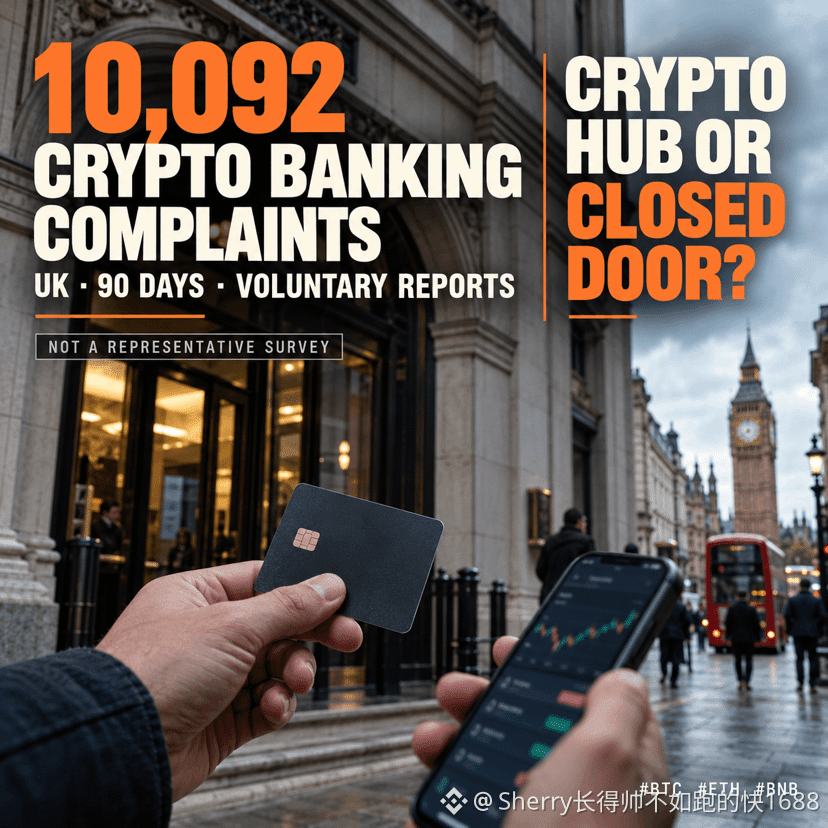
Important: These were voluntary submissions, NOT a representative national survey.
Four signals matter 👇
🏦 ① Legal crypto access doesn't guarantee banking access
🔐 ② Fraud prevention and AML remain legitimate banking concerns
💰 ③ Fiat on-ramps are essential to real-world crypto adoption
⚖️ ④ Regulatory ambition and banking practices remain disconnected
Here's the real question:
CRYPTO HUB OR CLOSED DOOR?
A country can support blockchain innovation.
But how can adoption grow if users struggle to move their money?
CORE VARIABLES:
BANKING ACCESS × REGULATORY CLARITY
What I'm watching:
👀 Changes to UK bank transfer restrictions 👀 Greater transparency from regulators 👀 Fiat access to compliant exchanges 👀 Capital flows and activity across BTC, ETH and BNB
This is NOT a nationwide banking ban on cryptocurrency.
And there's no verified direct impact on crypto prices.
👇 What's your take?
🟢 OPEN ACCESS: Allow compliant crypto transfers
🔴 STRICT CONTROL: Banking risk controls come first
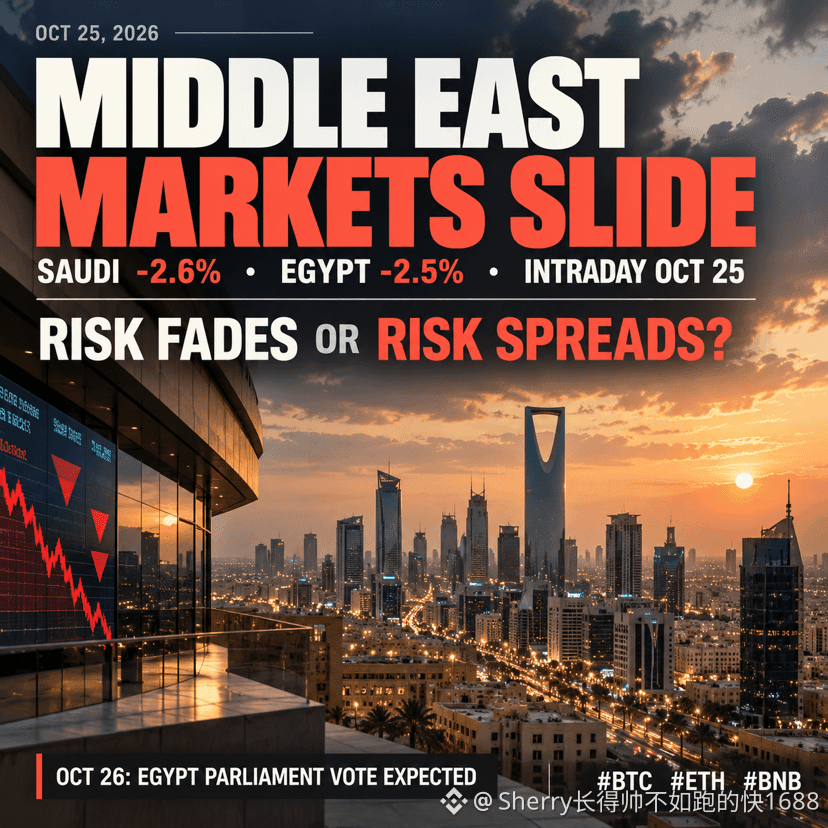
🚨 MOST STOCK MARKETS ARE CLOSED. MIDDLE EAST MARKETS ARE ALREADY FALLING!
A new geopolitical risk is shaking financial markets!
On October 25, fighting between Saudi Arabia and Yemen's Houthis intensified.
Saudi authorities reported intercepting drones and missiles targeting Riyadh and southern regions.
Markets reacted:
📉 Saudi stocks fell 2.6% intraday 📉 Egypt's main stock index dropped 2.5% intraday 🛢️ Energy supply risks returned to focus
But there's another critical development:
On October 26, Egypt's parliament is expected to vote on authorizing military support for Saudi Arabia if requested.
Why does this matter? 👇
🌍 ① The risk of a wider regional conflict is increasing
🛢️ ② Oil supply and transportation face renewed uncertainty
💵 ③ Higher oil prices could intensify inflation and rate pressures
₿ ④ BTC, ETH and BNB face another risk-appetite test
But the real question isn't:
WILL OIL GO HIGHER?
It's:
WILL THE CONFLICT SPREAD?
CORE VARIABLE:
GEOPOLITICAL RISK × ENERGY SUPPLY
What I'm watching:
👀 Egypt's October 26 parliamentary vote 👀 Monday's oil market opening 👀 Red Sea shipping and energy infrastructure 👀 Treasury yields, USD and U.S. stock futures 👀 BTC, ETH and BNB volume and capital flows
Important:
There is no verified evidence that this event directly caused a crypto selloff.
But while traditional markets are closed, 24/7 crypto markets may react first to changing risk expectations.