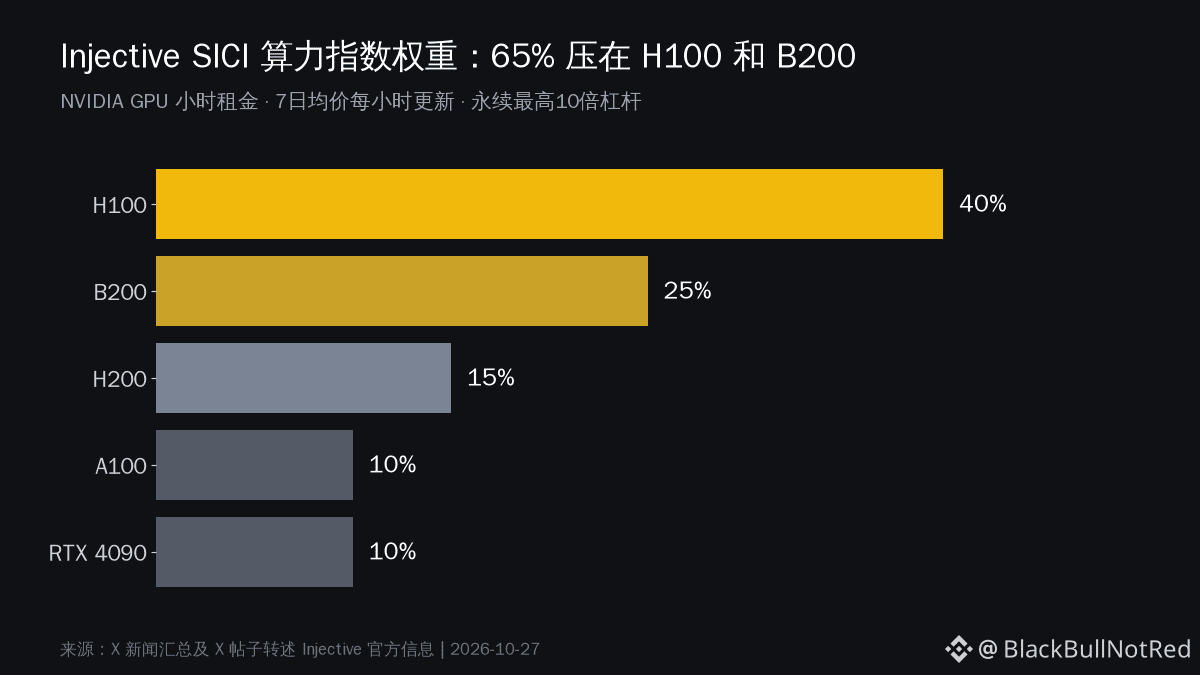
Injective has launched SICI, a perpetual contract tracking a GPU rental index, with up to 10x leverage. A bunch of .inj accounts on the timeline are parroting the same weights: H100 40%, B200 25%, H200 15%, A100 10%, 4090 10%. They’re posting in English and Thai back and forth, and plenty of the posts have only double-digit views.
I’m not knocking the product direction—compute pricing is a real problem. But let’s not rush to call this a new asset class.
According to the public description, the index uses compute-market data to calculate a seven-day average, updated hourly. Pair a seven-day average with 10x leverage, and you’re betting on a number that lags behind. The real price shock will already have been absorbed into rental contracts.
Then there’s the question of who’s hedging. AI companies that actually rent H100s either sign long-term contracts or buy the cards outright. Are they really going to come on-chain, post USDC collateral, and open short positions to lock in costs? I don’t buy it. Without natural hedgers, all that’s left is speculators trading against each other while market makers collect funding fees.
There’s also the data source. The promo posts only say “compute marketplaces”—they don’t specify which ones, how prices are determined, or who has the authority to change them. For index perps, the price feed is exactly the weak point you worry about most.
Fink says compute futures are a new asset class. There’s nothing wrong with that statement, but he almost certainly wasn’t talking about this particular market. For now, SICI looks more like a prop for telling an AI story about INJ.
#INJ #AICompute