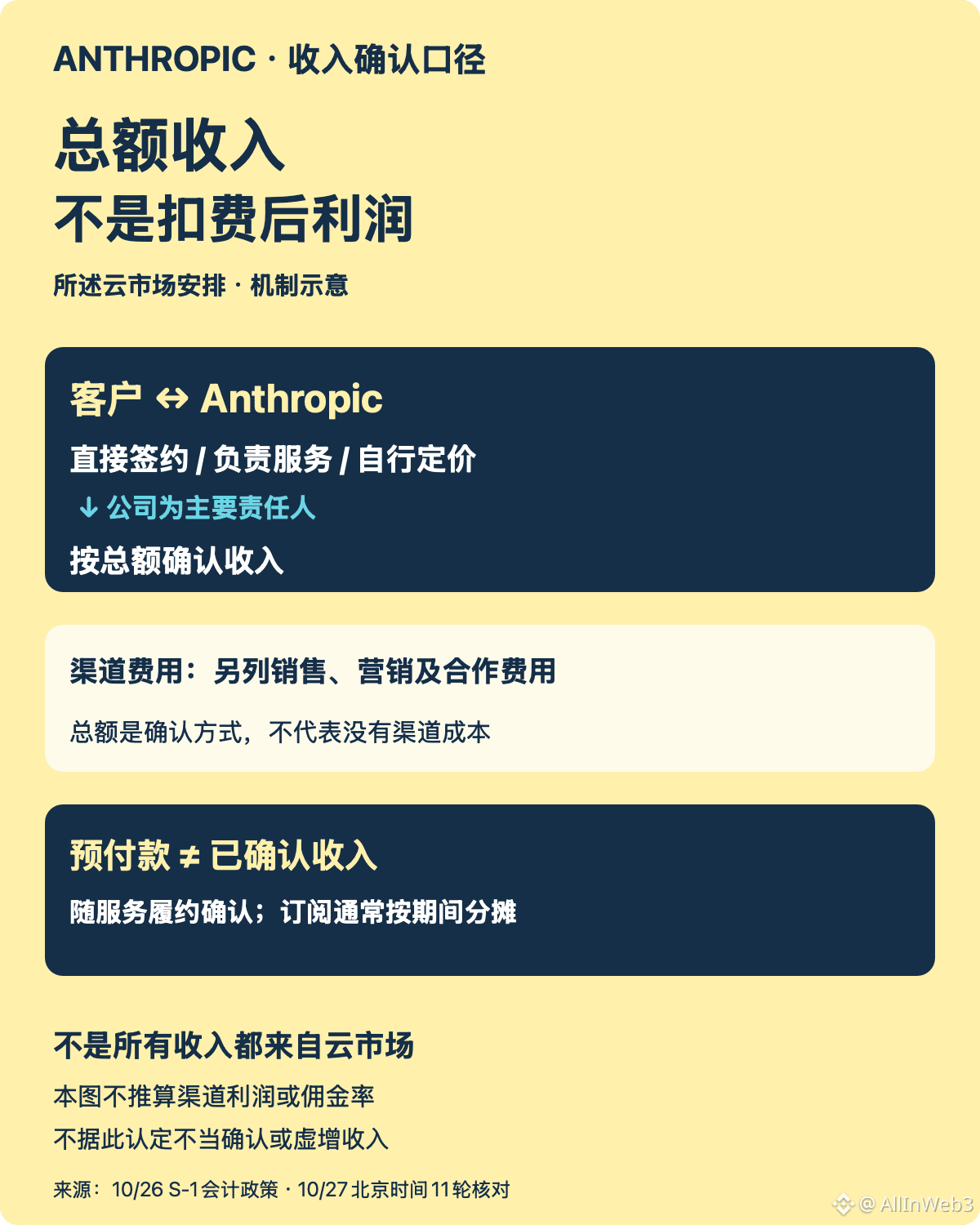
Anthropic’s revenue growth requires distinguishing gross revenue from the money left after channel fees. The previous post discussed revenue per employee; this time, let’s add the channel accounting described in the prospectus: selling through cloud marketplaces does not mean that only the net amount after revenue sharing is recorded as revenue.
Source: The October 26 S-1 states that, under the cloud service provider marketplace arrangements described, the company is considered the principal and therefore recognizes revenue on a gross basis. The rationale is that it contracts directly with customers, is responsible for providing the services, and sets its own prices; the cloud service provider does not obtain control before the services are delivered.
How to interpret this: Gross revenue here refers to the method of revenue recognition, not profit, and it does not prove that the channel has no costs. The filing separately includes fees paid to channel partners under sales, marketing, and partner expenses. To assess the quality of growth, revenue and the related channel costs need to be considered together; not all revenue should be treated as money the company gets to keep.
Another distinction: Revenue is generally recognized as services are used; subscription fees are usually paid in advance and then recognized over the subscription period. Receiving cash upfront and recognizing revenue are not the same thing, and one cannot be substituted for the other.
What to watch next: How channel fees and service costs change relative to revenue, and how much growth ultimately leaves behind. This only explains the accounting policies already disclosed; it does not allege that the company uses improper recognition or claim to have independent profit data for each channel.