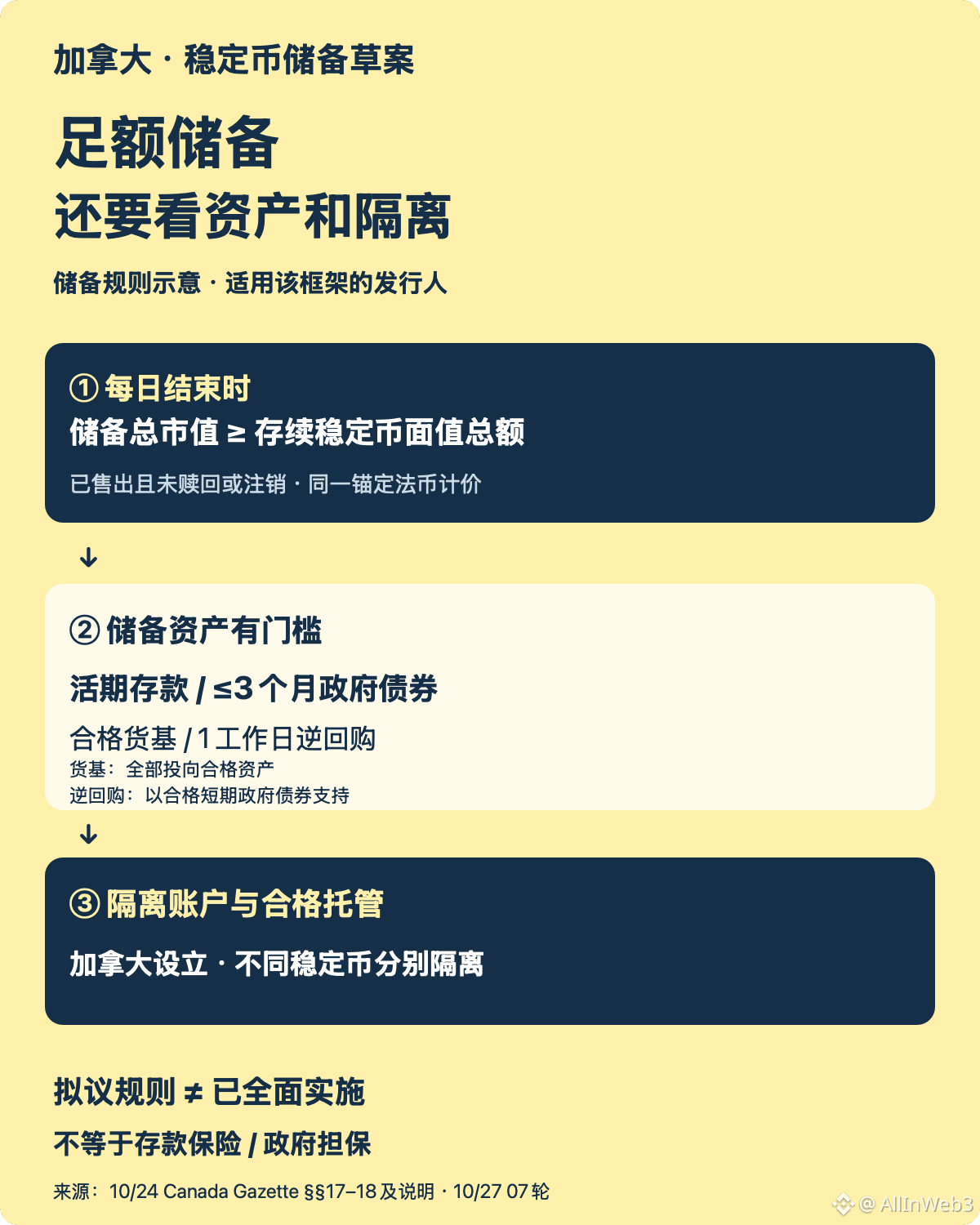
What’s worth watching in Canada’s stablecoin draft rules isn’t just how long redemptions can take, but also where the redemption funds are held. The previous post covered timelines and returns for holders; this one adds reserves: having sufficient reserves on the books, holding assets that are easy to liquidate, and keeping accounts segregated are three separate requirements.
Latest provisions: Section 17 of the proposed rules published in the October 24 issue of the Canada Gazette requires that, at the end of each day, the market value of reserves denominated in the pegged fiat currency must be no less than the total face value of stablecoins that have been issued and not yet redeemed or cancelled. The measure is market value, not the purchase cost; nor does it mean that all reserves must be held in cash.
Eligible assets: The draft lists demand deposits, government bonds with no more than three months remaining to maturity, money market funds invested entirely in eligible assets, and reverse repurchase agreements with a one-business-day term and backed by eligible short-term government bonds. The logic behind these restrictions is to support redemptions with assets that have shorter maturities and are easier to liquidate.
Segregation requirements: Regulatory guidance requires reserves to be held with an eligible custodian established in Canada and segregated in the event of insolvency. Reserves for different stablecoins issued by the same issuer must also be kept separate; multiple coins cannot be pooled together.
Risk boundaries: These measures apply to issuers covered by the framework. They do not amount to a government guarantee or deposit insurance, and they cannot guarantee that there will never be liquidity pressures. The rules are still proposed, so they should not be described as already fully implemented.
What to watch next: the final text, disclosures on reserve composition, and whether segregation arrangements can be put into practice. Fully backed reserves provide one layer of protection, but whether holders actually get their money back still depends on the assets and how the rules are implemented.