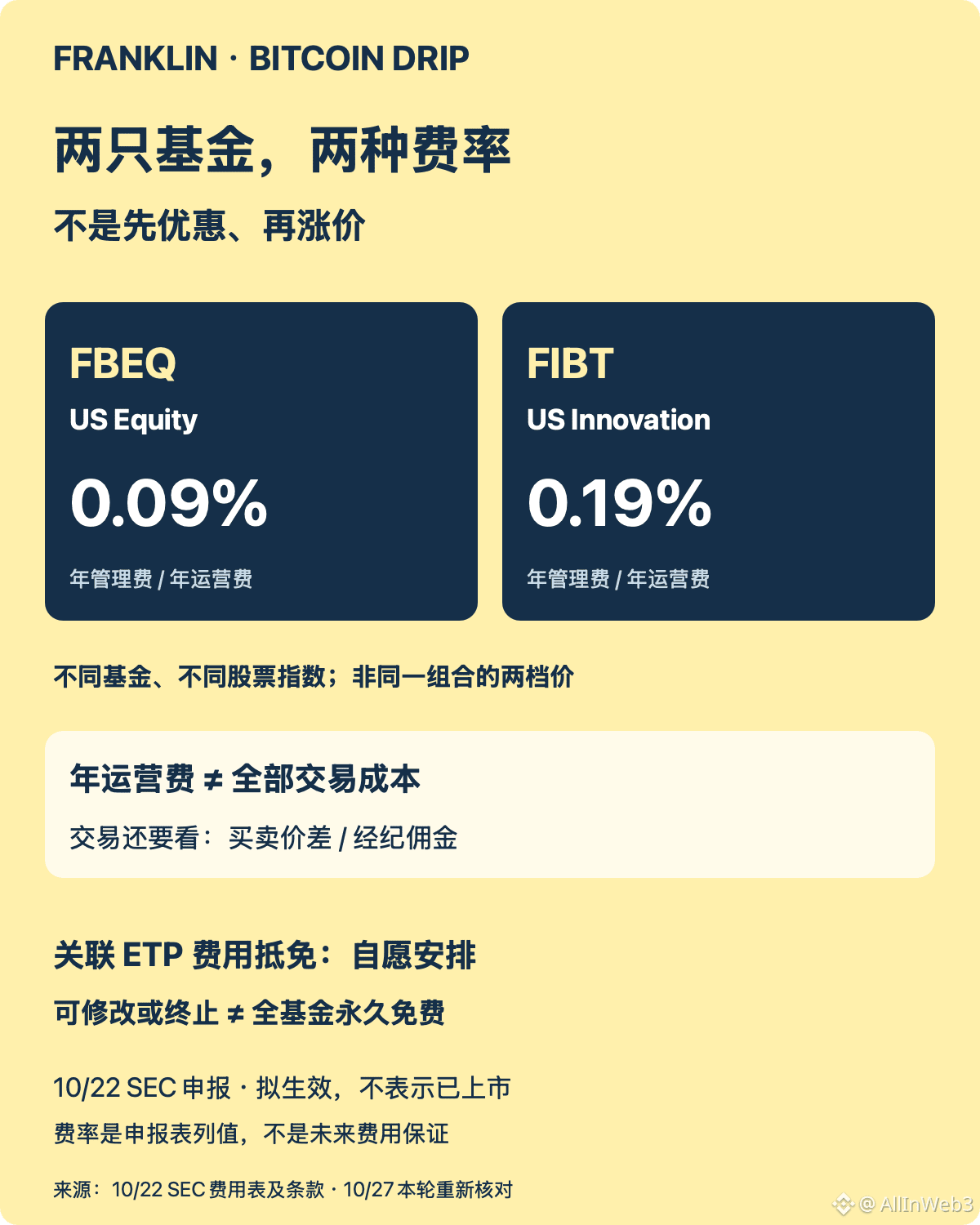
For Franklin’s “dividends-to-Bitcoin” ETF lineup, low fees still require distinguishing which fund you’re looking at and which costs are covered. The previous post covered the portfolio mechanics and distributions; this one focuses on fees: 0.09% and 0.19% are the rates for two different products, not a discount followed by a price hike for the same fund.
Filed fee rates: In the October 22 SEC filing, FBEQ corresponds to the U.S. Equity Strategy, with an annual management fee and stated total annual operating expenses of 0.09%; FIBT corresponds to the U.S. Innovative Equity Strategy, at 0.19%. They track different stock indexes, so they shouldn’t be treated as the same portfolio and compared on fee level alone.
Another provision: The adviser voluntarily waives part of its unified management fee to offset a portion of the sponsor fees actually earned by the adviser or its affiliates when the fund invests in affiliated ETPs; the offset is subject to a fee cap. This does not mean the fund’s entire management fee is waived, nor is it a permanent commitment: the filing allows this voluntary waiver to be modified or terminated at any time.
Cost boundaries: The stated annual operating expenses do not include all trading costs. The prospectus also notes that brokerage commissions, bid-ask spreads, and portfolio turnover costs can affect actual results, so the annual expense ratio should not be treated as the total cost of a single trade.
What to watch next: The final effective filing, whether the affiliated-fee offset continues, and actual trading spreads. This is an interpretation of the filed terms; it does not present a proposed effective date as a completed listing or imply investment returns based on low fees.