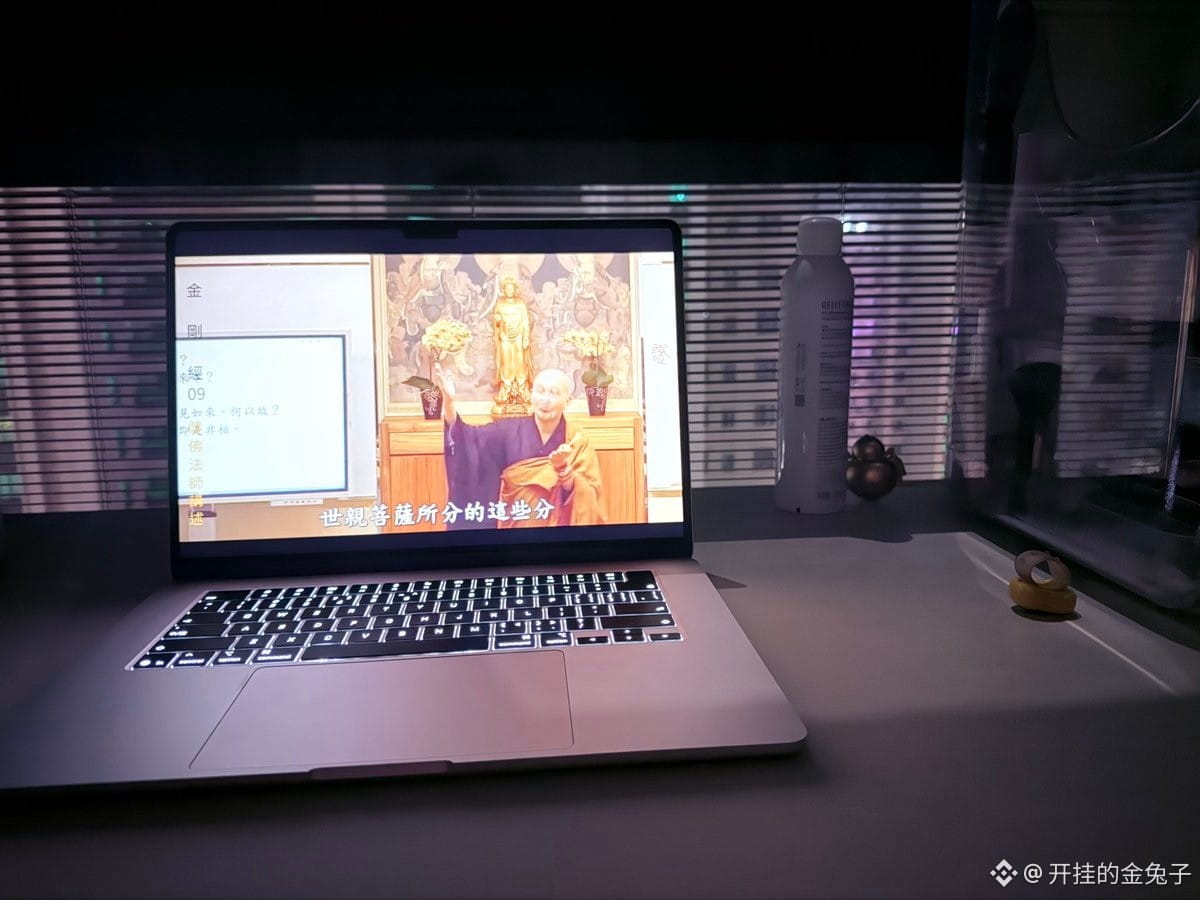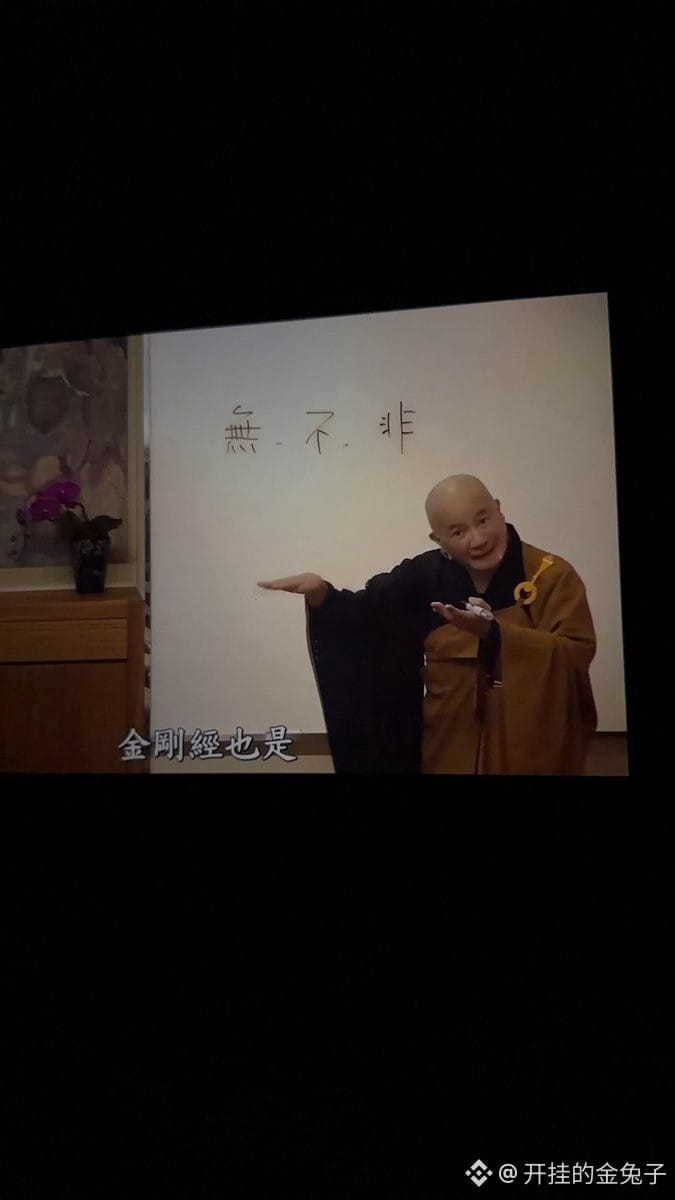

I spent two hours this evening listening to Dharma Master Tifo’s eleventh lecture on the Diamond Sutra. He talked about the Buddha’s lack of any mark of self, any mark of others, any mark of sentient beings, or any mark of a life span when King Kalinga cut his body apart piece by piece (similar to death by a thousand cuts). He also spoke about calmly accepting what one undergoes and the importance of patience in the face of humiliation.
Dharma Master Tifo has been teaching the Dharma for many years. One of his students had cancer and asked him what to do. Dharma Master Tifo said to let go, because the Diamond Sutra contains an example set by the World-Honored Buddha. One student replied, “Teacher, you don’t have cancer yourself, so of course you can say that.”
Dharma Master Tifo made a vow to demonstrate letting go by getting cancer himself. He developed bone cancer, one of the most painful cancers. Listening to this brought tears streaming down my face. When I hear the Dharma Master explain the Diamond Sutra, I feel that he is a living bodhisattva. Although he says that he is a monastic and an ordinary person, my own feeling is that he is a living bodhisattva, sharing the Dharma with us and setting an example in the same way.
The world we live in is an age of the Five Turbidities, but it is also the best place to practice and realize our true nature—the best world in which to cultivate patience. The patience spoken of here does not mean forcibly enduring things. It means understanding that everything is an illusion; even the body is merely the product of causes and conditions coming together, and is not eternal. The eternal self knows no suffering, and is free from the suffering brought by the eyes, ears, nose, tongue, body, and mind. The suffering of the body is the suffering of feeling and consciousness.
In the end, what people care about most is their health and their bodies. When one day we can let go of even these, and see clearly that they are illusory, we will no longer be attached to bodily pain. We will understand that our true self is free from suffering, while calmly accepting the body’s pain. We will also avoid creating all kinds of delusions that bring suffering to the mind because of bodily pain. When we are able to let go, we will be drawing ever closer to awakening.
When I read the Kṣitigarbha Bodhisattva’s Fundamental Vows Sutra in the past, people often said they were afraid to read it, especially at night, because Kṣitigarbha Bodhisattva delivers nonhuman beings from the hells and vowed not to become a Buddha until the hells are empty. The sutra describes many of the terrible torments of hell, so many people are afraid to read it. Some are afraid in their hearts; others are superstitious and think that reciting sutras or studying Buddhism will make their lives miserable. Today, Dharma Master Tifo also explained that reciting the sutra actually brings about a mind of contemplation, allowing us to see the difficulties in our lives. In my view, without reciting it, we simply continue cycling through rebirth after rebirth. It is like a frog being slowly boiled in water: lifetime after lifetime, we use different scripts to deal with the same problems. One way is to resolve them here and now; the other is to keep suffering through endless cycles of rebirth until they are resolved. Either way, they will eventually be resolved.
The world we live in is one that calls for patience in the face of humiliation; adversity is everywhere. This is the best place to practice and quickly attain the right fruition. But many people are afraid, myself included. I am afraid too, but I don’t want to suffer for all eternity. I hope to escape the suffering of rebirth in this lifetime and not have to repeat the same script again and again.
So we must study the sutras and, with the help of good spiritual friends, understand the truth of life and the universe. The patience that comes from understanding the truth is peaceful acceptance, not forced endurance—the kind of endurance that feels like there is a knife in your heart. Through the difficulties of worldly life, we can continually experience this mind of ours that understands all appearances to be non-appearances.
Reading the Kṣitigarbha Sutra brings many merits. Kṣitigarbha Bodhisattva is the most down-to-earth of bodhisattvas. As I understand it, when I read the sutra, the good things we seek in this world can all be realized, including wealth.
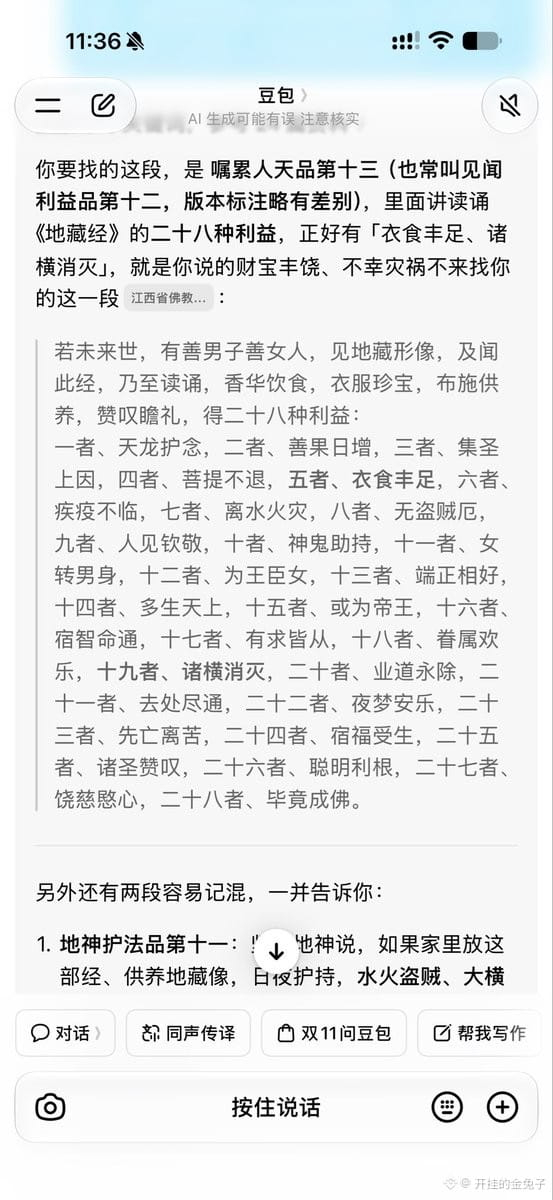
I personally began reading the Kṣitigarbha Sutra in 2018. At the time, I was tens of thousands in debt and had no other particular abilities. The sutra says that upholding and reciting it brings 28 benefits, and the fifth is having sufficient clothing and food, as shown in Figure 4. After reading it for more than three years, I did indeed have enough for food and clothing, and my debts were paid off. But then my laziness set in, and I stopped reading it for over a year.
Life seems to go in cycles. I encountered Buddhism in 2016, and in 2026 I began a new round of study. This time, I am upholding and reciting the Diamond Sutra, studying the path from worldly life to the transcendental.
At the same time, I feel that things are arranged by some unseen force. The people around me who study Buddhism all recite Amitabha Buddha’s name, while I chose Kṣitigarbha Bodhisattva. One of Kṣitigarbha Bodhisattva’s titles is “Patient and Steadfast Kṣitigarbha Bodhisattva.” I find myself wondering: why did I begin by reciting Kṣitigarbha Bodhisattva’s name, rather than Guanyin Bodhisattva’s or Amitabha Buddha’s?
Patience and steadfastness are the answer. Of course, I still have some questions. Once I’ve finished listening to all of Dharma Master Tifo’s publicly available online lectures, I hope my questions will be resolved.
The above reflects only my personal views and experience and does not constitute any investment advice.