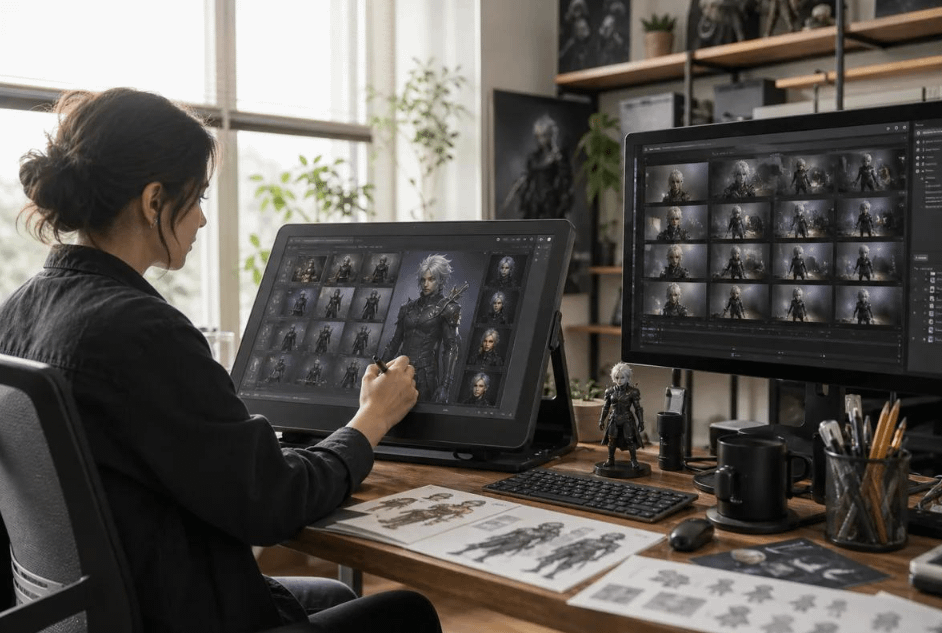

I'm 29 and work as a freelance game artist, making a living from character design, environment art, and contract projects. Put simply, freelancing looks flexible, but having work this month doesn't mean I'll have work next month. My biggest worry used to be when clients would pay me. Then I got into crypto, and picked up another worry: can today's candlestick help me make my money back?
I first got into the crypto market after doing some art for a blockchain game team. I listened to people on the project talk about tokens and on-chain assets, and decided to put a little money into some major cryptocurrencies myself. I didn't expect to catch a market upswing, and I did make some money trading spot. I was incredibly confident back then. I thought that just as I had an eye for art, I could spot patterns in the market too. I even started fantasizing that one day I wouldn't have to hustle for commissions and could make a decent living from trading instead.
What really woke me up was the period when I started trading futures.
My freelance income is unpredictable, so I’m always thinking that when the market is good, I should make a little extra—ideally enough to cover several months of living expenses during the slow season. When I first started making money, I thought I’d found my groove. But whenever I took a loss, I couldn’t bear to admit defeat. Even when the reason I’d entered the trade no longer held, I kept telling myself to wait a little longer, and my stop-loss kept getting pushed further away. I’d see prices bounce and chase the move with a long, then they’d drop and I’d rush to flip short. I’d go back and forth several times in one night, and fees and losses slowly wore down my account.
The worst time was when I’d just closed a losing trade, and the next day a client told me the project had been delayed. The payment I’d expected to receive was gone, too. Rent, software subscriptions, and everyday expenses were all staring me in the face. I watched my account, with just one thought in my mind: If I could catch one more market move, I could make up the shortfall.
And what happened? The more desperate I got, the more mistakes I made. One day, I nearly transferred in the emergency money I’d set aside for next month’s living expenses. My hand was already on the transfer screen when I suddenly realized that if I lost that money too, I wouldn’t even have the confidence to take on new work. The market won’t rebound just because I’m short on money, and it certainly won’t hand me a chance to make money just because I’m in a hurry.
In the end, I closed the page and stopped trading for a few days.
That experience made me rethink how I trade. First, living expenses, emergency savings, and trading funds must be kept separate. Rent money does not go into a futures account. Second, before entering a trade, I need to think through what I’ll do if I’m wrong and where I’ll put my stop-loss, instead of focusing on how much I could make when things are going well and coming up with excuses only after I start losing. Third, my position size must match the distance to my stop-loss. I can’t increase my risk just because an opportunity looks promising. Fourth, if I don’t understand the market, I’d rather stay out. If two trades in a row go badly, I stop and review them instead of trying to prove myself with the next one.
Now I mainly use the 4-hour timeframe to determine the direction, then look for entry setups on the 1-hour timeframe. For example, after the price breaks through a key level, I don’t chase it just because I see a big bullish candle. I wait for a pullback and see whether the price can hold above that level. If the market moves differently from what I expected, I exit according to plan. Missing part of a move is no big deal. The real danger is forcing myself into a trade I’m not confident about just because I don’t want to miss out.
Later, I put more of my energy back into my portfolio and maintaining client relationships. I reached out to teams I’d worked with before and tried to secure long-term projects. I only trade with spare money I can afford to lose. If I make a profit, I don’t rush to increase my position size; if I take a loss, I don’t cover it with my living expenses. My finances recovered more slowly than I’d hoped, but at least I no longer wake up every day and immediately check how much money is left in my account.
The biggest change for me now isn’t how much I’ve suddenly made. It’s knowing when to make a move and when to stop. Creating art takes repeated revisions, and trading is the same. It’s not about guessing right every time; it’s about adjusting promptly when you realize you’ve made a mistake and not letting one slip-up wipe out everything you’ve built.
I’ve also come to believe more and more in this saying: The market offers opportunities, but what really determines how far you can go is whether you’ve left yourself a way out. Your main job gives you a foundation, risk management is your guardrail, and trading is just one part of life—not a lifeline to solve every problem.
If you trade too, but find yourself constantly chasing rallies and selling off in a panic, or trying to win back your losses, come join our group and exchange ideas. We regularly discuss market structure, entry logic, stop-loss placement, and review trades that we shouldn’t have taken. No one can guarantee they’ll be right every time, but at least we can make our trading plans clearer together, act on impulse less, and stick to more discipline. There are opportunities in the market every day. First, stay in the game so you’re able to wait for the next one.$OSMO $DOOD $BULLA