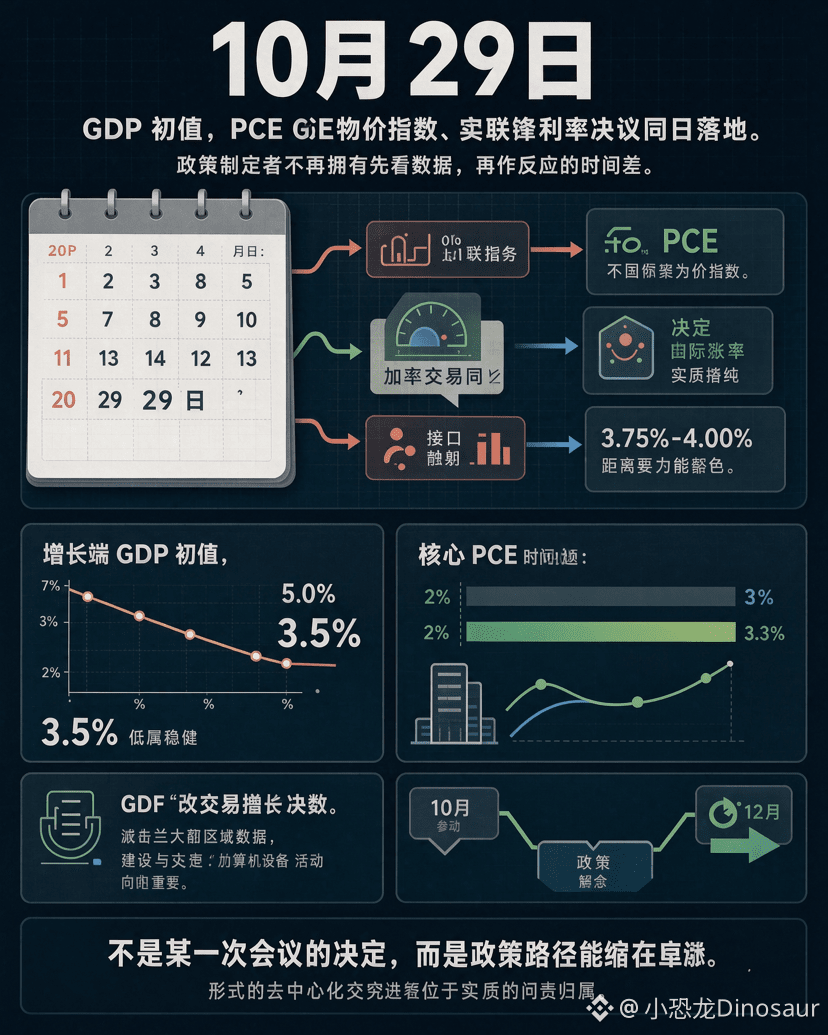

#美国下周将公布Q3GDP和9月PCE Next Thursday (October 29), the advance estimate of U.S. Q3 GDP and the September PCE price index are both due on the same day, while the Fed’s interest-rate decision is scheduled for the early hours of that morning. Having all three events fall on the same calendar page is itself a signal: policymakers no longer have the luxury of “looking at the data first, then responding.”
First, growth. The Atlanta Fed’s GDPNow model has tracked Q3 growth down from 5.0% at the end of July to 3.5% on October 20, its lowest reading since tracking began. The main reason for the downgrade is not a collapse in consumer spending, but downward revisions to private investment, government spending, and net exports alike. Growth of 3.5% is still solid, but the direction matters more than the level: momentum is beginning to ease from the highs of the first half of the year.
Now inflation. The forecast for core PCE inflation remains around 3.3% year over year, unchanged from July and still visibly distant from the 2% target. More troubling is the composition of inflation: rising prices for computer components and equipment, driven by construction of AI data centers, are emerging as a new source of pressure beyond the traditional cyclical framework. The New York Fed’s model attributes part of Q3 growth’s upside surprise to the AI investment boom, while that same force is creating new price stickiness.
The result is a combination that is neither hot nor cold, yet sufficient to freeze rate cuts: GDP is not weak enough to signal recession, and PCE is not low enough to justify a shift. The Fed raised rates to 3.75%–4.00% in September, and its dot plot points to the possibility of one more move this year. Market pricing for no change in October is firming, but the uncertainty around December remains. What is truly being squeezed is not the decision at any single meeting, but the visibility of the policy path: when growth is slowing but inflation is uncooperative, data dependence deteriorates from “waiting for more information” into “being forced to choose with incomplete information.” Next Thursday’s simultaneous releases will simply put this dilemma under the spotlight.