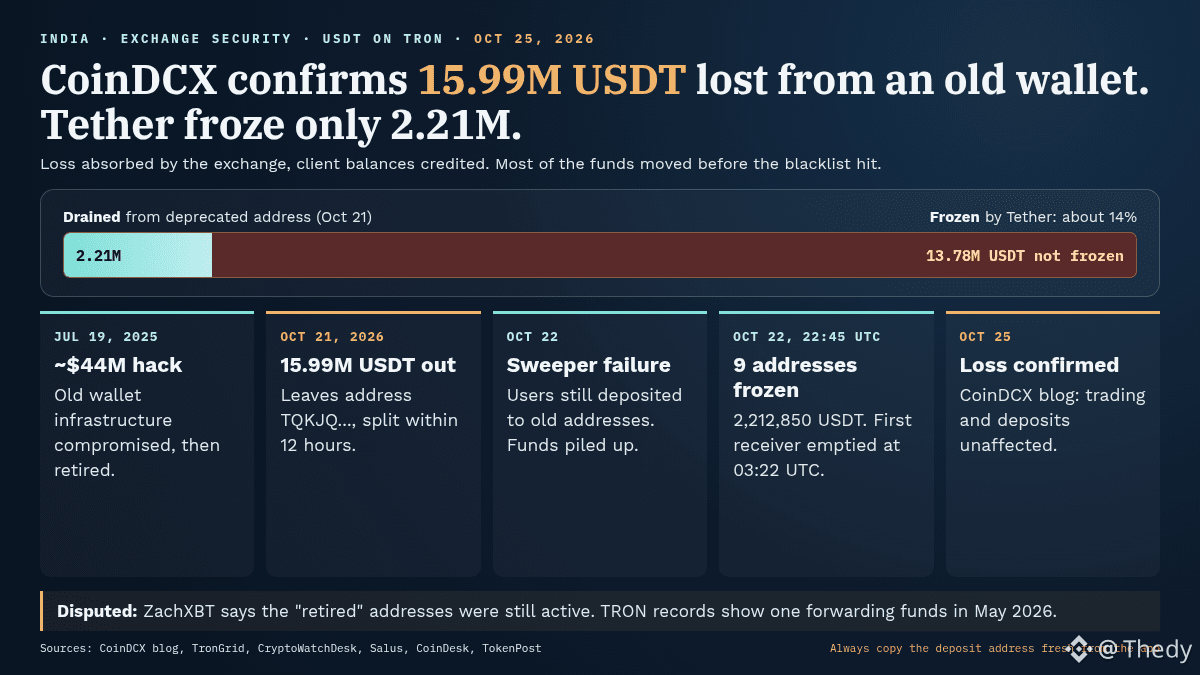
CoinDCX, a major Indian crypto exchange, confirmed this Sunday, 25/10, a loss of 15.99M USDT, which the company has absorbed. Tether froze 2.21M, or about 14%. The rest is gone.
The timeline, according to the CoinDCX blog and TRON data:
- 19/07/2025: A hack involving around $44M. The old wallet infrastructure was compromised and then abandoned.
- 21/10/2026: Around 15.99M USDT left a deprecated address (starting with TQKJQ) and was then split up in less than 12 hours.
- 22/10: CoinDCX initially referred to unused addresses, then acknowledged an outage in its “sweeping” service. Customers were still depositing to those old addresses, and funds were accumulating there.
- 22/10, 22:45 UTC: Tether blacklisted 9 TRON addresses, freezing 2,212,850 USDT. The first receiving address had already been emptied at 03:22 UTC.
- 25/10: CoinDCX disclosed the amount. Customer balances were credited, and trading was not interrupted.
The point of contention: ZachXBT disputes the claim that the addresses were “abandoned.” According to TRON records reviewed by CryptoWatchDesk, one of them was still transferring funds in May 2026.
My take: Tether's freeze came more than 19 hours after the first address had been emptied. The real lesson is for users. A deposit address saved in your address book can become a trap when an exchange changes its infrastructure.
Two possible outcomes: a technical report and smooth withdrawals, and the incident remains a company loss. If other old addresses start moving, platform security will become an issue again.
As for the market, no visible impact: $BTC at $80,380 on Kraken at 14:50 UTC.
Question: do you check the deposit address in the app every time, or reuse the one you saved?
#CryptoSecurity #CryptoNews