


"Bro, they burned 40% of supply, why isn't it pumping?"
Imagine you have a giant warehouse filled with 100,000 limited edition sneakers. You are selling them slowly, but overall demand is low. One day, you decide to set 40,000 pairs on fire. You announce to the world, "I just destroyed 40% of the sneakers! The rest are now super rare!" But the price on the street does not budge.
Why? Because those 40,000 sneakers were just sitting in a locked vault anyway. They were never for sale on the open market. Destroying them did not change the actual number of sneakers people were currently buying and trading. That is exactly the illusion of most crypto token burns.
"Wait, what does burning a token actually mean?"
In crypto, you cannot physically set a digital coin on fire. Burning simply means sending tokens to a dead wallet address.
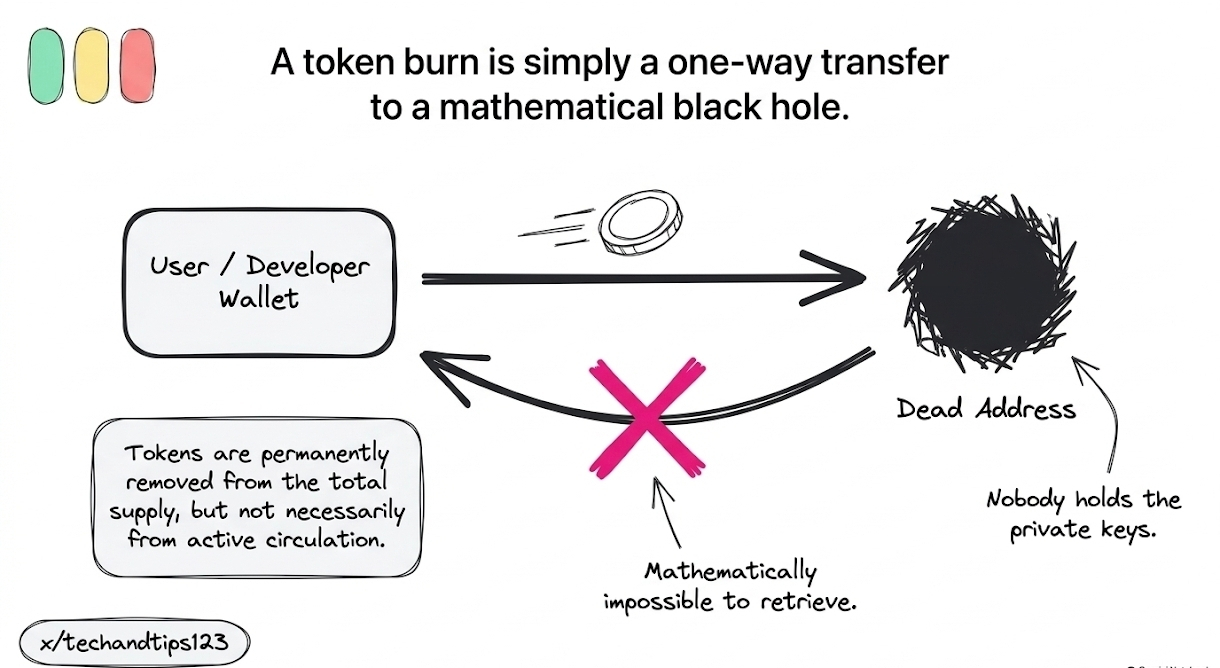
Every blockchain has a specific address where nobody holds the private keys. It acts like a digital black hole. Once a token is sent there, it is mathematically impossible to ever retrieve it. It is permanently removed from the supply.
"If the supply goes down, shouldn't the price go up automatically?"
No, and this is the biggest trap retail traders fall into.
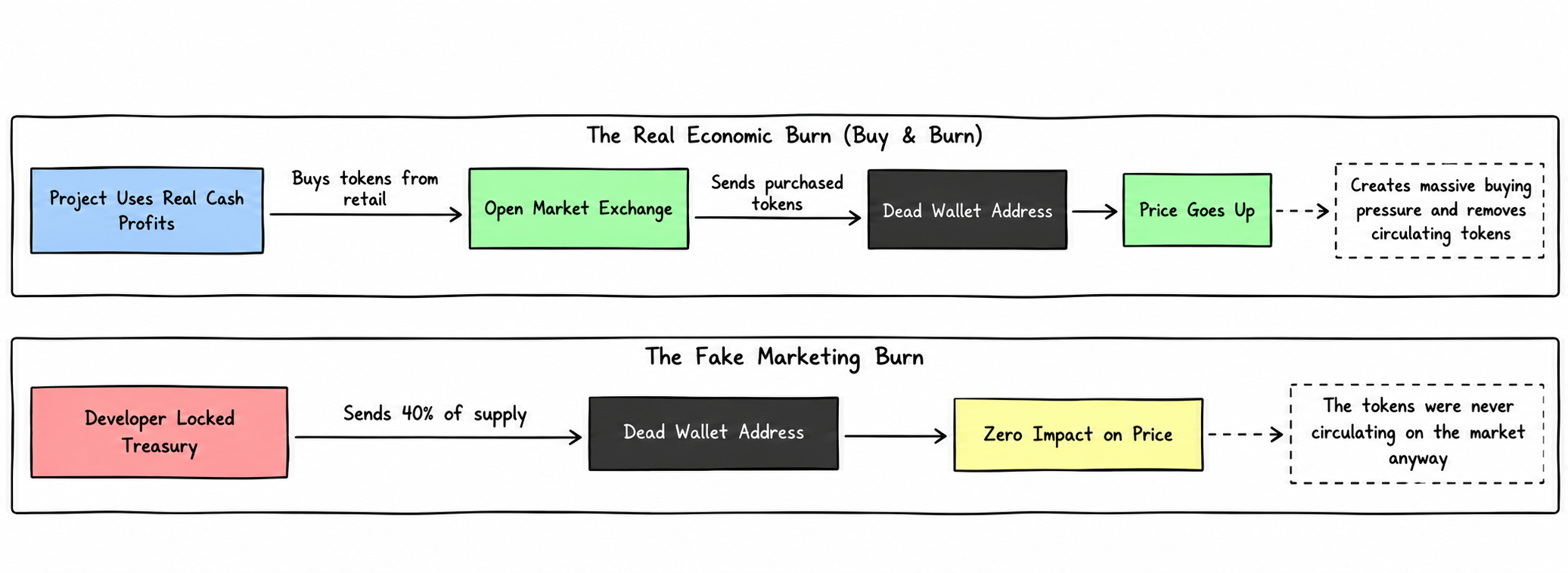
Price is strictly determined by active supply and demand on the exchange order books. If a developer burns a billion tokens from their own private locked wallet, it does not change the amount of money flowing into the public trading pools.
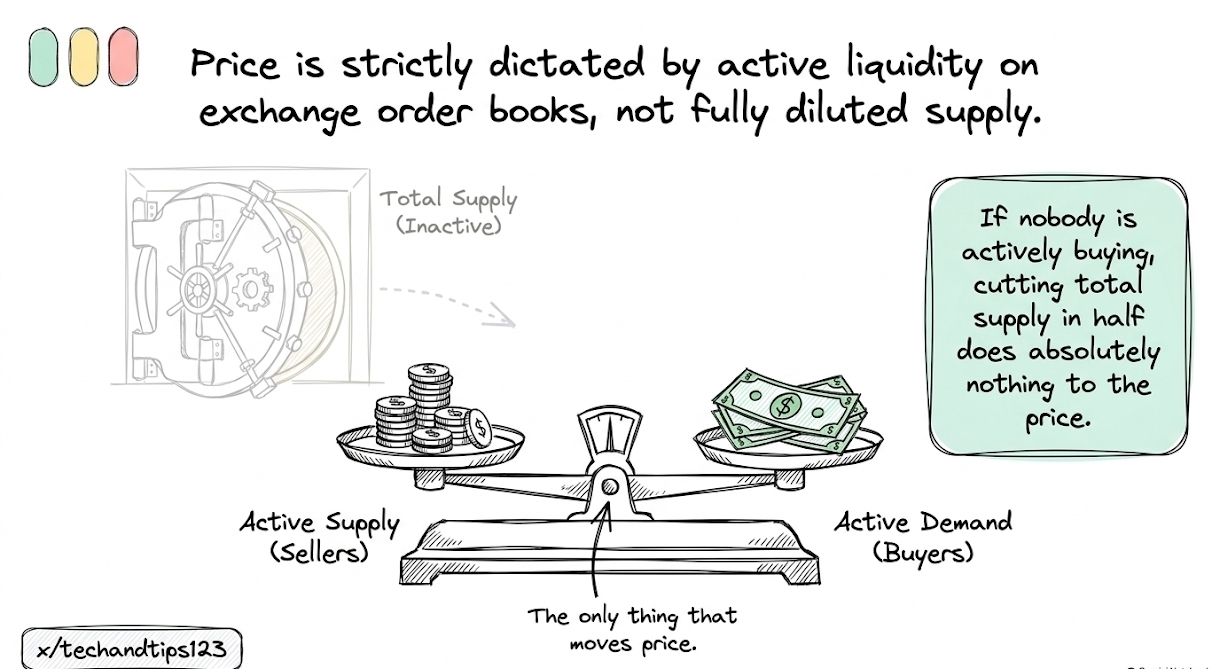
If nobody is actively buying the coin, cutting the total supply in half does absolutely nothing to the price. The only time a burn directly pumps the price is if the project takes real cash, buys the tokens off the open market from regular sellers, and then burns them. That creates actual buying pressure.
"Then why do projects constantly brag about massive token burns?"
It is mostly a marketing tactic.
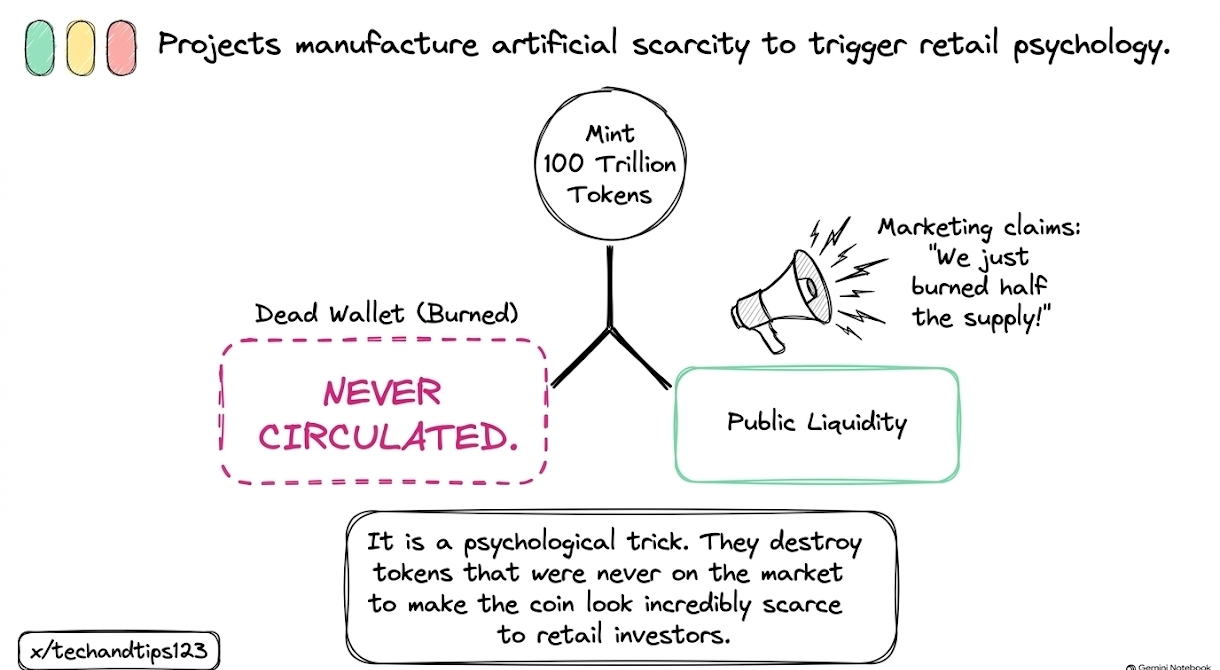
Meme coins are famous for launching with 100 trillion tokens, then immediately sending 50 trillion to a dead wallet. They scream to the community that they just burned half the supply to create artificial hype and make the coin look incredibly scarce. In reality, that half of the supply was never circulating in the first place. It is a psychological trick to get retail investors to buy in.
"Are all token burns just fake hype then?"
Not at all. When integrated into the actual network mechanics, burning is a powerful economic engine.
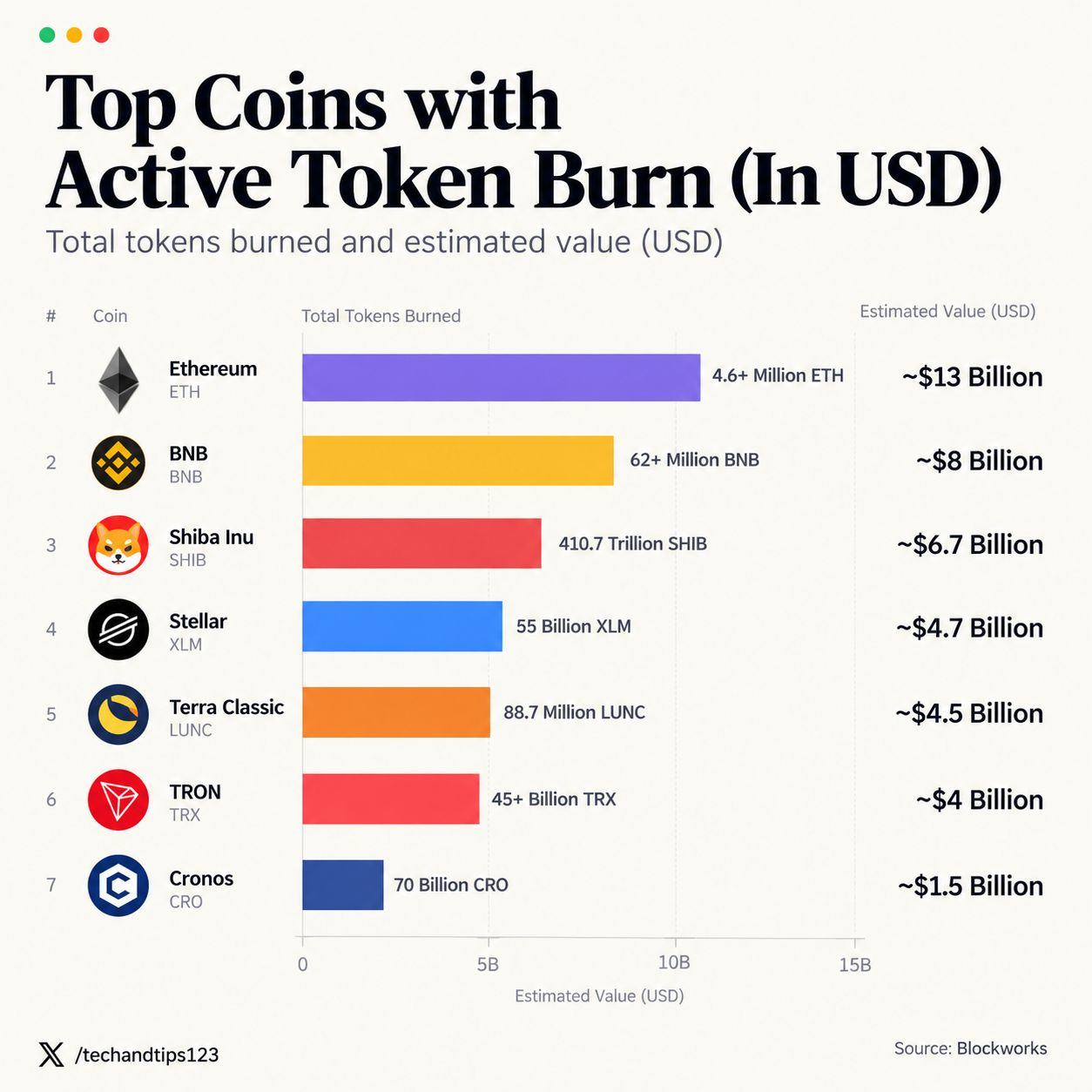
Look at Ethereum. The network automatically burns a fraction of the ETH used to pay for every single transaction fee. If the network is highly active, it burns more ETH than it creates. This makes the entire asset deflationary. Crypto exchanges like Binance do something similar.
Binance originally burned BNB using 20% of corporate profits, but today the process is decoupled from exchange earnings. Instead, BNB uses an automated, on-chain Auto-Burn formula (factoring token price and block production) plus real-time gas fee burns (BEP-95) to permanently reduce total supply toward a 100 million cap.