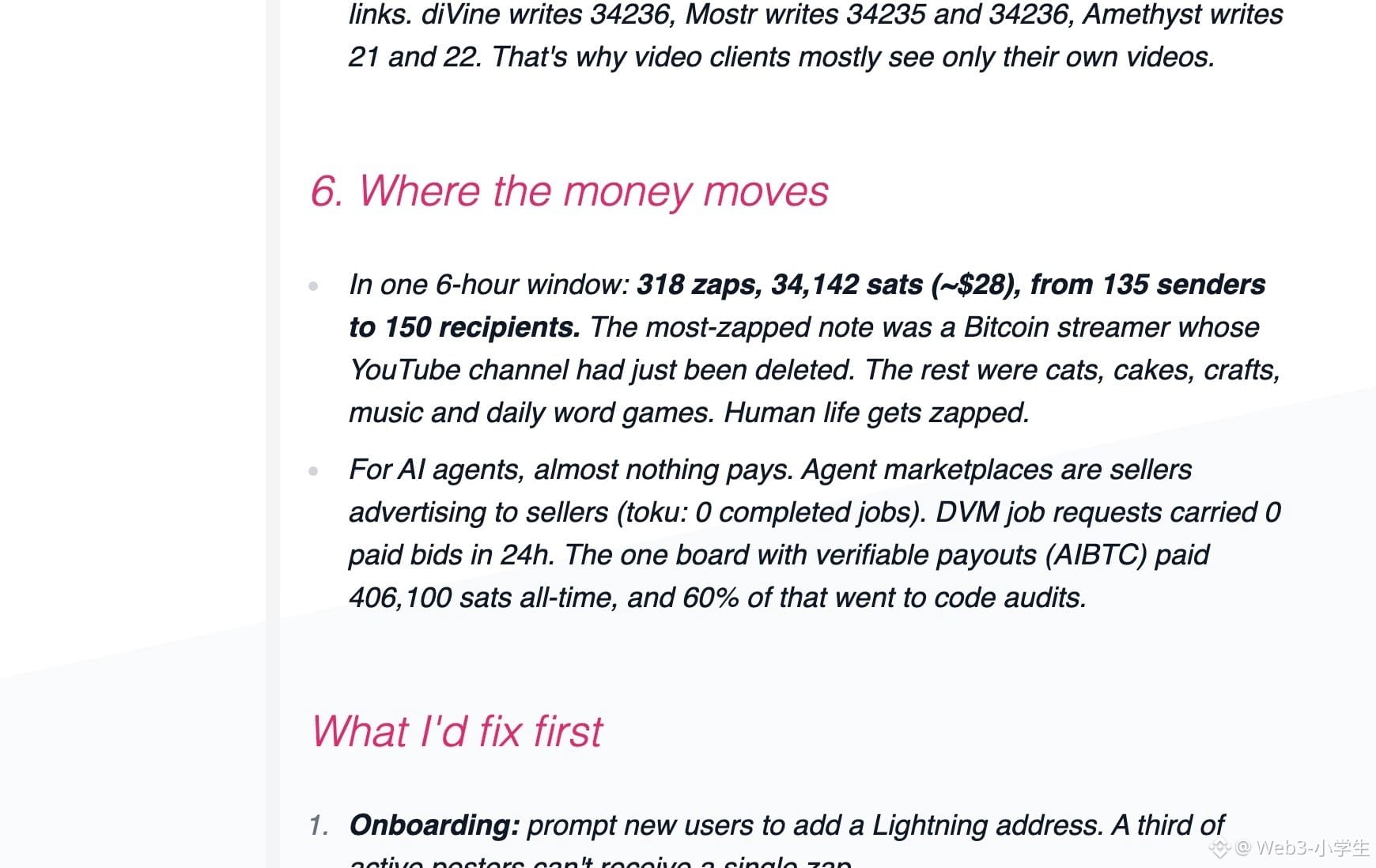
Six hours. Total tips on one network: twenty-eight dollars.
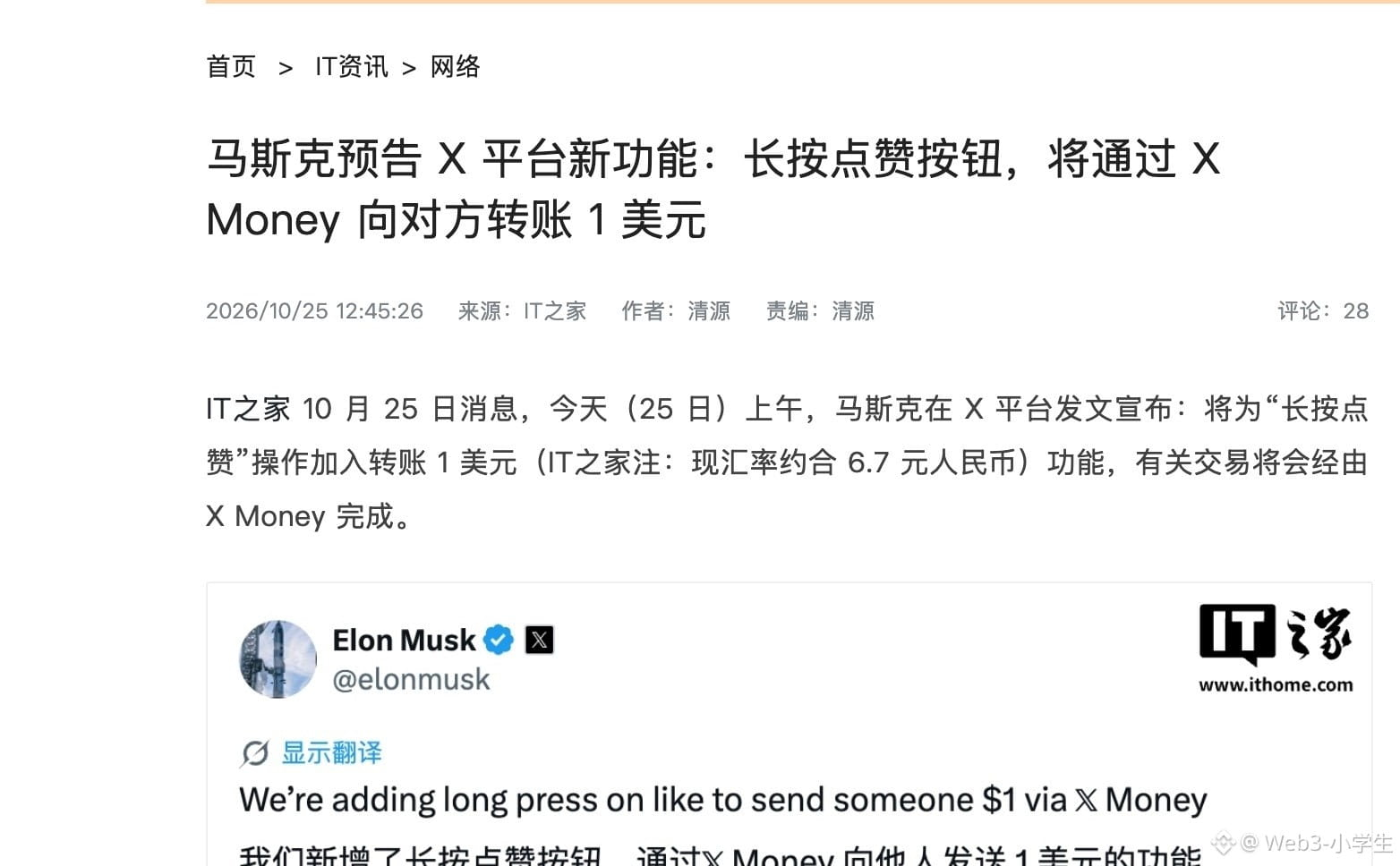
The figures were measured on Nostr on October 11: more than 3,000 accounts and 18,000 posts a day. That same morning, Musk said that in the future, you’ll be able to long-press Like to send someone a dollar through X Money.
One side lets you set your own price; the other fixes it at a dollar.
That’s an elevenfold difference. That network has been building for four years: more than 300 payments totaling over 34,000 sats, averaging nine cents. And he went and set the price at a whole dollar.
Most people see this news and think, “At last, people who write posts can make a living.” I see it the other way around: this meal was never meant for the people writing the posts.
He doesn’t want tips.
X Money launches on July 27. Deposits are held at Cross River Bank, with federal deposit insurance covering up to $250,000.
The most eye-catching number is the annual yield.
Six.
The highest publicly available savings rate in the U.S. is 4.35%; rates with conditions go up to 5%. That’s a 1.65-point gap. Anyone paying 6% on balances isn’t after transaction fees. They want the balances.
To get the full 6%, you have to deposit $1,000 in direct deposits into the account within 34 days—think paychecks. The requirement is pretty clear: open an account, then reroute your deposits. As for how much one dollar per long-press Like will bring in over a year, there’s no telling.
But you can work out how much money is sitting in the accounts of everyone who opened one just to long-press Like.
Tips are customer acquisition costs. Balances are assets.
In September, creator payouts switched straight from Stripe to X Money, leaving one more layer of money in transit.
The car company he owns, $TSLAB , makes money by selling cars. This one makes money by keeping money.
Crypto has traveled a similar path. Technically, tipping on the Lightning Network has been frictionless for a long time: $BTC , and a payment settles in seconds with fees under a penny.
The bottleneck was never the technology. It was the pool. That network took in $28 in six hours; that’s all the money in the pool.
The biggest tip went to a Bitcoin streamer whose YouTube channel had just been deleted. The rest was scattered across cats, cakes, crafts, and word games.
That’s it. People are willing to pay for cats, but not for opinions.
The business in crypto that looks most like this is $COINB : part of its revenue isn’t trading fees, but interest earned from holding other people’s money. That income doesn’t care whether the market is bullish or bearish.
Micropayments have never lacked the technology. What’s missing is the habit of paying for a post. And you can’t launch a habit; you can only nurture it, one account at a time.
Back to the Like button itself. Likes have always been free. The upside is that everyone gives them; the downside is that they prove nothing. If a post gets 8,000 likes, all you know is that 8,000 people didn’t object.
How many of them would pay a dollar? Not many.
Once you put a $1 price tag on it, the denominator changes from people who saw the post to people willing to pay a dollar. The number looks a lot worse.
So be it. For the first time, though, that ugly number can be counted as money.
Next time you’re about to Like something, take a look at the button. A short press is still free. A long press costs money.
What’s really worth remembering isn’t the dollar. It’s the structure. When signaling approval and making a payment are connected to the same button, a Like stops being an opinion and becomes a receipt.
Any design that connects those two things will eventually discover that receipts are much harder to manage than opinions. Opinions cost nothing, so everyone has one. Receipts cost money, so only a few people have them. The platform has never been focused on those few. It’s focused on everyone else’s accounts, all recorded in that ledger.
Because receipts will always be worth more than opinions, and accounts will always be worth more than receipts.
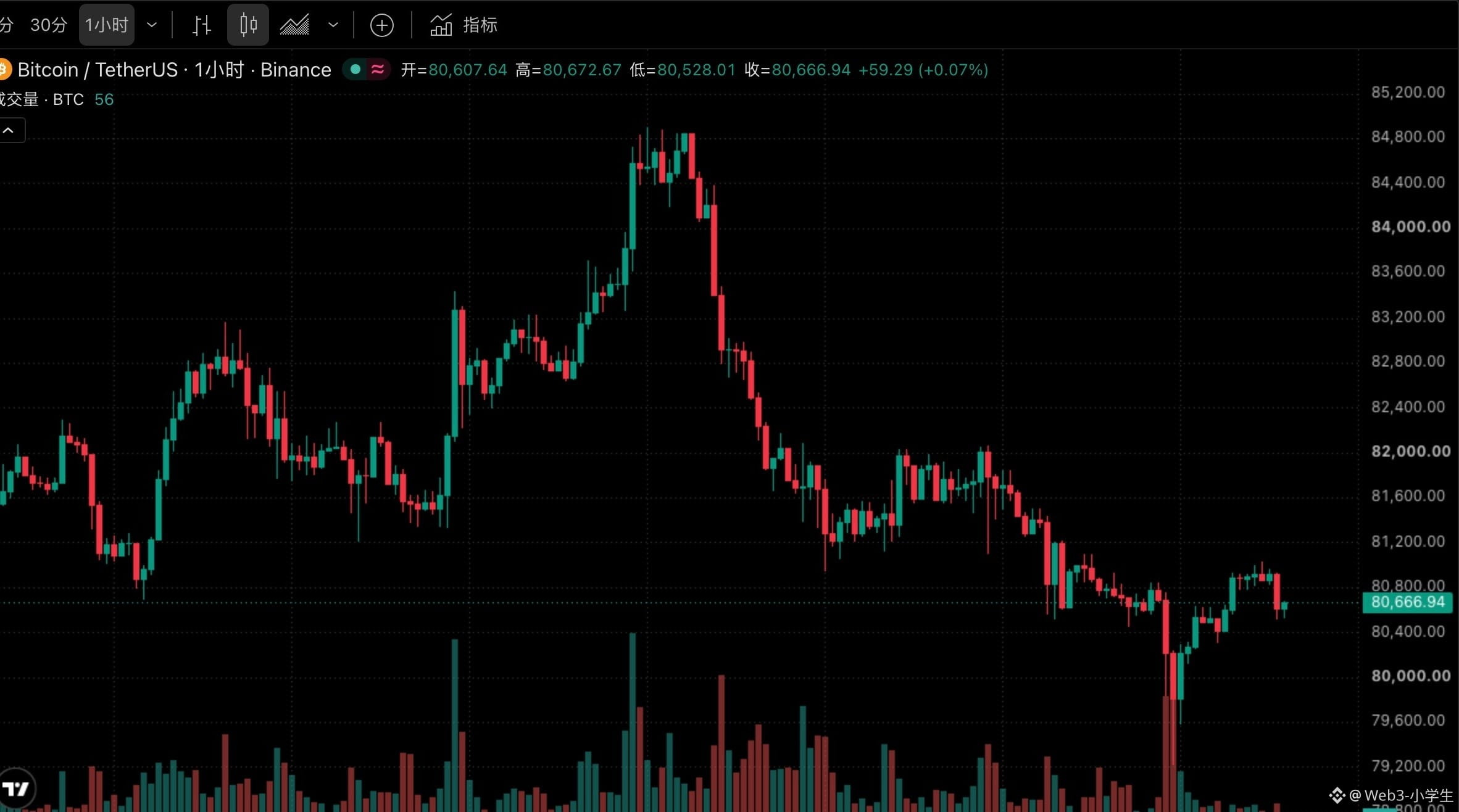
Bitcoin is now at $80,625, down 0.2% over the past 24 hours.
#比特币 #美股 #Binance Square