Thirty-eight people spent a year testing it, and lost to a blank page.
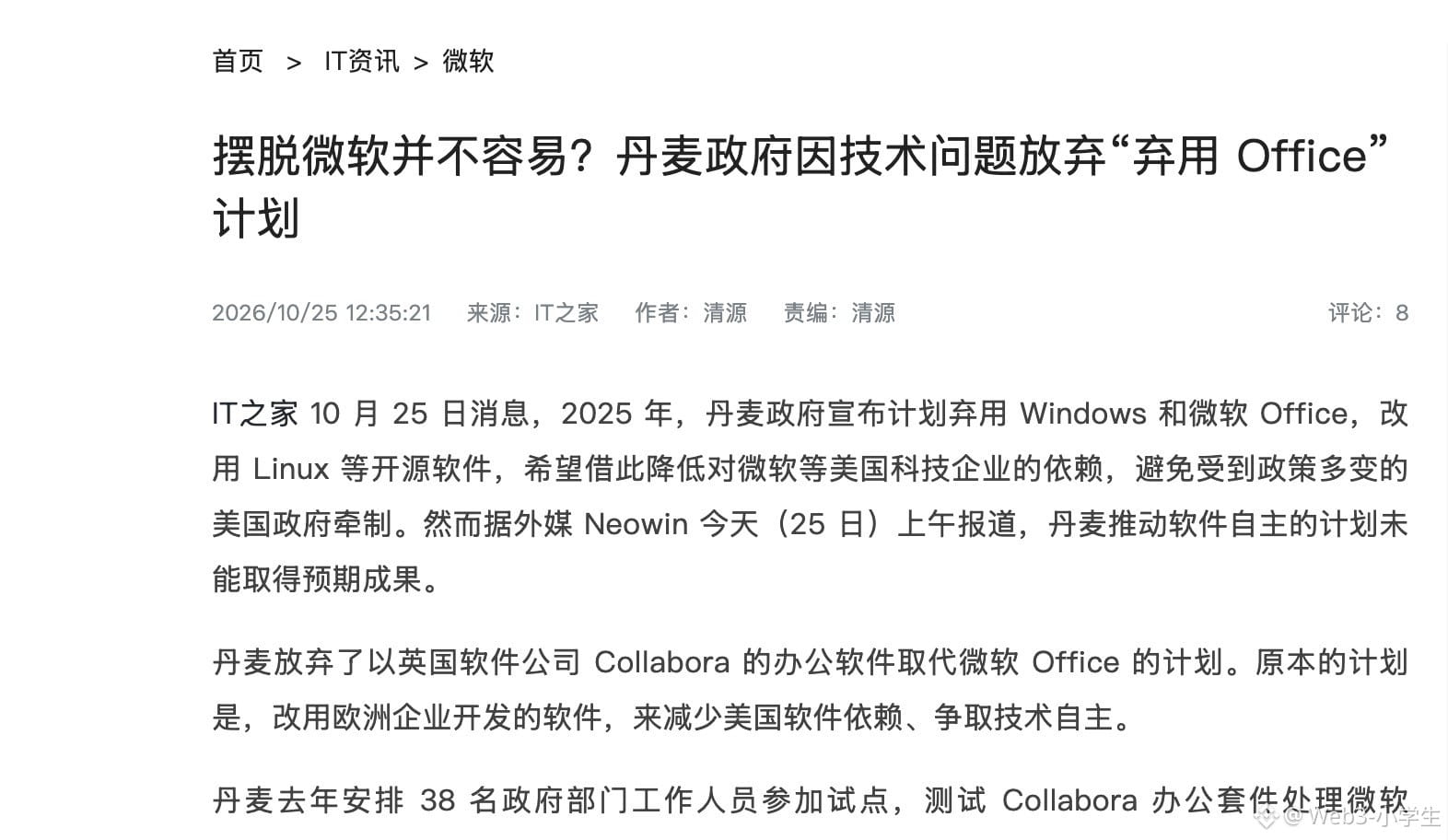
Last year, Denmark’s Ministry of Digitalization selected thirty-eight government employees to test an office suite from a British company, hoping to replace Microsoft Office across the government. This year, the project was halted. It won’t resume, and there’s no comparison report.
Was it any good? Nobody tested that.
The reason was compelling enough: Denmark wanted to free itself from American software, worried that policies over there could change at any moment. They picked people, formed a team, and spent a year on it.
The sticking point, absurdly, was tiny. Files moved between the two software suites, the formatting shifted, and they opened as blank pages. Collabora uses open formats; Microsoft uses its own.
A state in Germany’s far north took a different route: thirty thousand machines. Last October, forty-four thousand mailboxes and one hundred and ten million calendar entries and messages were moved from Exchange to Open-Xchange. The migration was completed.
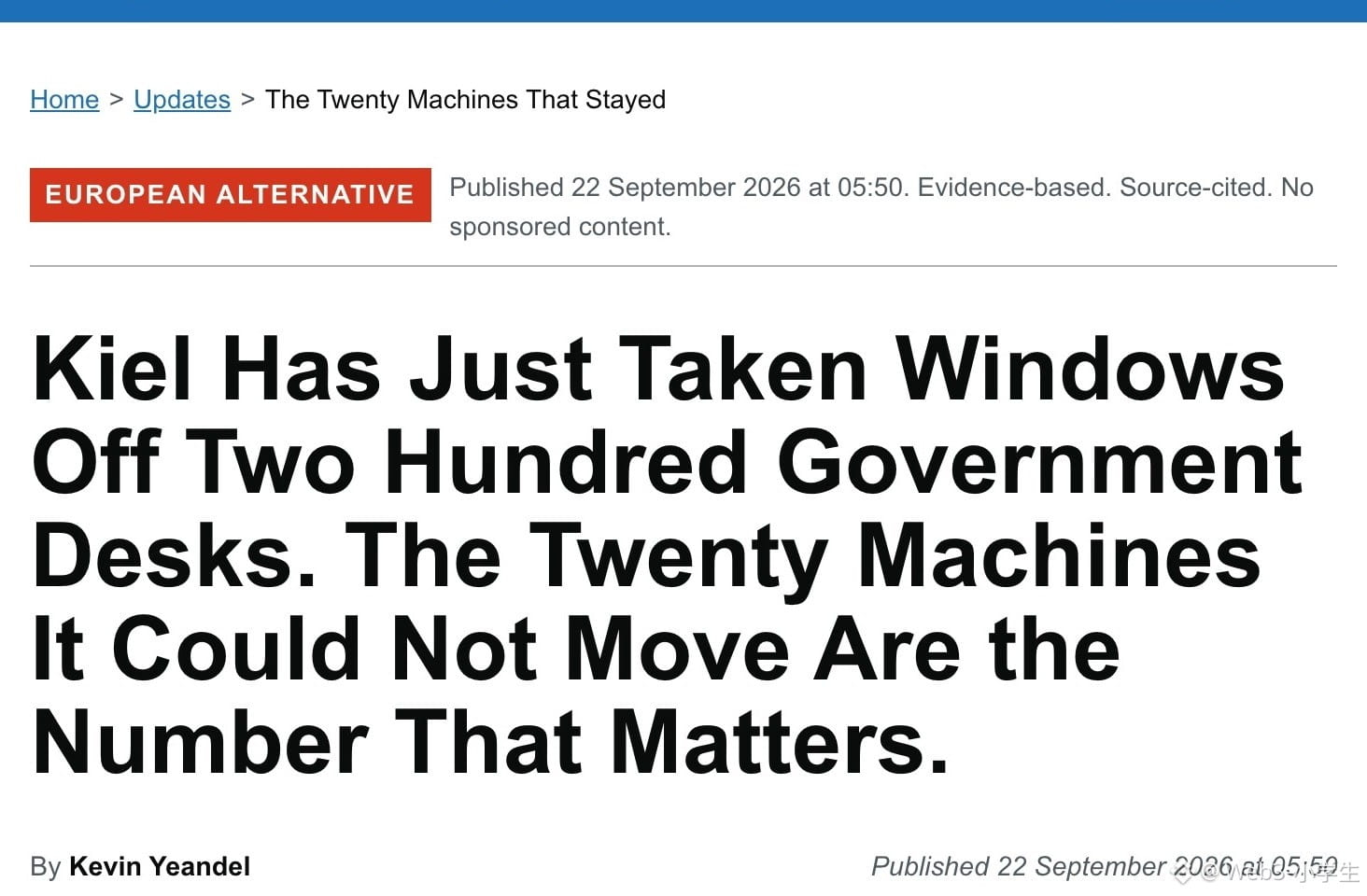
By the end of last year, Microsoft licenses had been cut by nearly eighty percent, saving fifteen million euros. On September twenty-first this year, the desktops used by more than two hundred people in the state chancellery were all switched to Linux.
Only twenty machines were left untouched.
The difference came down to the order of operations.
That state did it in reverse. Office first: out with it, in with LibreOffice. Then the email migration. Cloud storage, meetings—one by one. The desktop came last.
Most exit plans start with the desktop, because you can see it and it looks good in photos. Then they get stuck on the pile of software that only runs on it, and stay stuck for three years.
What really held them up was a hundred or so in-house Access databases built by individual departments over twenty years, each running a process that someone still depended on. Clearing them all took a full year.
A German journalist wrote a line I copied down: the desktop has moved to Linux, but if the workflow running on that desktop is still alive in a Windows database from 2003, it can’t be moved.
Twenty machines out of more than two hundred is less than ten percent. That ten percent is the work with names and budgets. The other ninety percent is a press release.
Anyone can write a press release. Who’s going to draw up the list of those twenty machines?
Most people see twenty machines and think the migration isn’t finished. They’re actually signposts.
This is playing out in crypto every day.
Move $BTC from an exchange to your own wallet, and the on-chain half is done in a second. Of Tether’s more than one hundred and eighty billion in circulation, ninety-two point five billion sits on Tron and seventy-two point six billion on Ethereum. The boxes you need to move between chains are light, and the difference in transfer fees is huge, so half the market really did move. $USDC is the reverse: of its more than sixty billion, sixty-two percent is still on Ethereum. Institutions use it, and they’re held back by audit and compliance records. Transfer fees don’t matter at all.
Moving your entire balance into self-custody is another matter.
There are no numbers in the things you need to move. Cost basis, trade history, active grid bots, funds locked in earn products or staked—that’s the real baggage. None of it is on-chain. It’s all on the other party’s servers, and they’ve never given you an export key. If the $BNB you hold on Binance is currently staked, you’ll have to check the announcements to find out when you can get it back.
People have been shouting “not your keys” for years, but few have actually completed the move. It’s not that many people disbelieve it; it’s that many can’t move. Most try once and go back anyway.
Everyone has a 2003 Access database in their hands. It just doesn’t look like a database.
I can’t tell whether those thirty-eight people in Denmark got stuck on formatting, or on nobody wanting to write the plan for year two. The official explanation only says the formatting broke and files opened as blank pages.
The thing worth remembering is the sequence. Any plan to move something out of a big system will die on the little piece nobody wants to take ownership of.
Because someone will carry the biggest piece, but nobody will carry the piece that gets the least attention.
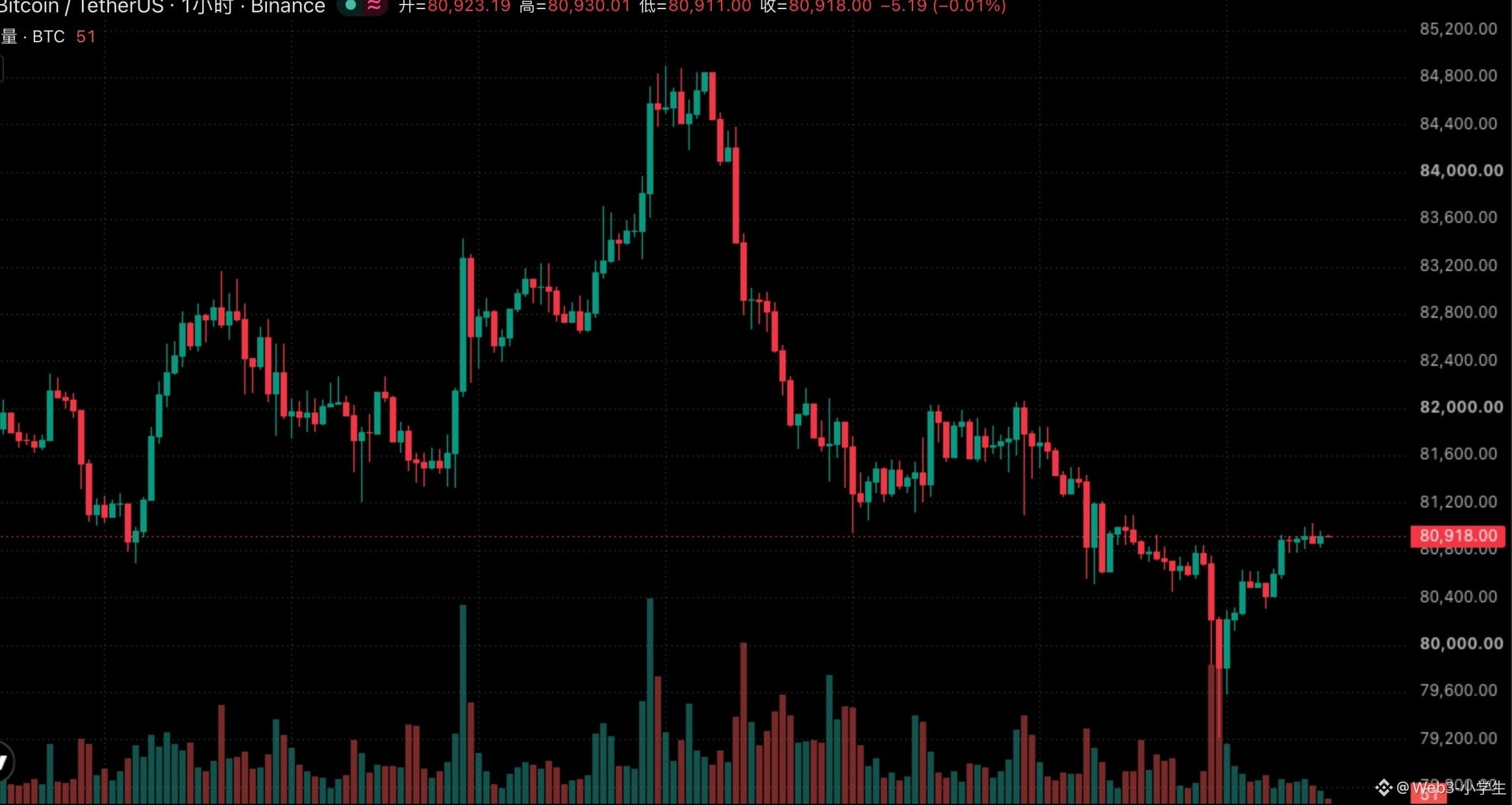
BTC is now at 80,918, up 0.08 percent over the past twenty-four hours, moving sideways.
#美股 #比特币 #BinanceSquare