📚 Day 24/100 — Learning On-Chain Analysis From Zero 🙌
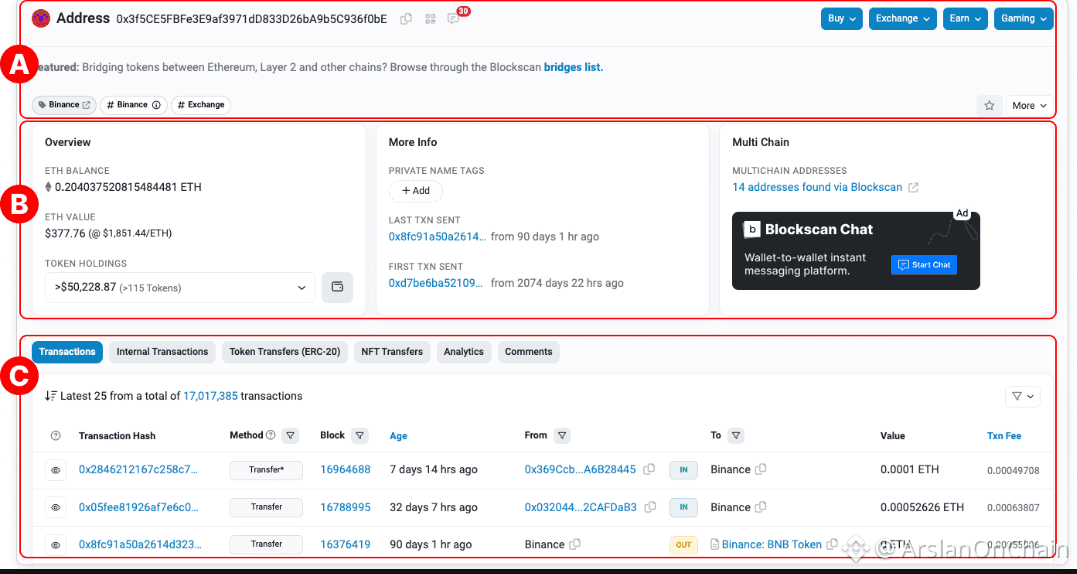
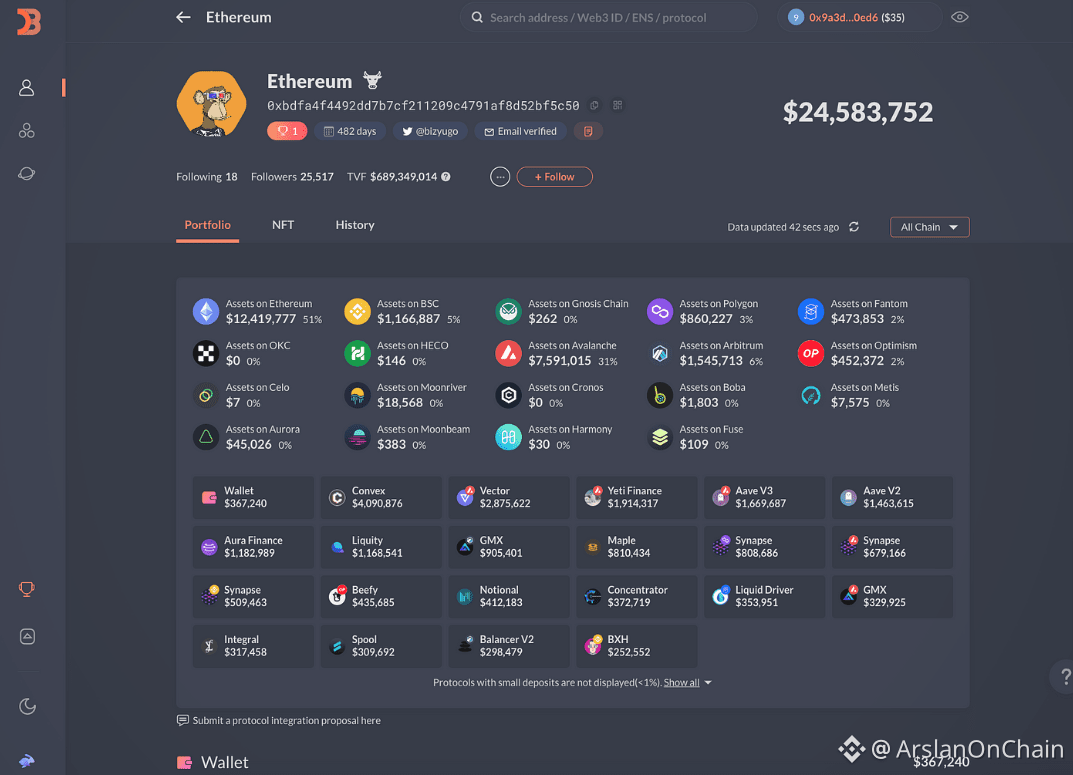
Today, we're learning how to identify wallet labels and check token holdings using two free tools: Etherscan and DeBank.
🔍 Etherscan: Check public wallet labels and inspect individual transactions.
🐋 DeBank: Explore a wallet's multi-chain assets and visible DeFi positions.
Your task today:
1. Search a wallet address on Etherscan.
2. Check its label and token holdings.
3. Paste the same address into DeBank.
4. Compare what both tools show.
🧠 Remember: A wallet label is a clue, not proof of ownership. Exchange wallets, personal wallets, and smart contracts can look very different. Always verify before drawing conclusions.
🎯 Homework: Share a screenshot of the wallet label and holdings, then answer one question:
Does this look like an exchange wallet or a regular wallet—and what evidence supports your answer?
One small skill every day. That's how we build real on-chain analysis skills. 🫡