

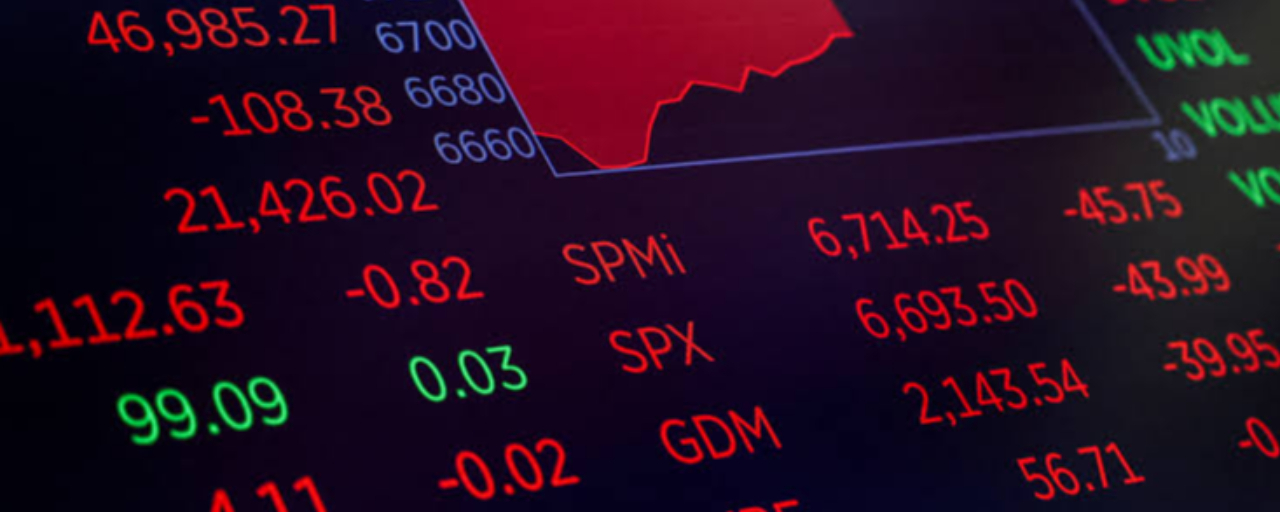

Stocks fell Friday as the selling that hammered AI and chip shares the day before spread across most of the market. Consumer staples, utilities, and health care, the corners investors usually retreat to, all ended lower. Add U.S. crude pushing past $100 a barrel on worries that the conflict between the U.S. and Iran could flare again, and the usual hiding places offered little cover. The 10-year Treasury yield ticked up and spent the day hovering around 5%.
The Dow Jones Industrial Average took the biggest hit: down 652.82 points, or 1.23%, at 52,215.16. The S&P 500 slipped 0.52% to 7,623.68. Nasdaq's slide was the mildest of the three at 0.21%, leaving the Composite at 25,955.34, while the small-cap Russell 2000 lost 0.3% and ended at 2,775.90.
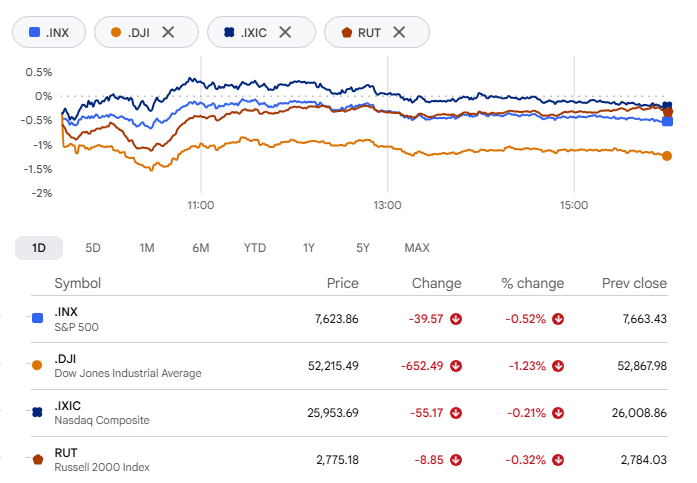
Zoom out and the week reads oddly. The S&P 500 (down 0.5%) and the Nasdaq (down 0.7%) each posted their second straight weekly loss. The Dow, though, gained 0.4% over the same five sessions, and the Russell 2000 did better still, up 2%.
Diesel Takes a Bite Out of the Dollar Stores
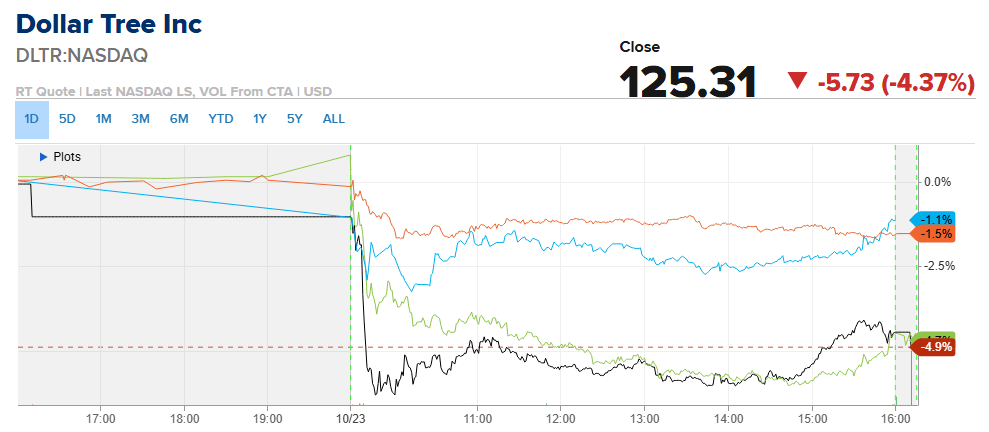
Wells Fargo analysts handed discount retailers a new worry in a note on diesel. Their warning: climbing fuel prices could squeeze profits through the rest of the year and into 2027. Dollar Tree and Dollar General both closed down more than 4%, and Five Below and TJX Companies each dropped more than 1%.
Their math starts with third-quarter diesel running about 60% above last year. On that footing, the average hit to operating margin is expected to widen to about 27 basis points from 18 in the second quarter, and the earnings-per-share drag to more than double, reaching 6.2%.
Dollar Tree is the most exposed, in Wells Fargo's view, because it has historically taken a heavier blow than peers whenever diesel spikes. The bank puts the third-quarter cost at about $25 million in profit, or 50 basis points of margin. Retail inflation could feel added pressure too.
American Express Trims Its Staff and Weighs on the Dow
On the Dow, American Express did the most visible damage, falling 3.7% after announcing it would cut about 5% of its global workforce to, as executives put it, "prepare for AI." Caterpillar dropped 2.4%, and Goldman Sachs shed more than 1%, adding to the drag on the 30-stock average.
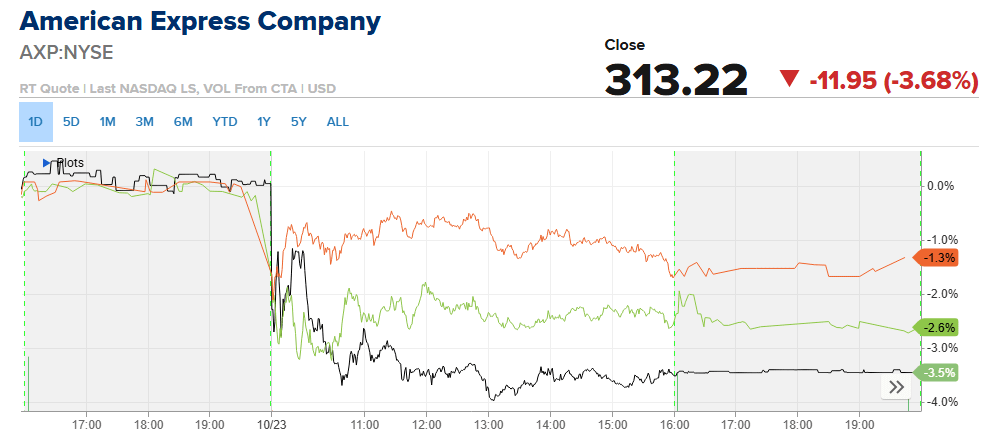
CEO Stephen Squeri announced the cuts with third-quarter results, together with a $336 million restructuring charge; the company describes the overhaul as a push for efficiency and wider AI adoption. American Express had nearly 77,000 employees at the end of 2025, which puts the reduction near 3,850 positions. Shares fell even though quarterly profit beat forecasts.
Moderna Slides Again After Good News
Moderna (MRNA) lost about another 1% on Friday, on top of Thursday's collapse. That slide began when partial data on the personalized melanoma vaccine it is developing with Merck leaked online; shares dropped as much as 25% before ending the session down roughly 17%. At the worst point, about $24 billion in market value was gone, from a stock that had gained more than 500% this year.
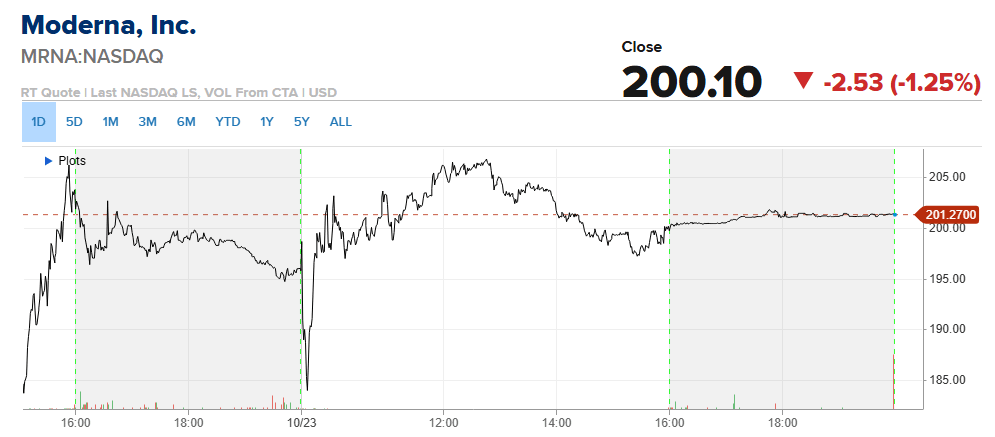
The odd thing is the data itself. When the full results came out later Thursday, they looked meaningful for patients and measured up to what Wall Street wanted to see. Combined with Merck's Keytruda, the vaccine reduced the risk of recurrence or death by 42% versus Keytruda alone; at two years, about 82% of patients on the combination were alive with no return of melanoma, against 70% on Keytruda by itself.
Merck fell roughly 1% Thursday too. Analysts read the move as selling the news after a big run-up, and the commercial outlook for the shot is now an open question. Full results go before the European Society for Medical Oncology meeting in Madrid this weekend.
Two Earnings Reports, Two Sell-Offs
Late Thursday Deckers Outdoor posted fiscal second-quarter results, and by Friday the stock was paying for them, trading about 5% lower. The quarter ended Sept. 30 brought $1.48 billion in revenue, short of the $1.51 billion analysts expected, and sales at HOKA and UGG both missed FactSet estimates. Management also trimmed its revenue outlook for the full year.
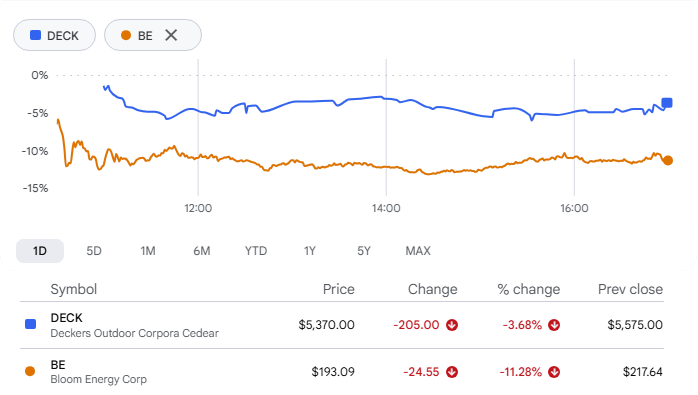
Bloom Energy's reaction was harsher, with shares off more than 11%, and on the surface the quarter gave little reason for it. Revenue and earnings both beat, and the on-site power supplier to data centers lifted its full-year 2026 earnings guidance. Investors zeroed in on something else: free cash flow came in negative, about $181 million. That was enough.
Oil Majors Hit Records While Uranium and Solar Funds Sink
Energy split in two directions on Friday. Uranium, nuclear and clean energy ETFs all sank to 52-week lows, while the country's biggest fossil fuel producers reached all-time highs.
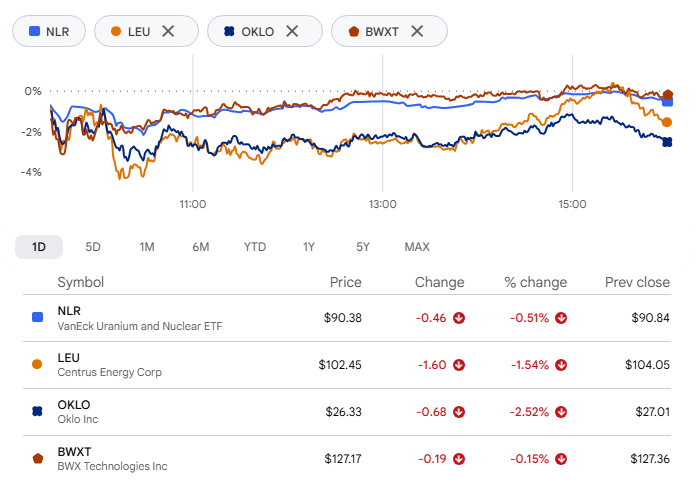
The VanEck Uranium and Nuclear ETF (NLR) closed down -0.46%, its lowest since May 2025. Holdings of those funds fared no better, with Centrus Energy, Oklo, and BWX Technologies all touching 52-week lows.
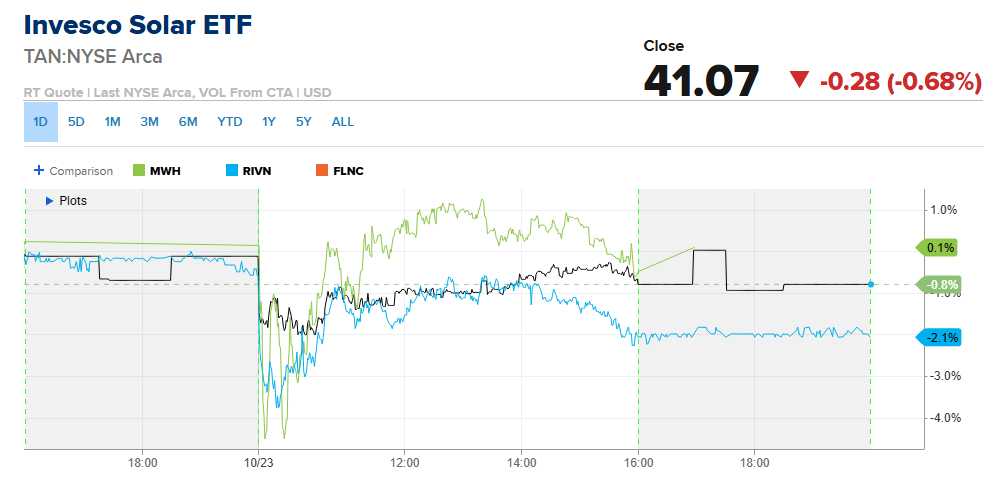
Solar and broader clean energy funds joined in. The Invesco Solar ETF (TAN) hit its lowest level since September 2025. Stocks in the group, among them Solv Energy, Rivian Automotive and Fluence Energy, slid to 52-week lows as well.
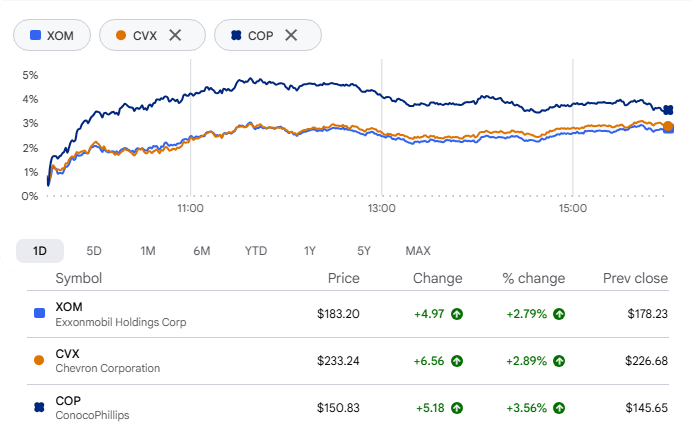
ExxonMobil, Chevron and ConocoPhillips went the other way, all trading at record highs. Same oil spike, opposite outcomes.
Brent Climbs to a Six-Month High on Iran Worries
Oil did most of the steering. West Texas Intermediate futures rose 3.8% to settle at $103.27 a barrel, and Brent added 3.1% to end at $116.72, its best settlement since April. For the week Brent is up 6.2%, a third straight weekly gain.
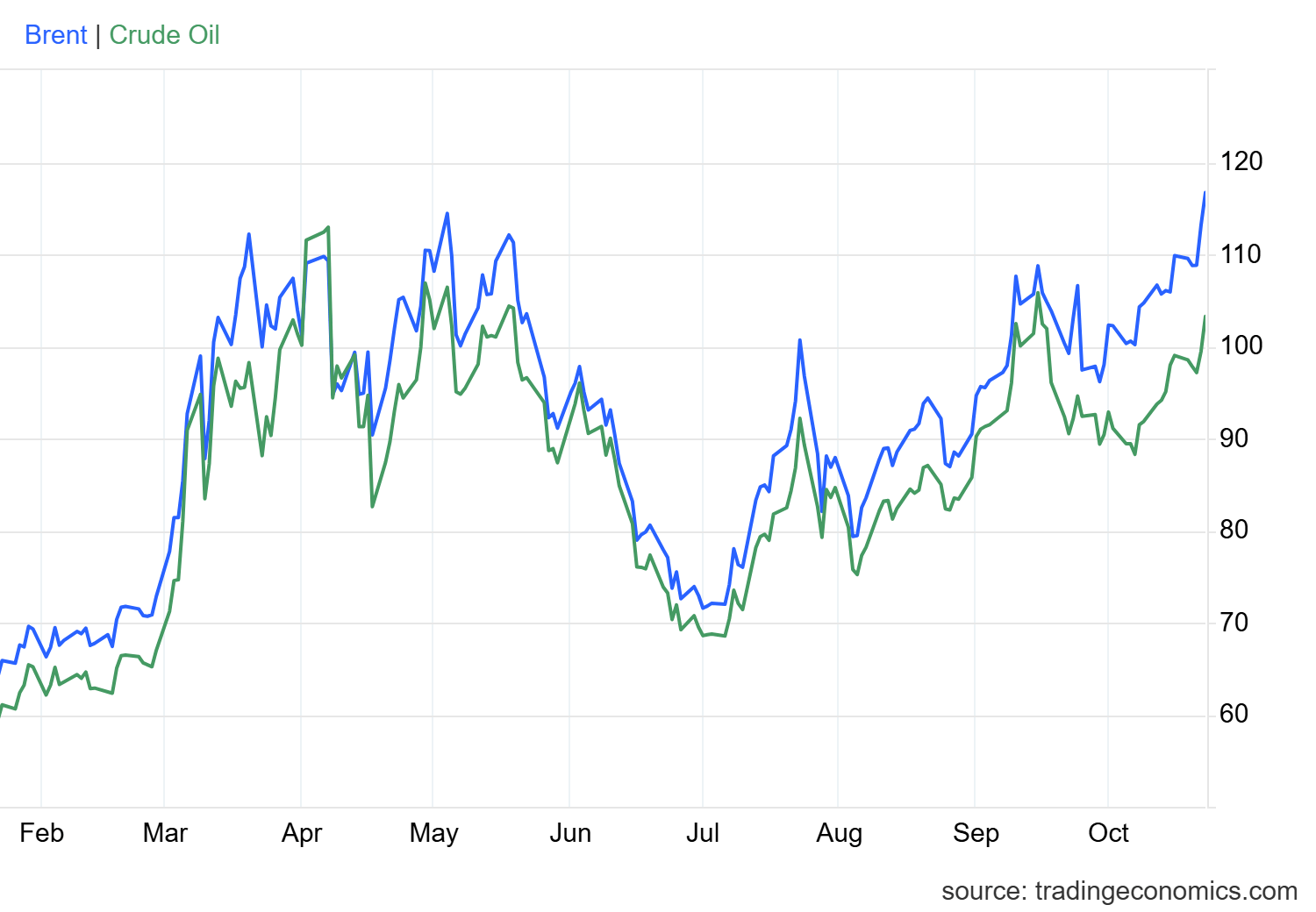
Behind the rally sit reports that the U.S. and Israel may be drawing up plans for renewed military action against Iran, part of a regional conflict dating to late February. Tehran's reply was that it is prepared to respond. Attacks by Houthi forces on Saudi Arabia added to the supply nerves.
SpaceX Picks Up a Convert
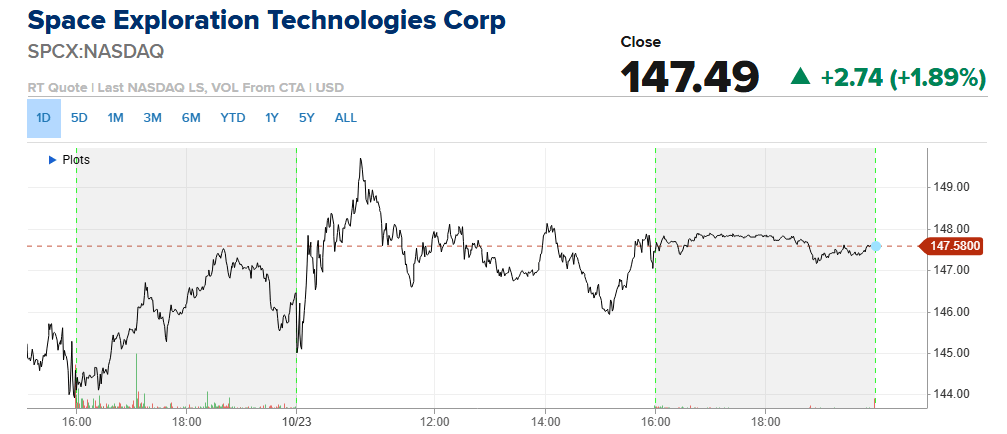
PhillipCapital gave SpaceX (SPCX), Elon Musk's space and AI company, a double upgrade, moving it to buy from sell and lifting its price target to $250 from $75 on stronger-than-expected gains in the AI business. The new target implies upside of roughly 70%. Shares ended up almost 2%.
Sector Analysis:
Best-Performing Sectors
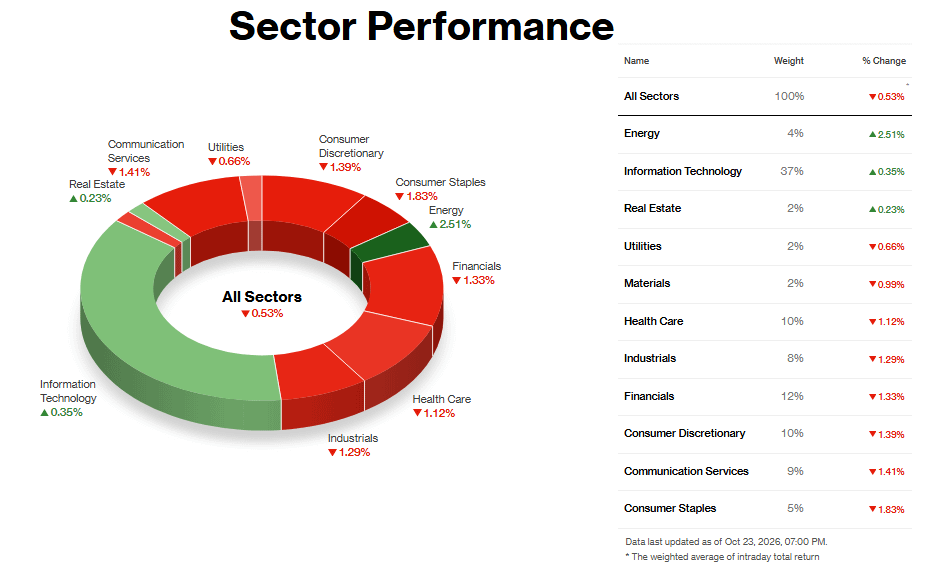
Energy led a market where only three sectors finished higher, rising 2.51% as crude pushed back above $100. WTI settled at $103.27 and Brent at $116.72, its highest settle since April, after reports that the US and Israel may be planning renewed attacks on Iran.
Technology’s 0.35% gain looks small until you remember its 37% weight, which kept the index loss contained. The bounce followed a brutal Thursday in which the Philadelphia Semiconductor Index fell 6.72%, with all 30 members lower. Memory names such as Micron and SanDisk led the rebound. It reads as a rebound attempt, not a reversal, since the sector is still down more than 5% in October.
Real Estate’s 0.23% gain came from one corner of the sector. Crown Castle jumped about 9% and American Tower about 4% after Bloomberg reported that SpaceX is seeking access to at least 80,000 cell sites. Tower owners stand to gain from a new carrier building out a network. The broader sector had no such help, with the 10-year yield up 3.6 basis points to 4.989%.
Worst-Performing Sectors
Consumer Staples fell 1.83% with no single company catalyst. This was a defensive group giving back an outsized run. The sector ETF was up about 11% in October, heading for its best month on record. Procter & Gamble had its best day since March 2020 on Thursday. Coca-Cola, down 2.76% on Friday, had been trading at record highs. Staples trade like bond proxies, and with yields climbing back toward 5%, the premium investors paid on Thursday became harder to defend.
Communication Services lost 1.41%, driven by telecom rather than the whole sector. The SpaceX report hit carrier stocks, and AT&T was already weak after its October 21 earnings, when a $2.6 billion impairment and heavy post-spectrum-deal debt overshadowed an EPS beat. AT&T, Verizon and T-Mobile all slid on fears of a fourth national competitor.
Consumer Discretionary dropped 1.39%, again without one dominant driver. Oil above $100 fed inflation worries, pushed yields back up and hit oil-sensitive consumer stocks. Rising rates have been a drag on the group for weeks. Luxury sentiment added to the gloom after Kering fell 12% in early trading on a 6% drop in Gucci sales.
The week ahead is crowded. The Fed's policy meeting ends Wednesday, with rates widely expected to stay put, and Alphabet, Microsoft and Amazon all report, into a market that spent the past several sessions asking who pays for the AI buildout. Reports that renewed U.S. and Israeli action against Iran would wait until after the Nov. 3 midterms give oil traders a second date to watch.
Friday put the AI-financing worry and the crude worry on one tape after days of taking turns. Whether they keep arriving together is the thing nobody has managed to price.