
#瑞典央行敦促重新评估电子克朗
What I care more about in this discussion is the competition over “which currency to use for payments.”
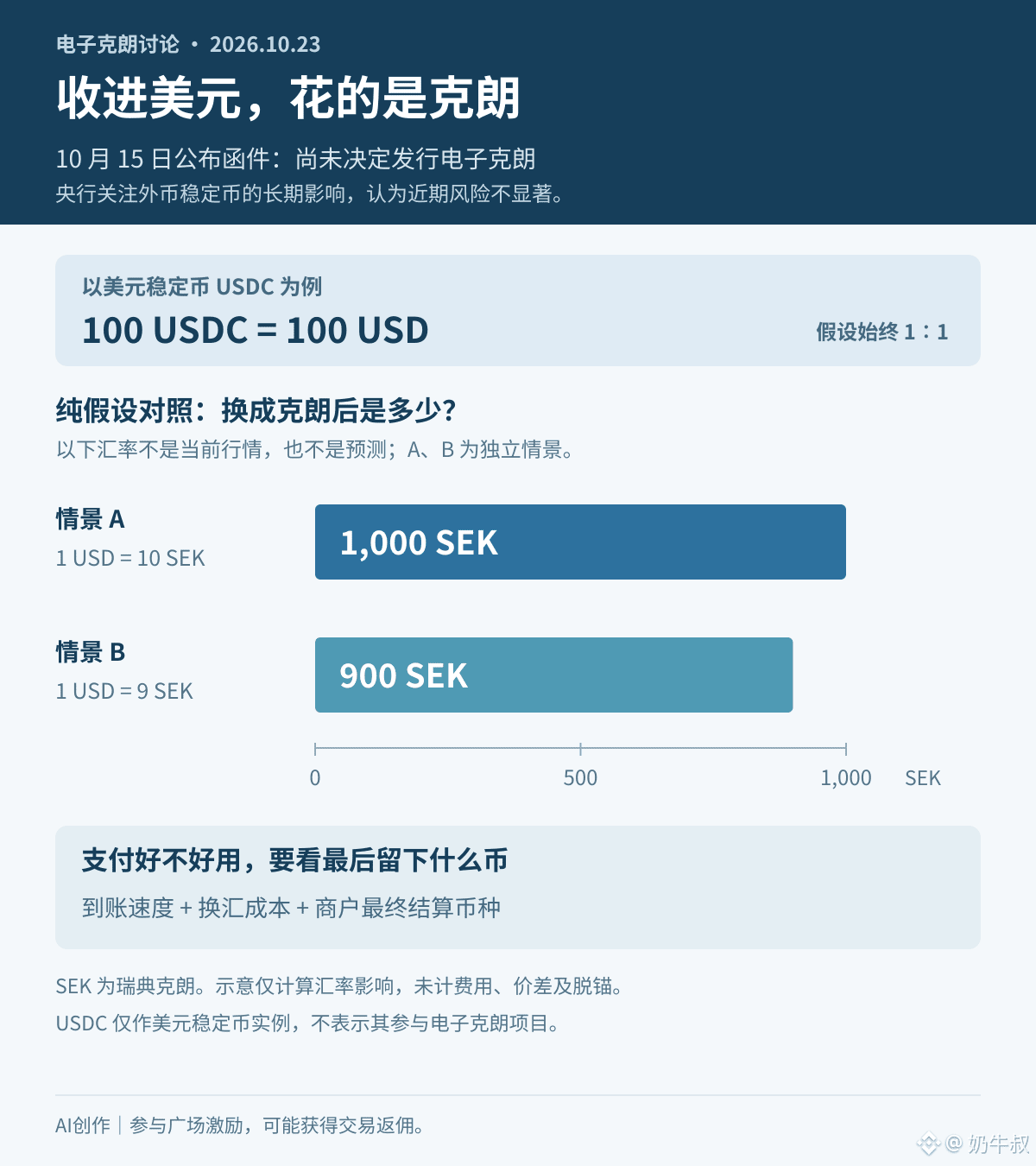
In a letter published on October 15, Sweden’s central bank had still not decided whether to issue an e-krona. It warned that if foreign-currency stablecoins are easier to use, the krona’s role in payments could come under pressure, while judging that the near-term risks are not significant.
Take the dollar stablecoin $USDC as an example: even if it stays pegged at one dollar, how many kronor Swedish merchants ultimately get back still depends on the USD/SEK exchange rate.
When I assess the competitiveness of stablecoin payments, I look at settlement speed, conversion costs, and which currency merchants ultimately keep. An e-krona would also need to address these practical issues if it is to attract users.
When you receive a cross-border payment, what matters more to you: getting it quickly, or how much you receive after converting it into your local currency?