


Imagine working all month, getting paid, and discovering that your money has already lost a significant part of its purchasing power. Food prices rise, rent goes up, fuel becomes more expensive, and what you could afford today costs much more the following week.
Now imagine that this goes on for months, or even years. People stop trusting the currency, businesses struggle to calculate their costs, and workers try to spend their wages as soon as they receive them, before they lose even more value.
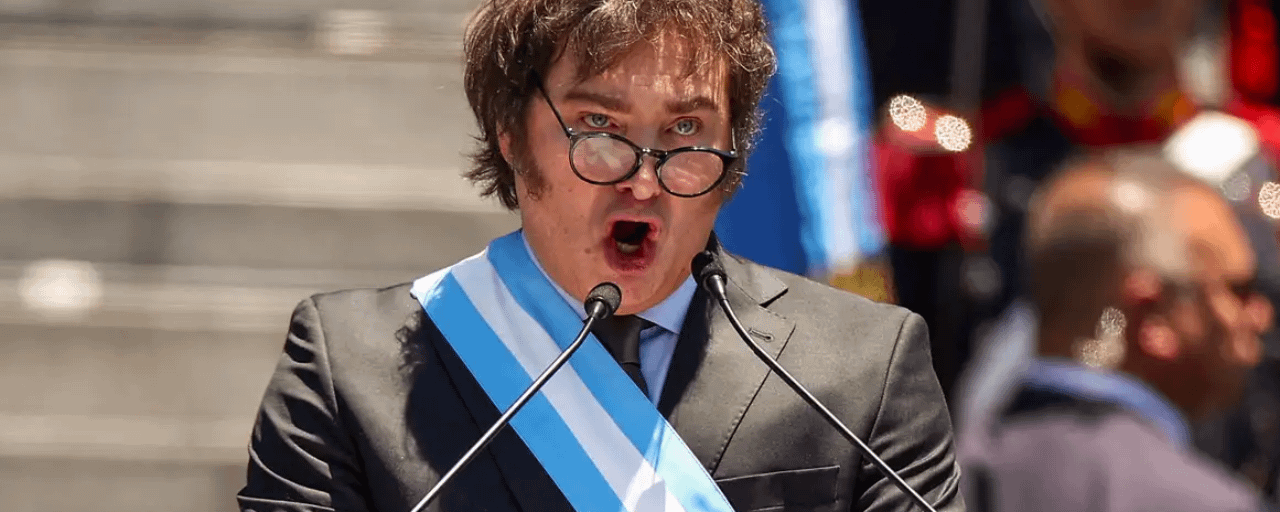
This is not a hypothetical situation. It was part of the reality Argentina faced, a country that recorded annual inflation above 200% before Javier Milei took office in December 2023.
Faced with a crisis of this scale, a difficult question arises: how do you pull a country out of runaway inflation? And, above all, why can the path to solving the problem make people's lives even harder in the short term?
1. How does a country end up with runaway inflation?
Inflation is a general increase in the prices of goods and services. It does not necessarily happen for just one reason, but a combination of imbalances can turn a manageable problem into a severe crisis.
Imagine a government that consistently spends more than it collects, struggles to obtain financing, and becomes increasingly reliant on creating money to cover its expenses.
If the amount of money grows much faster than the production of goods and services, and people stop trusting the currency, prices can skyrocket. This mechanism is neither automatic nor the only explanation for inflation, but it can become especially destructive when combined with currency depreciation, foreign-currency shortages, and expectations of further price increases.
The situation can enter a vicious cycle:
The government struggles to balance its budget.
The currency loses value and prices rise.
Workers demand wage increases to try to preserve their purchasing power.
Businesses raise their prices to cover higher costs and protect themselves from uncertainty.
People become even more distrustful of the currency and try to get rid of it quickly.
Currency depreciation and inflation expectations fuel further price increases.
In Argentina, this process was worsened by decades of economic instability, currency crises, debt, fiscal difficulties, and a loss of confidence in the national currency.
When people begin to believe that money will quickly lose its value, controlling inflation is no longer just a matter of printing less money. It is necessary to restore the credibility of economic policy and show that the government can sustain its decisions over time.
2. Why isn't it enough to order prices to stop rising?
If inflation could be solved simply by banning price increases, any government could stabilize the economy by decree.
The problem is that prices reflect many different factors: production costs, wages, transportation, the availability of goods, taxes, exchange rates, and demand.
Freezing prices without correcting imbalances can lead to shortages, black markets, and reduced incentives to produce. Likewise, raising wages by decree without considering productive capacity and financing conditions does not guarantee that purchasing power will be preserved.
To stabilize an economy in crisis, it is necessary to address the causes that sustain inflation.
Possible measures include reducing persistent public deficits, ending uncontrolled monetary financing of the government, rebuilding international reserves, reorganizing debt, stabilizing the exchange rate, and adopting monetary policy capable of restoring confidence in the currency.
This does not mean that every country should apply exactly the same set of measures. The strategy depends on the causes of inflation, the fiscal situation, debt levels, the structure of production, and each country's social conditions.
But there is one fundamental principle: lasting stabilization requires the economy to stop persistently generating the imbalances that fuel inflation.
3. What is austerity, and why can it be so painful?
One way to tackle a persistent public deficit is fiscal adjustment, which means reducing the gap between what the government collects and what it spends.
This adjustment can combine spending cuts, subsidy reviews, revenue increases, tax changes, and the reorganization of public programs.
The problem begins when we look at what happens in practice.
Imagine that the government subsidizes part of the cost of public transportation, electricity, or cooking gas. If it eliminates these subsidies to reduce spending, public expenditure goes down, but the bill that the state previously covered in part weighs more directly on household budgets.
Now imagine that, at the same time, the government suspends public works, cuts investment, and lays off employees.
The effects do not stop at the state budget. Workers lose their jobs, suppliers stop receiving contracts, merchants sell less, and businesses that depend on domestic consumption may scale back their operations.
Someone who loses their job stops spending money at a restaurant. The restaurant, in turn, may buy less from its suppliers. Those suppliers may lay off workers. In this way, an initial reduction in spending can produce ripple effects throughout the economy.
This phenomenon is known as the multiplier effect of fiscal contraction.
When an economy is booming, certain adjustments can be absorbed more easily. When unemployment is already high, wages are low, and businesses have idle capacity, taking even more money out of circulation can deepen the recession.
That is why austerity can help correct fiscal imbalances while also worsening living conditions for part of the population.
4. The case of Argentina: inflation fell, but the social cost became clear
Javier Milei's government took office in December 2023, promising to break with the previous economic model. Its program included cuts to public spending, reductions in subsidies, public-sector layoffs, limits on state investment, and measures aimed at reorganizing the government's finances.
The strategy helped reduce the need to finance the deficit by creating money and restore fiscal balance. Inflation slowed sharply compared with the crisis the country had been facing.
This result should not be overlooked. For a population that had been living with extremely rapid price increases, slowing the pace of inflation is a significant economic achievement.
However, stabilization came with substantial social costs.
The removal of subsidies made essential services more expensive for many families. Public spending cuts affected workers and sectors that depend on state investment. Falling real incomes and weak consumption made life harder for businesses geared toward the domestic market.
According to a report published by Jornal GGN on October 22, 2026, urban poverty in Argentina stood at 32.3% at the beginning of that year, while informality and household debt remained significant problems. The article also describes public-sector job cuts and the difficulties export sectors face in creating enough jobs to offset losses in other areas.
These figures help explain the contradiction: the economy can improve on certain indicators while a significant share of the population remains in precarious circumstances.
Lower inflation does not, by itself, guarantee a recovery in wages, the creation of quality jobs, or a reduction in poverty.
It is also necessary to look at economic activity, investment, real income, formal employment, and families' ability to pay their expenses.
5. The detail many people miss: lower inflation does not mean lower prices
This is one of the most important points in the entire discussion.
Imagine that a product costs 100 pesos and its price rises by 200% over a period of time. It will then cost 300 pesos.
Then inflation falls to 30% a year. If the price of this product rises at exactly that rate, it will go from 300 to 390 pesos.
Inflation fell significantly, but the product did not go back to costing 100 pesos. On the contrary: it kept getting more expensive, just at a slower pace.
For the price to fall again, the price of that product would have to actually decrease—something that is not guaranteed simply because inflation slows.
That is why many people may hear that inflation is falling and still feel that life keeps getting more expensive.
The situation becomes even harder when wages do not keep up with the cumulative price increases. Even with lower inflation, a family may still be able to buy less than it could before.
Inflation measures how quickly prices are rising; purchasing power measures what people can buy with the income they receive. They are different things.
6. So is the population's suffering necessary?
Here, we need to be careful not to turn a complex economic reality into an automatic justification for any kind of sacrifice.
When a country is facing deeply rooted inflation, some kind of adjustment may be inevitable. If the state cannot finance its spending sustainably, if the currency loses credibility, and if inflation keeps eroding wages and savings, maintaining everything exactly as it is also carries a high social cost.
Runaway inflation is not a painless alternative.
It particularly harms people on fixed wages, retirees whose pensions do not keep up with prices, and those whose incomes cannot be adjusted quickly. It also makes it harder for businesses to plan, disrupts investment, and penalizes those without access to financial tools to protect themselves.
In this sense, fighting inflation may require difficult decisions and correcting imbalances that have built up over many years.
But that does not mean that every cut, at any pace, is necessary or effective.
There is a difference between recognizing the need to stabilize the economy and claiming that the population must suffer as much as possible for it to happen.
A government can choose how to distribute the costs of adjustment. It can better protect the poorest, preserve productive investment, review tax benefits, tackle waste, and adopt gradual measures when conditions allow. It can also opt for abrupt cuts that concentrate the impact on workers, retirees, and low-income families.
These choices make a difference.
Austerity is not a medicine with a single dosage. The size, composition, and pace of the adjustment influence its effects on inflation, employment, and economic activity.
7. What needs to happen after inflation is brought under control?
Imagine a patient who has undergone difficult surgery. The operation was successful, but they still need to recover, regain their strength, and return to their routine.
Economic stabilization works in a similar way.
Reducing inflation is an important step, but it is not the ultimate goal of an economy. The goal is to enable people to live better, work, produce, save, and plan for the future.
After bringing inflation under control, a country needs to create the conditions for investment to grow again, productive businesses to expand, workers to recover their incomes, and new formal jobs to be created.
It also needs to prevent credit from becoming a false solution to falling incomes. When families turn to expensive loans and credit cards to pay for food, energy, and other essential expenses, consumption may be sustained temporarily, but debt piles up and creates new problems.
A healthy recovery needs to ensure that labor income once again supports consumption, rather than relying continually on new debt.
This is where the success of an economic program should be assessed more broadly. It is not enough to ask whether the government managed to balance the budget or reduce inflation. We must ask whether stabilization is creating the conditions for lasting prosperity.
8. The real dilemma: treating the illness without destroying the patient
Argentina's experience teaches two lessons that must be understood together.
The first is that runaway inflation can destroy purchasing power, disrupt production, and jeopardize a country's future. Ignoring the imbalances that fuel it can make the crisis even more painful.
The second is that the method chosen to fight inflation matters just as much as the goal. Stabilization that improves fiscal indicators but leaves a significant share of the population without jobs, adequate income, or prospects for recovery faces an economic and social problem that cannot be ignored.
We must recognize that some measures can produce positive results and high costs at the same time. The drop in inflation in Argentina matters, but it does not erase the suffering of those who lost their jobs or had to choose between paying bills and buying food.
Likewise, social suffering does not automatically mean that all stabilization measures have failed. We need to examine the concrete results, the costs, the available alternatives, and the model's sustainability over time.
The central question is not whether to choose inflation or suffering as if they were the only possible options. It is how to stabilize the economy in a way that corrects its imbalances without unnecessarily undermining society's ability to recover.
The medicine may be bitter. But good treatment is not measured only by how quickly it eliminates the symptoms; it is also measured by its ability to help the patient recover.
A truly stabilized economy is not one where prices simply stop skyrocketing. It is one where people once again have the ability to work, produce, consume, and build a more secure future.
If inflation falls but millions of people still have no prospects, the work is not over.
And if fiscal adjustment is necessary, the government's responsibility does not end when the books are balanced. It continues with the task of turning stability into a tangible improvement in people's living conditions.